Jul 20, 2026Ceiling Fan
Floor Fan vs Pedestal Fan for Workshops: Which Cooling Solution Delivers the Best Results?
Torn between a high-velocity floor fan and a pedestal fan for your workshop? As a fan manufacturer, we compare these two fans in detail to help you make the best choice for your cooling needs.
Floor Fan vs Pedestal Fan for Workshops: Which Cooling Solution Delivers the Best Results?
Introduction
When summer temperatures soar, large open spaces like workshops, warehouses, garages, shopping malls, and breeding farms face severe cooling challenges. Air conditioning is too expensive and impractical. Compared to AC, a large industrial fan is a cost-effective choice with low energy consumption and powerful airflow. However, choosing the wrong type of fan can mean failing to achieve the desired cooling effect.
The extreme heat witnessed globally underscores this need. This summer, Europe has already experienced two rare heatwaves. In late May, an unusually early and intense heatwave struck Western Europe, with the UK, France, Spain, and Italy all breaking monthly high-temperature records. In late June, another widespread heatwave swept from west to east across Central, Northern, and parts of Eastern Europe, shattering records in multiple countries. Germany, the Czech Republic, and Poland reached 41.7°C, 41.1°C, and 40.5°C respectively, all setting national all-time highs. Denmark and Switzerland also recorded record-breaking temperatures during the same period. More recently, a persistent and dangerously intense heatwave has blanketed large areas of the central and eastern United States, with soaring temperatures and high humidity amplifying the discomfort. South Asian countries, including India, Pakistan, Bangladesh, Nepal, and Sri Lanka, are also in the grip of a prolonged heatwave, with some areas approaching 50°C.
So, in such extreme heat, how should you choose the right fan to get through the scorching summer months?
In the industrial ventilation sector, the high-velocity floor fan and the pedestal fan are two of the most common cooling and ventilation devices. Both appear to be just fans, but they have fundamental differences in airflow principles, coverage area, and suitable application scenarios.
This article will start from your core cooling needs and deeply compare the actual performance of these two fan types across dimensions like air volume, air speed, coverage area, noise control, durability, and cost-effectiveness, helping you make the best choice for your workspace.
Understanding Workshop Cooling: Why Standard Fans Fall Short
Why Most Household Fans Can't Handle Industrial Spaces
Warehouses and workshops are open spaces with numerous heat sources, such as running machinery and direct sunlight on roofs, leading to poor air circulation. Shopping malls are also open spaces without sealed environments, making air conditioning unsuitable for such areas.
Standard household fans are small in size, have low air volume, and a short air delivery distance. They cannot effectively disturb a large mass of hot air and carry the heat away.
In workshops, warehouses, and malls, large industrial fans are generally used. An industrial-grade fan must feature high airflow (CFM), high air speed (FPM), long air delivery distance, and the durability for continuous operation. These industrial fans are larger in size and powerful in airflow.
Floor Fan vs Pedestal Fan: A Quick Overview of the Two Contenders
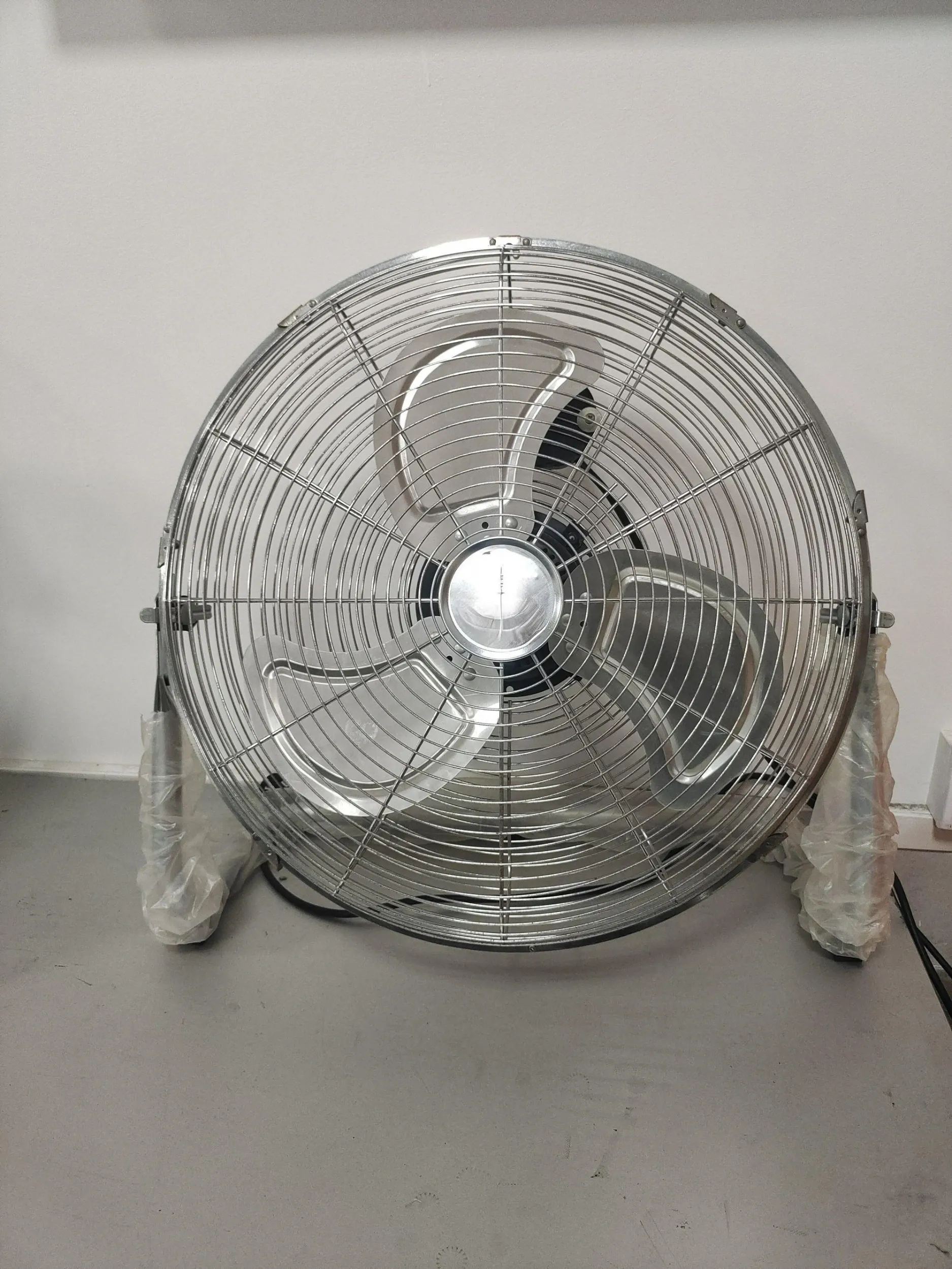
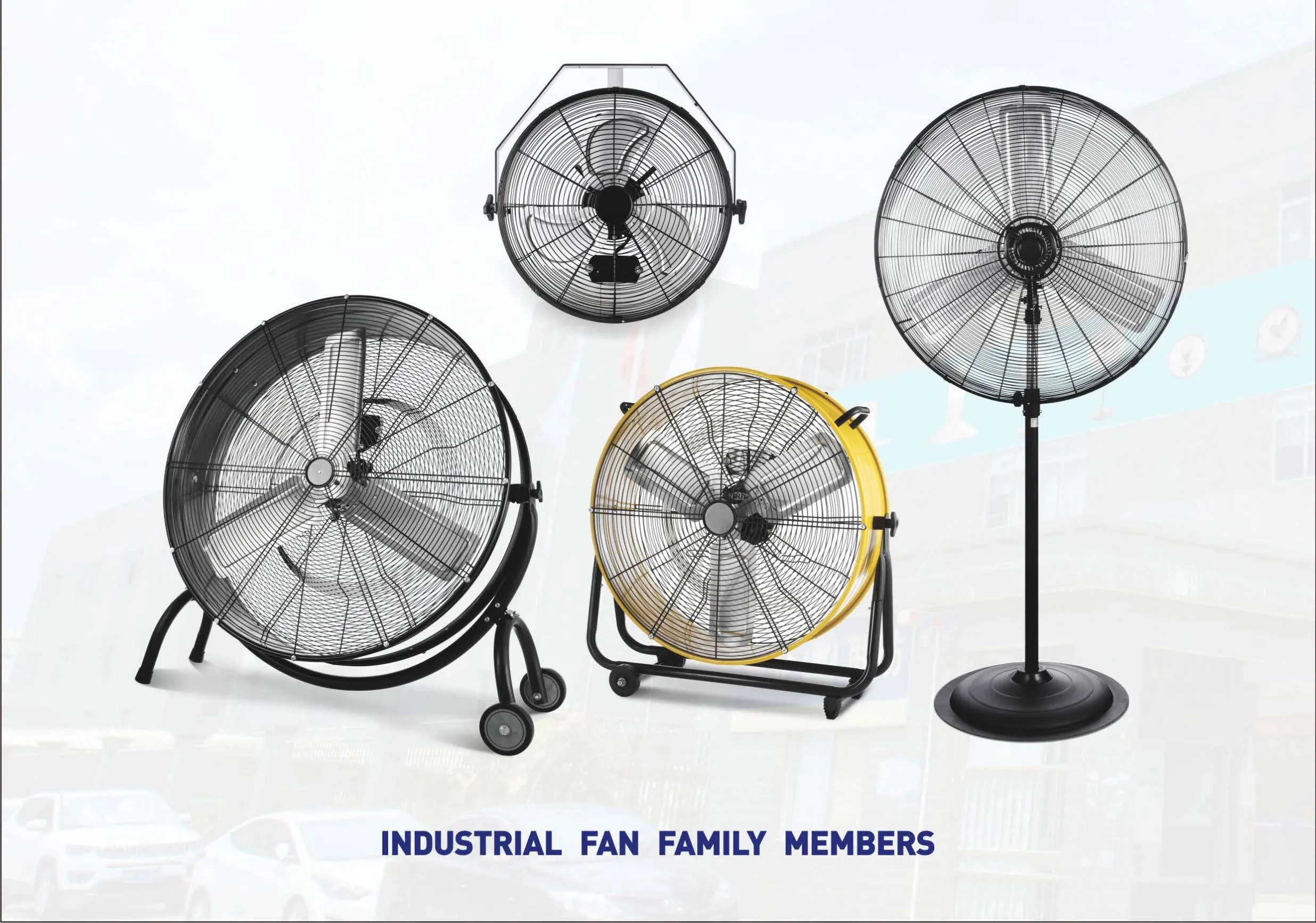
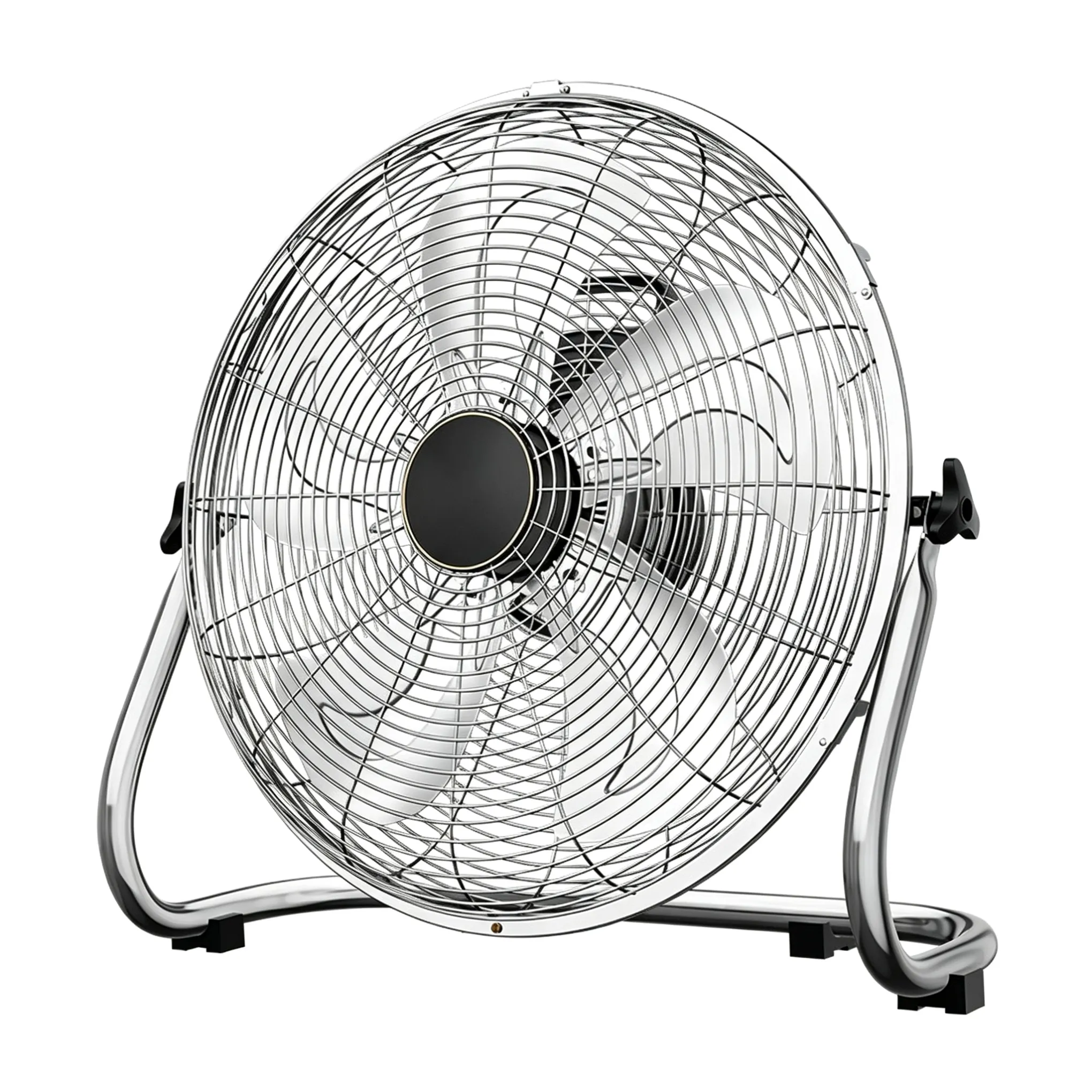
- High-Velocity Floor Fan: A compact, powerful fan. An industrial metal floor fan includes a triangular wall bracket. It can be used as a standalone floor fan or mounted on the wall as an industrial wall-mounted fan. These dual installation modes save valuable floor space. Use it as a shop fan for the workshop and mount it to save bench space. As a warehouse ventilation fan, install it high up to better distribute air. As a garage fan, you have the flexibility to place it wherever needed. It can also function as an exhaust fan or a blower.
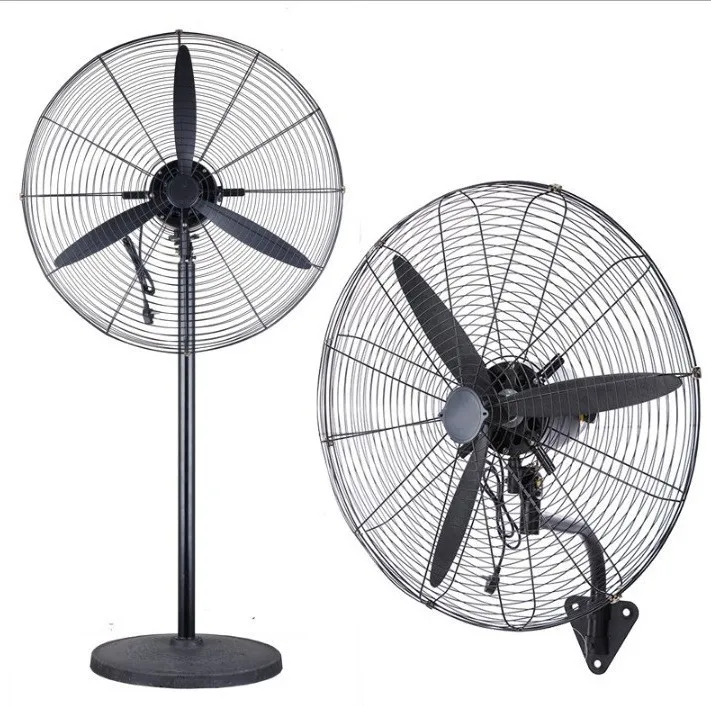
- Pedestal Fan: A height-adjustable standing fan, typically using large-diameter blades to produce a wide and gentle airflow. It can oscillate 60 degrees left and right to cover a larger area. Its core advantages lie in its height adjustability and oscillating wide-angle air delivery.
Deep Dive: What Makes a High-Velocity Floor Fan Different?
Built Tough: Core Design and Engineering of Floor Fans
- A powerful industrial fan, typically constructed with an all-metal body. It uses high-quality aluminum material, known for its high strength and resistance to deformation, plus a detachable, reinforced, dense grill for wider and stronger air output.
- Compact cylindrical or box-shaped design, placed directly on the floor or mounted on a wall.
- Core parameters: High CFM (Cubic Feet per Minute) airflow + high FPM (Feet per Minute) air speed.
- Fan size and blades: 10-20 inches, generally with three blades, customizable to 4-5 blades.
- Motor type: Ball bearing high-power motor, energy-saving, safe, durable, and capable of long continuous operation.
- Optional features: Multiple speed settings. It can be placed on a workshop conveyor belt for cooling or positioned at a doorway as an exhaust fan. Remote control function for speed and power.
Where Floor Fans Outperform: Key Benefits for Tough Jobs
- Concentrated Powerful Airflow: Produces a high-velocity jet that can penetrate hot air over long distances, effectively performing spot cooling or ventilation.
- Extreme Portability: Its compact size allows it to be moved near heat sources at any time, such as welding stations or beside injection molding machines.
- Multi-Purpose Use: Beyond cooling, it can quickly dry floors, exhaust welding fumes, and assist with air circulation.
- Rugged and Durable: The all-metal construction resists impact, adapting to harsh workshop environments.
- Insulation to Prevent Leakage: A fully enclosed insulated motor housing blocks electrostatic contact between the motor and the grill, conducting electricity safely and providing comprehensive protection.
- Overheat Protection: An over-temperature shut-off at 145°C protects the motor from overheating, extending the fan's service life.
- Low Noise: Integrated ball bearings offer better noise reduction, are unafraid of drops and bumps, and ensure long-lasting durability.
Best Use Cases for High-Velocity Floor Fans in Real Workshops
Suitable for multiple scenarios, including factories, shops, restaurants, living rooms, offices, and dormitories.
- Spot cooling for specific workstations or high-temperature equipment.
- Workshop cross-ventilation, creating airflow channels when used with open doors and windows.
- Exhausting welding smoke, dust, or odors.
- Quickly drying wet floors or products.
- Anywhere that needs ventilation and cooling.
Deep Dive: What Sets an Industrial Pedestal Fan Apart?
Designed for Reach: The Mechanics Behind Pedestal Fans
- A vertical design consisting of a base, adjustable stand pole, motor head, and grill.
- Large-diameter blades, typically 16-30 inches, with relatively lower rotational speed.
- Core function: Wide-angle oscillation to cover a large area.
- Adjustable height and tilt angle to flexibly direct airflow. High-volume air circulation sweeps away stuffiness.
Where Pedestal Fans Shine: Comfort and Wide-Area Cooling
- Wide Area Coverage: The oscillation function allows airflow to cover a larger area, making it suitable for cooling multiple people simultaneously.
- Height Adjustable: The wind direction height can be adjusted for standing or seated work.
- Gentle Airflow: The large blade area produces a gentle, comfortable, sustained breeze, suitable for long-duration blowing without causing operator discomfort. A high-velocity floor fan's intense airflow is not ideal for prolonged, close-range blowing.
- Quiet Operation: Lower rotational speed means the noise level is typically lower than a high-velocity floor fan.
- Flexible Air Delivery: Features 90° up-down adjustment, three speed settings, 120° oscillation, a dense protective grill, and low-noise operation.
- Excellent Durability: Uses a rolling bearing motor with power-off protection.
Ideal Applications for Pedestal Fans in Commercial and Industrial Settings
Widely used in various occasions, suitable for large places like warehouses, workshops, canteens, and kitchens.
- Precision processing workshops needing a quiet environment.
- Background ventilation for warehouse aisles or rest areas.
- Circulating cool air in conjunction with air conditioning systems.
Head-to-Head: Critical Performance Differences That Matter
Airflow Battle: Concentrated Blast vs Wide Dispersion
- High-Velocity Floor Fan: Excels in high air speed (FPM) with concentrated airflow and long reach. A typical 20-inch high-velocity floor fan can produce 4,000-6,000 CFM, effectively pushing airflow over 15 meters.
- Pedestal Fan: Excels in large-volume coverage, but the air speed is gentler. A 24-inch oscillating fan can produce 5,000-8,000 CFM, but its effective delivery distance is shorter, around 3-5 meters, making it suitable for close-range use.
- Conclusion: If you need powerful, long-distance spot cooling, choose a high-velocity floor fan. If you need wide-area gentle cooling with flexibility, choose an oscillating pedestal fan.
Moving Your Fan: Portability and Space Requirements Compared
- High-Velocity Floor Fan: A floor fan comes with a handle, making it very convenient to carry to the work site. Its compact, low-profile body can be placed directly under a workbench or beside equipment without occupying vertical space.
- Pedestal Fan: The air delivery height of a pedestal fan is higher, but its stand pole can become an obstacle.
- Conclusion: For crowded workshops with lots of equipment, a high-velocity floor fan is the top priority. If you need a higher air delivery angle and multi-directional airflow, a pedestal fan is the choice.
Which Fan Lasts Longer? Durability and Safety in Harsh Conditions
- High-Velocity Floor Fan: The all-metal body resists impact and wear. The dense metal grill prevents large debris from being drawn in, offering high safety. It is suitable for harsh environments with lots of dust and flying debris.
- Pedestal Fan: Has more plastic parts, which are prone to aging and becoming brittle under long-term exposure to oil, dust, and UV radiation. Stability depends on the base weight, and it can be knocked over.
- Conclusion: In tough industrial environments, the durability of the high-velocity floor fan is a clear winner.
At-a-Glance: High-Velocity Floor Fan vs Pedestal Fan Comparison
Comparison Dimension | High-Velocity Floor Fan | Pedestal Fan |
|---|---|---|
Airflow Characteristic | High-speed, concentrated, long-range | Gentle, wide-area, short-range |
Best Cooling Method | Spot Cooling | Area Circulation |
Effective Air Delivery Distance | 10-20 meters | 3-5 meters |
Coverage Angle | Fixed direction or manual adjustment | 90°-180° automatic oscillation |
Noise Level | 60-75 dB | 50-65 dB |
Suitable Environment | Heavy industry, dusty, high-temp workshops | Assembly lines, precision machining, warehouses |
Portability | Excellent (compact and low-profile) | Good (with rolling base) |
Durability | Excellent (all-metal structure) | Medium (more plastic parts) |
Power Range | 100-300W | 50-100W |
Reference Price | | |
Service Life | Over 10 years | 3-7 years |
How to Choose the Right Equipment for Your Workspace
What to Look for When Evaluating Cooling Equipment for Your Facility
When examining the practical application of cooling and ventilation equipment, the following selection points are quite common:
- Factory Structure and Spatial Characteristics: Different floor heights, spans, and degrees of sealing significantly impact equipment selection. For example, in factories with a floor height exceeding 8 meters, natural ventilation equipment like roof ventilators tends to be more effective. For densely populated areas with lower floor heights, evaporative air coolers are more suitable for targeted air delivery.
- Heat Source Distribution and Intensity: The heat generated by equipment, personnel density, and the type of heat produced in the process (sensible or latent heat) all affect the load calculation. The selection of cooling and ventilation equipment must be based on thermal environment parameters to avoid situations of underpowered or excessive configuration.
- Airflow Organization Design: Simply purchasing equipment does not equal effective cooling. A rational airflow organization design is crucial. The layout of air inlets and outlets, air supply speed, and throw distance need to be simulated based on site conditions. This often requires technical cooperation from the equipment supplier.
- Maintenance Convenience and Operating Costs: In industrial environments, components like cooling pads, fans, and motors are prone to dust accumulation or aging after long-term operation. The equipment's modular design, easy-to-disassemble and clean structure, and parts commonality will directly impact later maintenance costs and downtime.
You can select the appropriate fan based on your factory building and equipment.
Pick a High-Velocity Floor Fan If You Need These Features
In industrial plant environment management, cooling and ventilation equipment is an important facility for regulating indoor temperature and improving air circulation. In practice, the application of such equipment often requires a comprehensive consideration of factors like the plant structure, heat source distribution, and personnel activity areas, rather than a simple equipment selection. The demand for cooling and ventilation varies greatly across different industries. For example, a machining workshop focuses more on localized cooling effects, while an electronics assembly workshop pays more attention to overall air cleanliness and temperature/humidity control.
- You need powerful spot cooling for a specific workstation or heat-generating equipment.
- You need a fan that can both cool and exhaust, such as aiming it at a doorway to blow out dust or smoke.
- Your workshop environment is harsh, with lots of dust and heavy oil mist, requiring robust and durable metal equipment.
- You need to quickly dry a floor or products.
- Your workshop is crowded with equipment and lacks the floor space for a pedestal fan's stand.
Pick a Pedestal Fan If These Benefits Match Your Operation
A pedestal fan has significant advantages in specific workshop settings. Compared to concentrated air delivery, an oscillating pedestal fan provides intermittent cooling for workers. A constant direct blast from a fan can cause discomfort over time, whereas intermittent airflow can make personnel feel more comfortable.
- You need to provide wide-area airflow for multiple operators or a broad workbench.
- Your work environment is noise-sensitive, such as an electronics assembly or quality inspection station.
- You need a more gentle and sustained airflow to prevent strong winds from blowing away lightweight materials.
- Your workshop has a high ceiling, and you need to adjust the fan height to cool a specific height zone.
- You need a fan for long continuous operation and have requirements for energy saving.
- A pedestal fan can be fitted with a water tank to become a misting fan, providing the added effect of spray humidification and cooling.

The Winning Strategy: Why Not Use Both Types Together?
In reality, many efficient workshops use a combination of both fan types, allowing them to complement each other's weaknesses.
- Recommended Strategy:
- Use high-velocity floor fans as task fans for spot cooling high-heat workstations or as exhaust fans installed at doorways.
- Use pedestal fans for background ventilation, promoting air circulation across the entire workshop area.
- Result: This layered ventilation strategy ensures comfort at critical workstations while improving overall air quality, far exceeding the efficiency of a single fan type.
Frequently Asked Questions About Workshop Fans
What is a high-velocity floor fan?
A high-velocity floor fan is a compact, powerful industrial fan designed to sit on the floor. It uses high-RPM motors and metal blades to produce a concentrated, high-speed jet of air for spot cooling, ventilation, or drying.
Can a pedestal fan cool an entire workshop?
It depends on the workshop size. A pedestal fan is excellent for circulating air over a wide area, making it feel cooler for multiple people. However, in very large or high-heat workshops, its gentle airflow may not be sufficient for extreme spot cooling needs.
Which fan is better for a garage gym?
A high-velocity floor fan is generally better for a garage gym. It delivers the intense, direct airflow needed to cool down a sweating person quickly during and after a workout.
Are high-velocity floor fans too loud?
They are louder than pedestal fans, typically in the 60-75 dB range. In a workshop already filled with machinery noise, this is usually acceptable. For quiet environments, a pedestal fan is the better choice.
Which is more energy-efficient?
Pedestal fans generally consume less power (50-100W) for continuous, long-duration operation. High-velocity fans use more power (100-300W) but are often used for shorter, targeted bursts, making their overall energy impact dependent on usage patterns.
Final Verdict: Align Your Fan Choice with Your Cooling Priorities
There is no absolute "better" between a high-velocity floor fan and an oscillating pedestal fan. The key lies in your workspace type, cooling needs, and environmental conditions.
- If you need powerful spot cooling, exhaust, or multi-purpose use in a harsh industrial environment, the high-velocity floor fan is an irreplaceable choice. Its all-metal structure and long-range airflow are built specifically for the workshop.
- If you need to provide quiet, wide-area, gentle airflow for multiple people, the pedestal fan is the more economical and comfortable choice.
- Best Strategy: For a large workshop, combine the strengths of both to build a layered ventilation system, maximizing both comfort and efficiency.
💡 One-Sentence Summary: The high-velocity floor fan is a precise "sniper," built for a high-temp workstation. The pedestal fan is a comprehensive "area mage," skilled at covering an entire zone. Do you need pinpoint cooling, or full-area coverage?
📞 Looking for an efficient cooling solution for your workshop? Contact us for expert selection advice and a customized industrial fan solution.