Ceiling Fan
HVLS Fan Selection Guide: How to Choose the Right Industrial Ceiling Fan
HVLS fan selection in four steps: floor area, ceiling height, controls and motor. PMSM vs induction compared, plus 2.5 m, 3.5 m and 7.3 m fan specs.
Quick answer: Choose an HVLS fan by floor area first, then by ceiling height, then by motor. A 2.5 m fan covers 80–300 m² under a 2.5–5 m ceiling; a 7.3 m fan covers up to 1,600 m² where the clearance is 6–16 m. Between a permanent magnet synchronous motor and an induction motor, the permanent magnet unit costs more up front and less every month after that. There are three mounting types — standard ceiling, remote-control ceiling, and standing outdoor — and the site decides which one you need before the spec sheet does.
What Is an HVLS Fan?
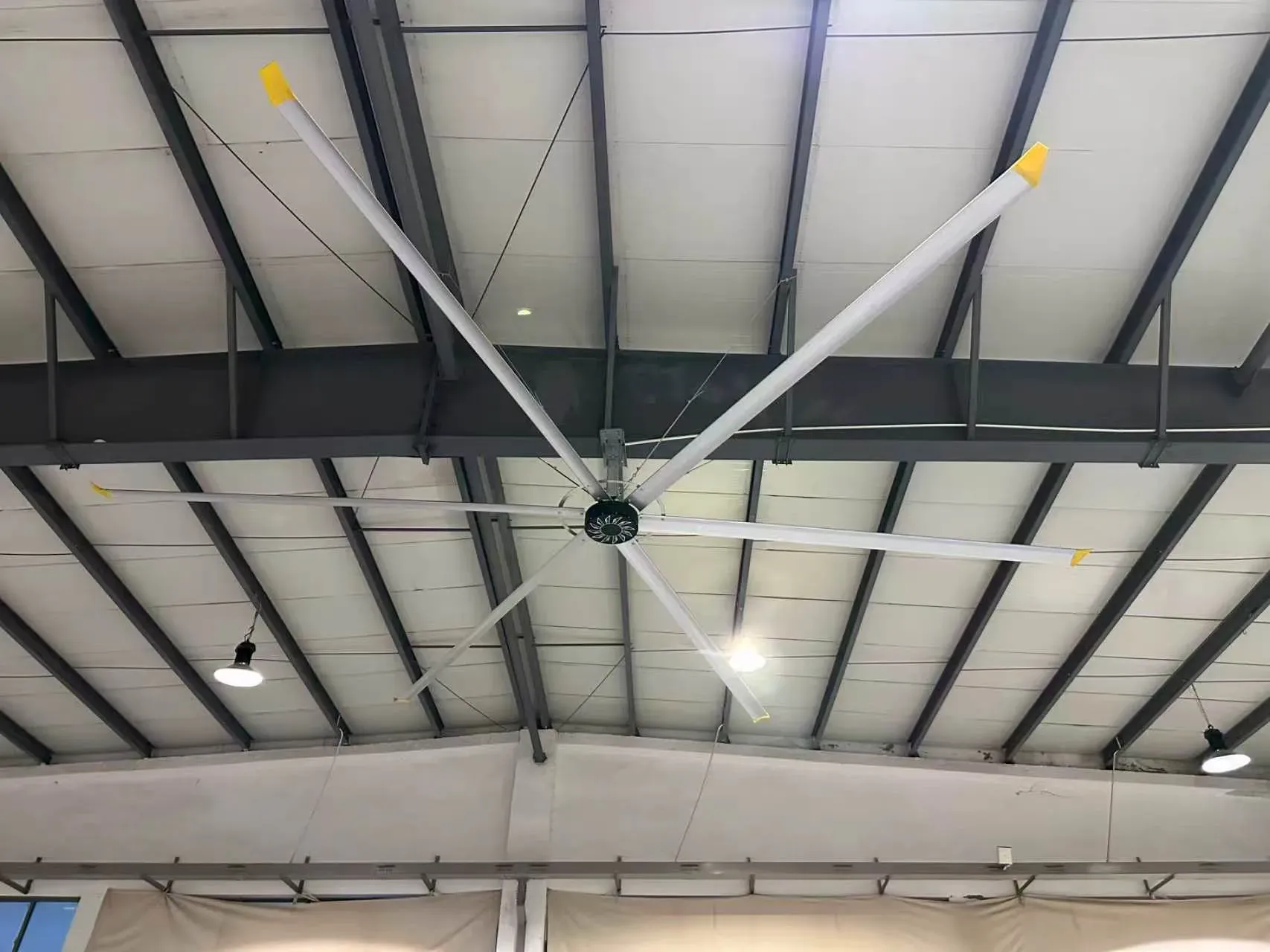
A large industrial energy-saving fan, usually called an HVLS fan, is equipment for moving air in tall, open spaces. HVLS stands for high volume low speed, and those two words describe the whole design: a very large swept area turning slowly, instead of a small blade turning fast. It is used in industrial plants, logistics warehouses and large commercial buildings.
The fan uses a permanent magnet synchronous motor and aerofoil-section blades, and drives a three-dimensional circulating airflow at low power. One unit covers a large floor area, it lowers the temperature a person actually feels, and it saves energy. Run alongside an air conditioning system, it lets that system work less.
How the air moves
The drive system turns the large blades slowly through a fixed angle, pushing a large body of air from the ceiling down toward the floor. This is the "air lake" effect: a column of air settles over the floor, then spreads outward horizontally, dragging the stagnant air in the room into the same loop. What a person standing underneath feels is not a blast but a continuous, three-dimensional breeze — and that breeze is what does the cooling.
To get that volume at low speed, the blades use an aviation-style aerofoil cross-section, which cuts air resistance and raises the efficiency of the airflow output. Increase the blade diameter and area, and the fan moves an enormous body of air at low rpm — which is why the motor does not need much power. Our 7.3 m unit runs on 1,500 W; the 2.5 m unit on 200 W.
Some models add an intelligent control system that adjusts speed automatically against the conditions in the room, so the fan meets the ventilation demand without wasting electricity. That is what automated energy saving looks like: the fan is not running at one fixed speed all day.
What an HVLS Fan Is Made Of
An HVLS fan is four things: the motor, the controller, the blades, and the accessories that hold them together.
By motor type, HVLS fans split into two families — induction (asynchronous) motor fans and permanent magnet synchronous motor (PMSM) fans. The difference is not cosmetic. It decides what you pay, what you maintain, and how much electricity the fan uses over ten years.
In product listings the same motor turns up under several names — a PMSM ceiling fan, a permanent magnet ceiling fan, a direct drive ceiling fan, a gearless ceiling fan. All four describe the fan below. What they have in common is no gearbox and no rotor current, and that is the part that matters.
Induction motor vs permanent magnet synchronous motor
| Induction (asynchronous) motor | Permanent magnet synchronous motor |
|---|---|---|
Rotor | Squirrel cage; current is induced in the rotor by the stator | Rare-earth magnets; no current in the rotor |
Drive | Gearbox or belt reducer to reach low blade speed | Direct drive, external rotor, no gearbox |
Efficiency at low speed | Drops sharply; losses sit in the rotor and the reducer | Stays high across the speed range |
Power for a 7.3 m fan | Typically 1.5–2.2 kW | 1,500 W |
Weight | Higher — motor plus reducer | Lower — no reducer, slimmer hub |
Maintenance | Gearbox oil, belt tension, bearing wear | Bearings only; no oil to change |
Noise | Gear mesh and belt noise on top of airflow noise | Airflow noise only — ≤40 dB on our unit |
Speed control | Coarse; needs a matched inverter | Stepless through a dedicated VFD |
Upfront cost | Lower | Higher |
Fits | Budget projects, buyers with in-house maintenance | Quiet sites, high electricity prices, long duty cycles |
The short version: an induction motor is cheaper to buy and more expensive to run. If your customer is buying ten units and running them eight hours a day for a decade, the permanent magnet unit is the cheaper fan. If they are buying one unit for a shed that runs in summer, the induction unit is fine.
The Three Types of HVLS Fan
1. Standard ceiling HVLS fan — the 7.3 m model
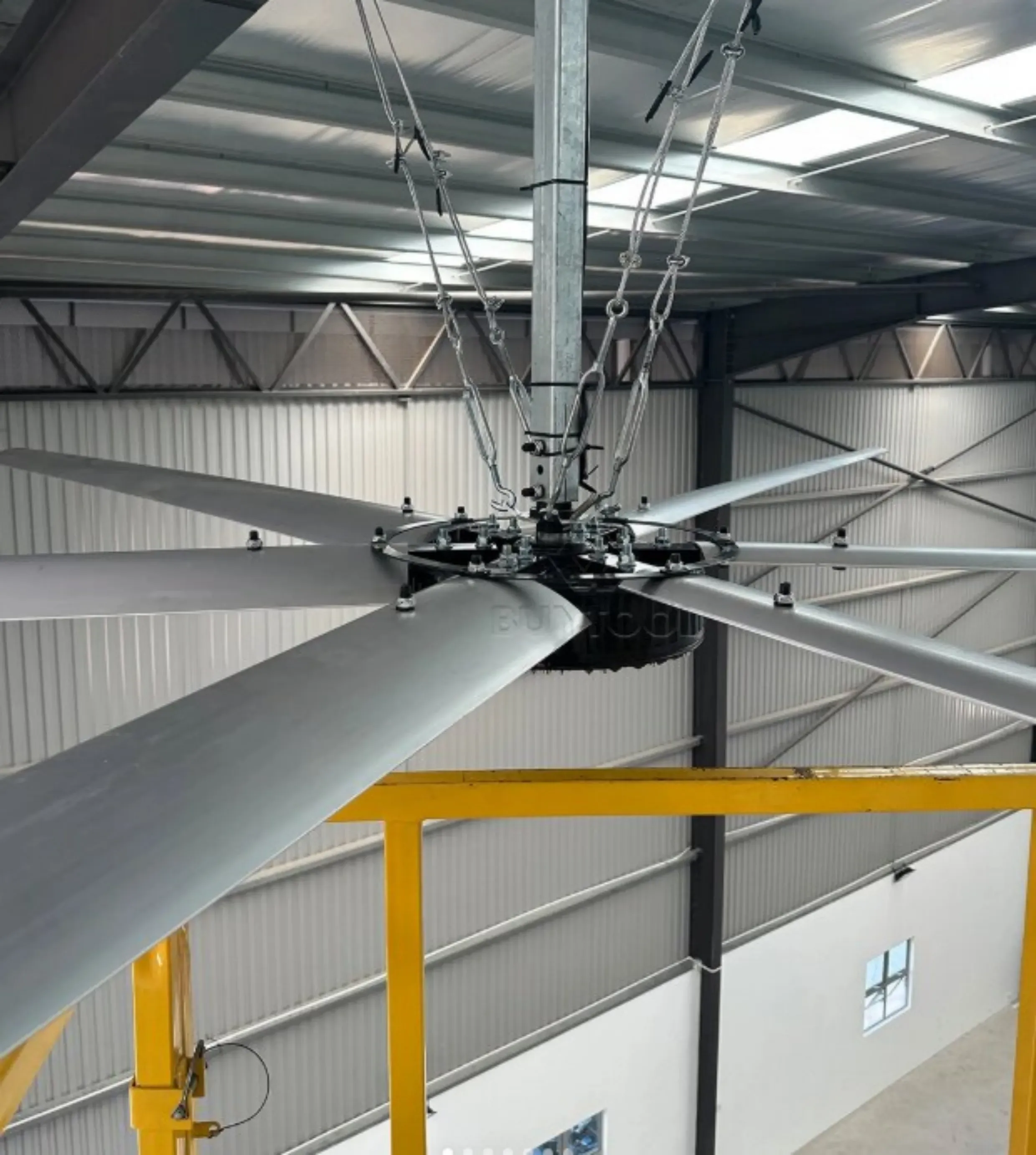
This is the permanent magnet HVLS fan mounted on the roof structure and controlled by a wired controller. It is the type most people mean when they say HVLS fan, and it is the one for high-clearance buildings.
Parameter | 7.3 m ceiling HVLS fan |
|---|---|
Fan diameter | 7,300 mm (24 ft) |
Blades | 6, widened aerofoil section |
Rated power | 1,500 W |
Motor | Permanent magnet, variable frequency |
Max airflow | ≥15,000 m³/min (≈530,000 CFM) |
Noise | ≤40 dB |
Protection grade | IP55 |
Coverage | Up to 1,600 m² |
Ceiling height | 6–16 m |
Control | Wired VFD controller |
Supply | Three-phase |
Three numbers in that table matter more than the rest. 15,000 m³/min is the airflow that makes 1,600 m² possible from one point of attachment. ≤40 dB is quiet enough to run above a production line. IP55 is what lets the same fan go into a dusty workshop or a damp livestock shed, because dust and moisture are what kill motors early.
Industrial ceiling fan vs normal ceiling fan
This is where the two part company. A residential fan moves air in one room and is built to be looked at; it has no IP rating, no VFD and no safety cable, and nobody specifies it for 16 m of clearance. If a supplier quotes you a decorative fan on a long drop rod and calls it an industrial ceiling fan, the airflow number will not be there.
A heavy duty industrial ceiling fan is a different object again from a light commercial one: bigger hub, thicker blade brackets, a motor sized for continuous duty. That is what makes a large industrial ceiling fan worth its price — it is rated to run eight hours a day for a decade, not to run on summer afternoons.
The controller
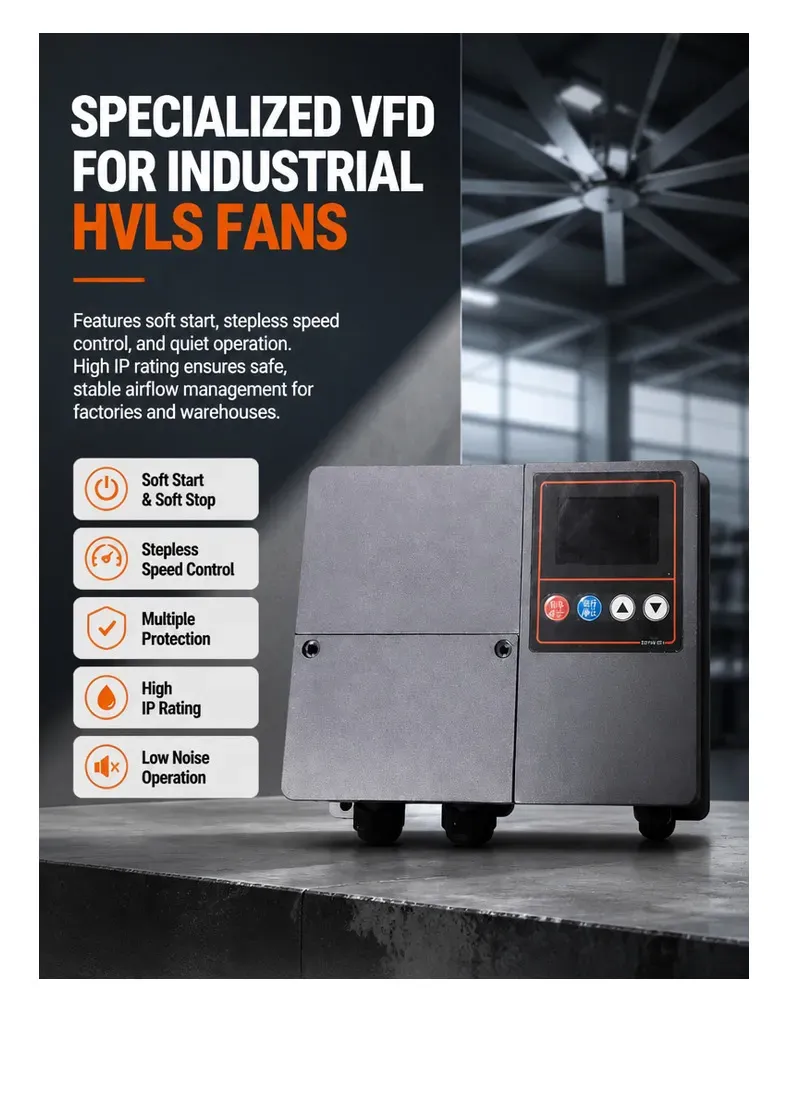
The controller is not a switch. On a permanent magnet HVLS fan it is a dedicated variable frequency drive built for this motor, and it does five things:
- Soft start and soft stop. The blades ramp up and down instead of slamming to full speed, which removes the starting torque that works the blades and the roof anchors loose.
- Stepless speed control. Any speed between zero and maximum, not three fixed gears.
- Multiple protection. Over-current, over-voltage, over-temperature and phase loss protection, so a fault trips the drive instead of the motor.
- High IP rating. The enclosure survives a factory floor, not a clean control room.
- Low noise operation. The drive adds no whine to the airflow.
Two notes for buyers. A permanent magnet motor and its drive are a matched pair — you cannot swap in a third-party inverter later and expect the same torque curve, so buy the controller with the fan. And put the controller where someone can reach it without a ladder.
2. Remote-control HVLS fan — the 2.5 m model
The remote version does everything the standard fan does, but the switch, the speed and the stop are on a handset instead of a wall box. That matters in two situations: a building where running control cable to the ceiling is expensive, and a space where the person who needs the air is not the person standing next to the wall panel.
This is also the size most buyers should look at first. A 2.5 m fan covers 80–300 m² under a 2.5–5 m ceiling, which is the range that covers most workshops, retail floors, gyms and canteens.
Parameter | 2.5 m remote HVLS fan |
|---|---|
Fan diameter | 2,500 mm (8 ft) |
Blades | 6 |
Rated power | 200 W |
Rated current | 2.3 A |
Speed | 105–0 rpm |
Max airflow | ≥4,000 m³/min (≈141,000 CFM) |
Noise | ≤40 dB |
Net weight | 22 kg |
Coverage | 80–300 m² |
Ceiling height | 2.5–5 m |
Protection grade | IP55 |
Control | Remote handset |
Supply | 220 V 50 Hz single phase |
The 22 kg weight is the number worth pausing on. A 2.5 m HVLS fan is light enough that a standard purlin or a concrete slab takes it without new steelwork, and two people can hang it. That is not true of the 7.3 m unit.
If you are stocking rather than installing, the wholesale industrial fan list puts these models in a channel context — which one sells to integrators, which one sells on platforms.
3. Standing outdoor HVLS fan — the 3.5 m model
When there is no suitable place to hang a fan, you use a standing HVLS fan. It carries the same large-blade, low-speed logic on a pole, with a base instead of a roof anchor, so it can go on a loading dock, an outdoor yard, a tented event floor or a warehouse mezzanine that was never designed for a ceiling load.
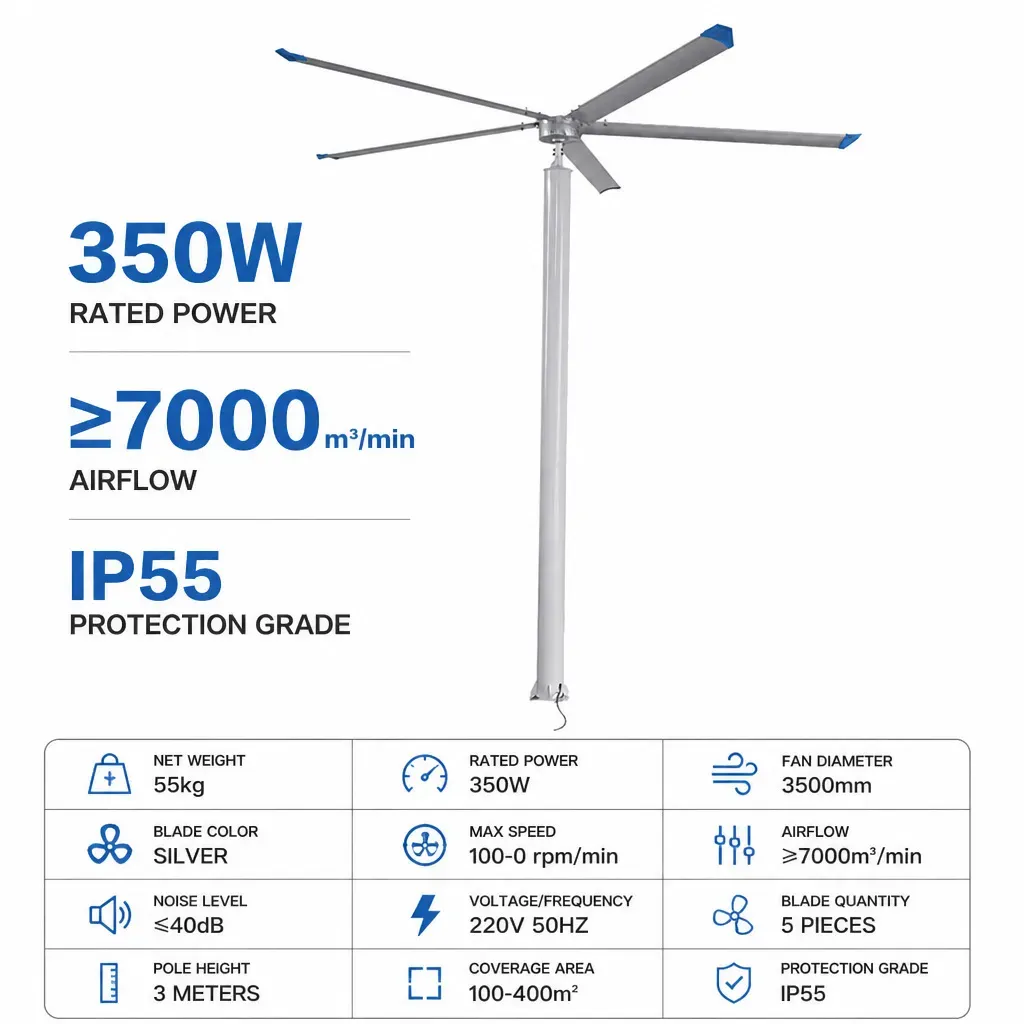
Parameter | 3.5 m standing HVLS fan |
|---|---|
Fan diameter | 3,500 mm (11.5 ft) |
Blades | 5, silver |
Rated power | 350 W |
Speed | 100–0 rpm |
Max airflow | ≥7,000 m³/min (≈247,000 CFM) |
Noise | ≤40 dB |
Net weight | 55 kg |
Pole height | 3 m |
Coverage | 100–400 m² |
Protection grade | IP55 |
Supply | 220 V 50 Hz single phase |
At 55 kg with a 3 m pole, this is a two-person move and it needs a flat, load-bearing surface. It is not a fan you relocate every day, and it is not a substitute for a ceiling unit in a 12 m building — a pole fan only pushes air at the level it stands at.
HVLS Fan Installation and Safety
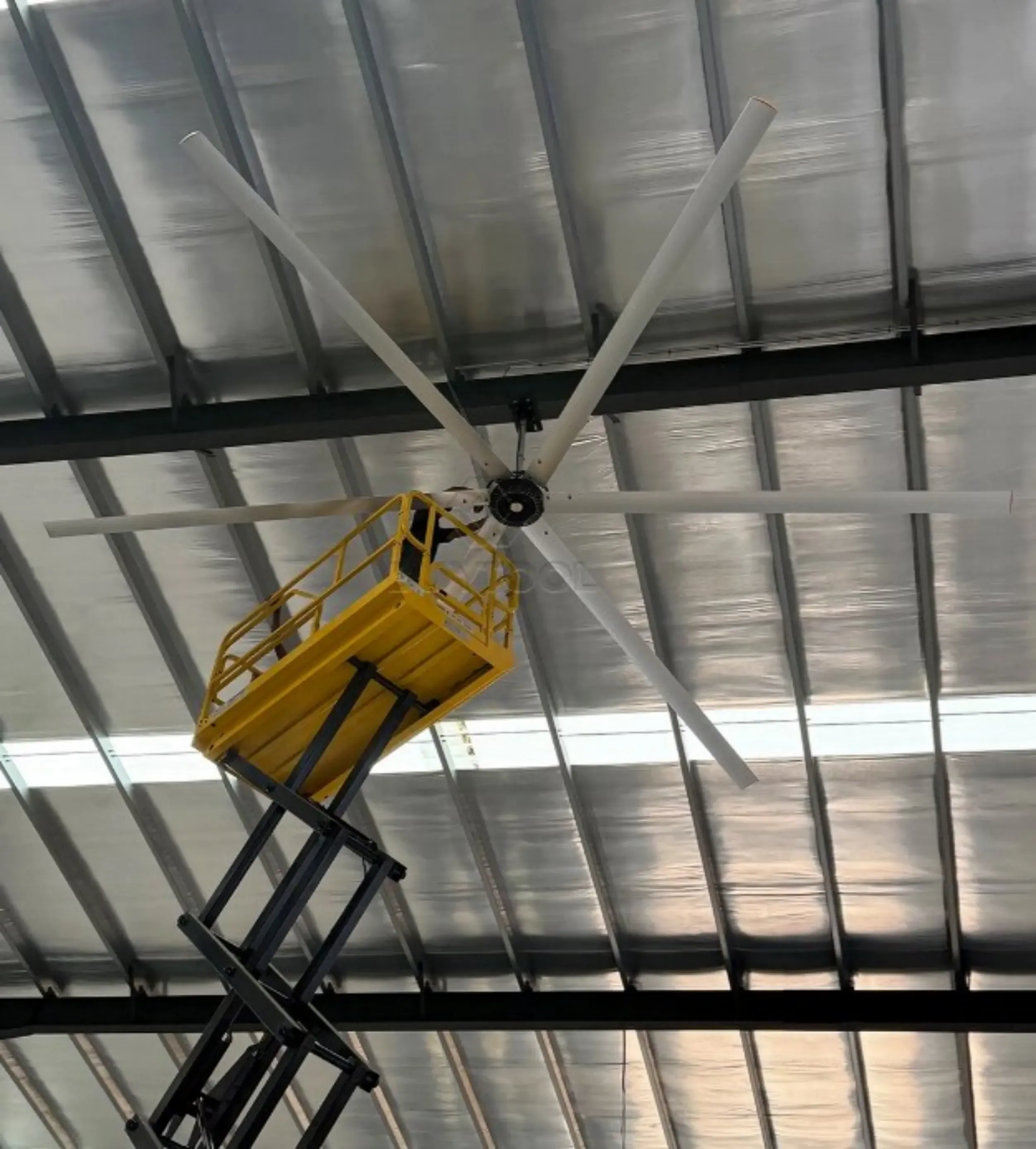
An HVLS fan hangs over people, so the mounting is part of the product decision, not an afterthought.
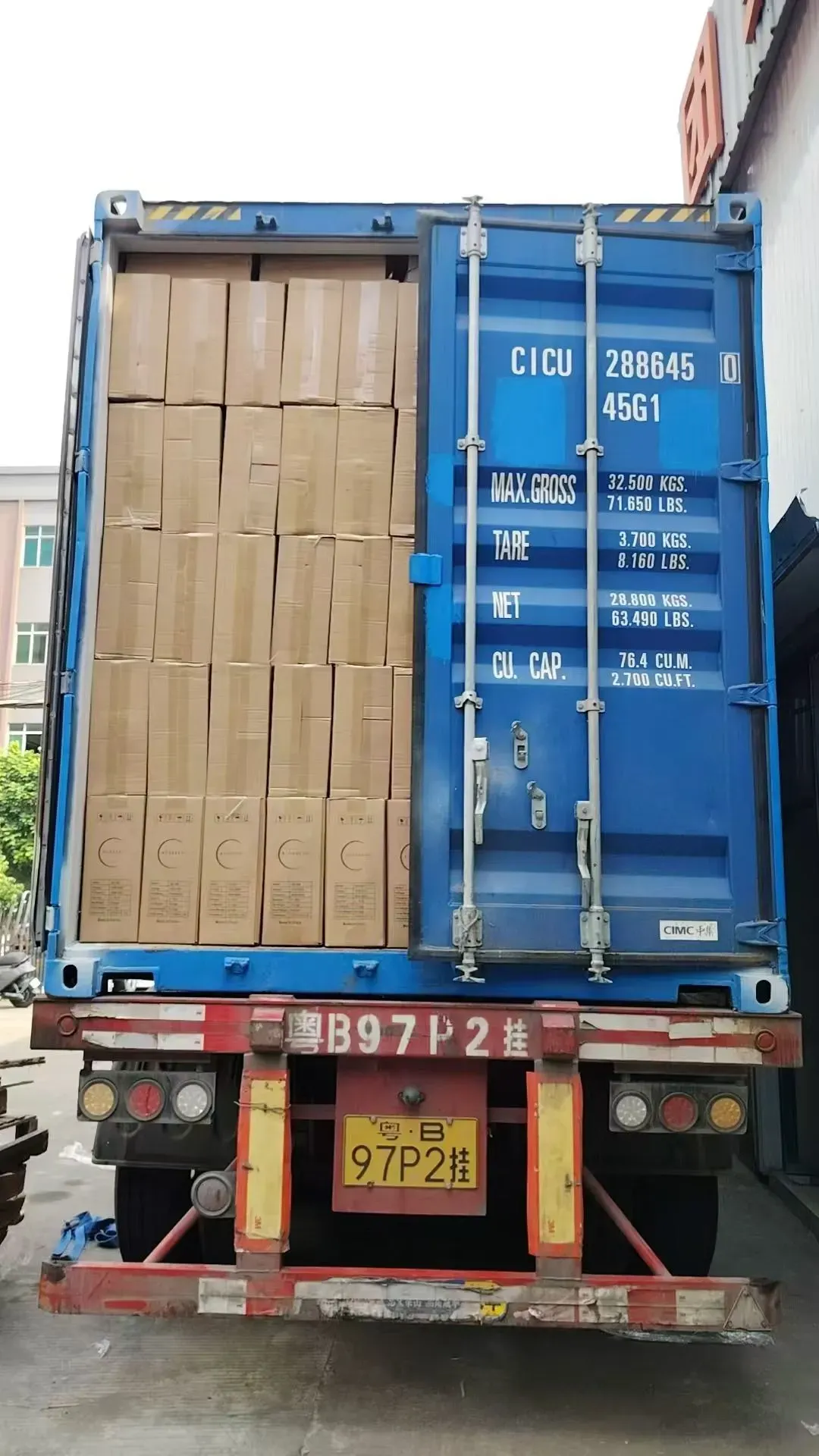
Three things to settle before the container ships:
- The structure has to carry it. The 7.3 m unit needs a roof or beam that takes the fan weight plus dynamic load. On a lightweight metal roof that usually means spanning two purlins rather than hanging from one.
- There needs to be a second line of defence. Safety cables or guy wires run from the hub back to the structure, so one fixing failure does not drop the fan. Check that the mounting kit includes them and that the installer fits them.
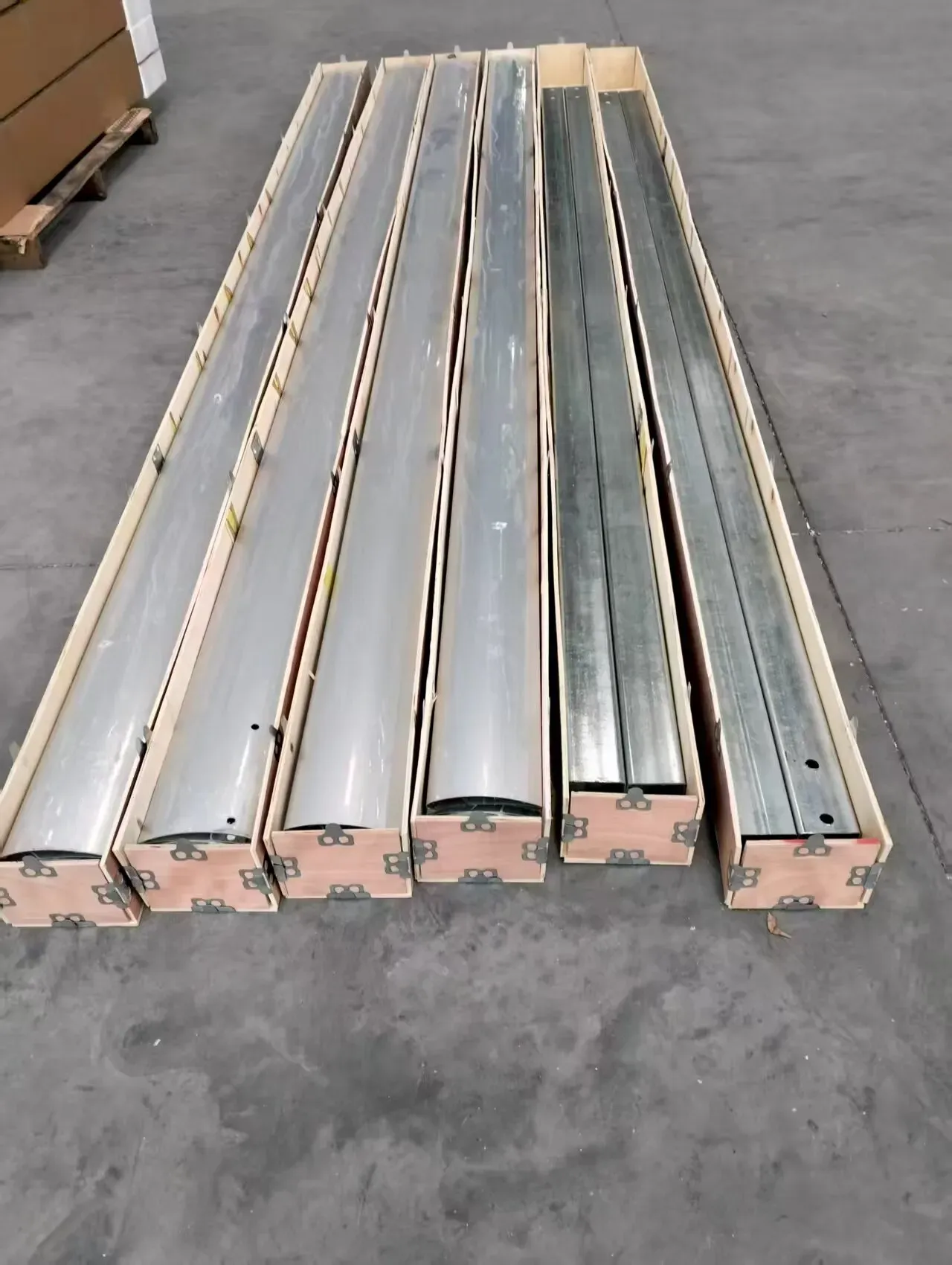
- The blades go on last, at height. Blades ship detached and bolt to the hub on site — which is what makes the packing possible, and why installation needs two people and a lift.
How to Choose an HVLS Fan
Four steps, in this order. Doing them out of order is how people end up with a fan that is the wrong diameter for the building.
Step 1 — Floor area, and where the fan goes
Measure the floor area first. Then use the manufacturer's coverage figure to get the diameter: as a rule of thumb, a 2.5 m blade diameter covers 80–300 m².
Then decide whether the fan goes indoors or outdoors. Indoors, it is a ceiling unit. Outdoors, with no suitable mounting point, it is a standing HVLS fan. That one question eliminates a third of the range before you look at any specification.
Step 2 — Ceiling height
Diameter and height are linked, and this is where most sizing goes wrong. If the building is very tall, you either add an extension tube to drop the fan closer to the occupied zone, or you go up a diameter.
The reason is the air column. A large fan needs vertical distance to develop its column of air before that air reaches the floor. Our 7.3 m unit is specified for 6–16 m of clearance; the 2.5 m unit for 2.5–5 m. Put a 7.3 m fan under a 4 m ceiling and it stirs the top layer and never reaches the people. Put a 2.5 m fan under a 14 m ceiling and you will need several — compare that cost against one large unit.
The same logic covers what people actually search: a ceiling fan for a 20 foot ceiling, or for 16 ft ceilings, is an HVLS question, not a residential one.
Step 3 — Controls and features
- Remote control — for buildings where control cable to the ceiling is impractical, or where the operator is not next to a wall panel.
- Bluetooth group control — one handset or one app driving a bank of fans together, which is what you want in a 6,000 m² warehouse where twelve fans should ramp up as one.
- Tuya / smart control — fans on the same app as the rest of the building, with schedules and remote monitoring.
None of these change the airflow. They change how much of it you actually get, because a fan nobody can be bothered to adjust runs at one speed forever.
Step 4 — Power, and what it costs to run
Match the power to the blade length, not to a bigger number on a brochure. An HVLS fan turns slowly by design; with a long enough blade it reaches high volume at low rpm, so a 200 W fan can be the correct fan for a 2.5 m diameter and a 1,500 W fan the correct one for 7.3 m. A 7.3 m fan sold at 3 kW is not more powerful — it is less efficient.
Running cost is where the motor choice shows up, and it is why an energy saving industrial fan is worth paying more for up front. 1,500 W for eight hours is 12 kWh a day. Compare that with the number of floor fans it would take to move the same air across 1,600 m², and the economics stop being close.
It is also the argument for one large industrial fan instead of several small ones. A big industrial fan is one motor, one controller, one mounting point and one maintenance item. The same coverage in pedestal fans is a dozen of each — and every one of them stands in the way of a forklift.
HVLS Fan Sizes at a Glance
Three diameters, one high volume low speed principle. Industrial ceiling fan dimensions, airflow, coverage and clearance side by side — this is the HVLS fan specification most buyers actually need:
Diameter | Type | Power | Max airflow | Coverage | Ceiling height |
|---|---|---|---|---|---|
2.5 m / 8 ft | Ceiling, remote | 200 W | ≥4,000 m³/min | 80–300 m² | 2.5–5 m |
3.5 m / 11.5 ft | Standing, outdoor | 350 W | ≥7,000 m³/min | 100–400 m² | Floor-standing, 3 m pole |
7.3 m / 24 ft | Ceiling, wired VFD | 1,500 W | ≥15,000 m³/min | Up to 1,600 m² | 6–16 m |
Use the table to shortlist, not to specify. The same diameter behaves differently in a 4 m workshop and a 14 m foundry, and unit count matters as much as size: two 7.3 m fans spaced down a 3,000 m² bay cover it better than one centred unit, because the air has to reach the corners. An industrial ceiling fan for warehouse use is bought by bay, not by building.
Where the fan goes changes the brief more than the numbers do. A warehouse fan and a factory fan are the same equipment bought for different reasons: one is about heat sitting over people, the other about general ventilation and fumes. A distribution centre is a warehouse cooling fan question — coverage per bay. A plant with process heat is a factory ventilation fan question — air changes. A factory cooling fan in a foundry is not sized like a warehouse ventilation fan in a chilled DC, even at the same floor area.
That is how the diameter gets decided in practice. For a large fan for warehouse bays, the 7.3 m unit. For a big fan for warehouse aisles that must clear the racking, the 2.5 m. An HVLS fan for warehouse bays is specified by bay; an HVLS fan for factory floors by air changes. Same product, two calculations.
On price, expect the gap between the three sizes to be wider than the gap between power ratings suggests. Blade area, motor size and the controller scale together, and the 7.3 m unit carries a controller the 2.5 m unit does not need. Any HVLS fan price you see online is a starting point, not a quote — it is usually a 2.5 m unit at one set of terms.
Ask an HVLS fan manufacturer — or an HVLS fan supplier if you buy through a trader — for a price against diameter, quantity and destination port, not a single list figure. Freight on a 7.3 m fan is a real part of the landed cost and it moves with the container programme. The same applies to industrial ceiling fan price: an industrial ceiling fan manufacturer will quote differently from a trading company for the same specification, and the difference is usually visible in what the controller is. Ask whether the industrial ceiling fan factory builds the drive as well as the motor — if it does, the two are matched at the design stage rather than at the order stage.
If you are still deciding whether the building needs HVLS at all, or HVLS plus floor fans, that is a separate question and it has its own answer — see HVLS vs floor fans in a working factory.
FAQ
Is a higher power HVLS fan always better? No. The power has to match the blade length. These fans turn slowly by design, and because the blades are long, the airflow formula says a low speed on a long blade still produces high volume. A 7.3 m fan rated at 1.5 kW is doing its job; the same fan pushed to 3 kW is burning electricity to overcome its own blade area.
How do I choose the right HVLS fan for my building? Photograph the mounting position, measure the floor area and the clear height, and send those three things to the manufacturer. The photo shows them the roof structure and the obstructions; the two numbers let them size the fan. Five minutes on site, and most of the risk is gone from the order.
How long is the warranty? On our fans the permanent magnet motor carries three years and the controller two. Terms differ between manufacturers, so compare them on the same basis — and check the exclusions, because a warranty that excludes the controller covers the part that fails least.
Can parts from different sizes be used interchangeably? No. Blades, brackets and mounting kits are designed for a specific diameter. A blade built for a 2.5 m fan on a 7.3 m hub changes the load the motor sees, and the safety margin goes with it.
What is the MOQ? Usually 10 units, which is also where the price becomes worthwhile. Mixed orders across the three types are normally acceptable, since they ship in the same container programme.
Can an HVLS fan replace air conditioning? No, and it is not meant to. It moves air and lowers the temperature a person feels; it does not remove heat or humidity from the building. What it does is let an existing air conditioning system hold a higher set point, which is where the saving comes from.
Conclusion
Choosing an HVLS fan comes down to four numbers and one decision. The numbers are floor area, clear height, diameter and power. The decision is the motor, because it is the one choice you cannot change later and the one that sets the ten-year cost.
Get the diameter right for the area, get the fan low enough for its air column to reach the floor, and put the controller where a person can reach it. Do those three things and the fan disappears into the background, which is what ventilation equipment should do.