Floor fan
How to Import High-Quality Fans from China
Five checks decide fan quality from China: copper winding, motor type, metal guard, in-house aging test and container loading. CE is not a quality proof.
Quick answer: Import fans from China by working five checks in order. Confirm the motor winding is copper, not aluminum. Confirm the motor type — permanent magnet or induction — matches your market's price point. Confirm the housing and guard are metal where the fan will be used hard. Confirm the factory runs its own motor winding, controller assembly and aging test instead of buying finished units. And confirm the container loading quantity before you negotiate a unit price, because freight per fan often decides your margin. A CE certificate does not answer any of these questions on its own — it proves electrical safety and electromagnetic compliance, not service life.
Why Importers Buy Fans from China
Extreme heat has turned fans from a seasonal novelty into a fast-moving commodity across Latin America, North America and Southeast Asia. Buyers in Brazil, Argentina, the United States, Peru and the Philippines are moving volume because a fan costs a fraction of an air conditioner to buy and a fraction again to run. For households and small businesses that cannot absorb the price of a split unit or the electricity bill that comes with it, a fan is not a downgrade — it is the only option that fits the budget.
That demand is served by three different kinds of buyer, from wholesale distributors to project integrators, and each one needs a different thing from a supplier:
- Individual and small-volume buyers want a single model that works, at a landed price they can compare on a marketplace listing.
- Company procurement wants documentation, stable specifications across repeat orders, and a warranty they can point at.
- Ventilation equipment distributors and integrators want a product range wide enough to cover residential, commercial and industrial jobs, plus the ability to customize.
China's fan cluster exists because it covers all three at once. Component supply, motor winding, controller production and final assembly sit within a short drive of each other, which is why a Chinese factory can quote a customized fan in days rather than quarters. The catch is that the same cluster also produces very cheap fans built to hit a price, and the two look identical in a product photo. That is the real risk in importing fans from China. Most importers who lose money on a first order lose it because they bought the second kind without knowing how to tell them apart.
The Types of Fans You Can Import from China
Fan is not one product. The category splits by airflow pattern, mounting and duty cycle, and each type maps to a different market and a different buyer. Knowing which type you are actually buying is the first step, because quality standards differ between them.
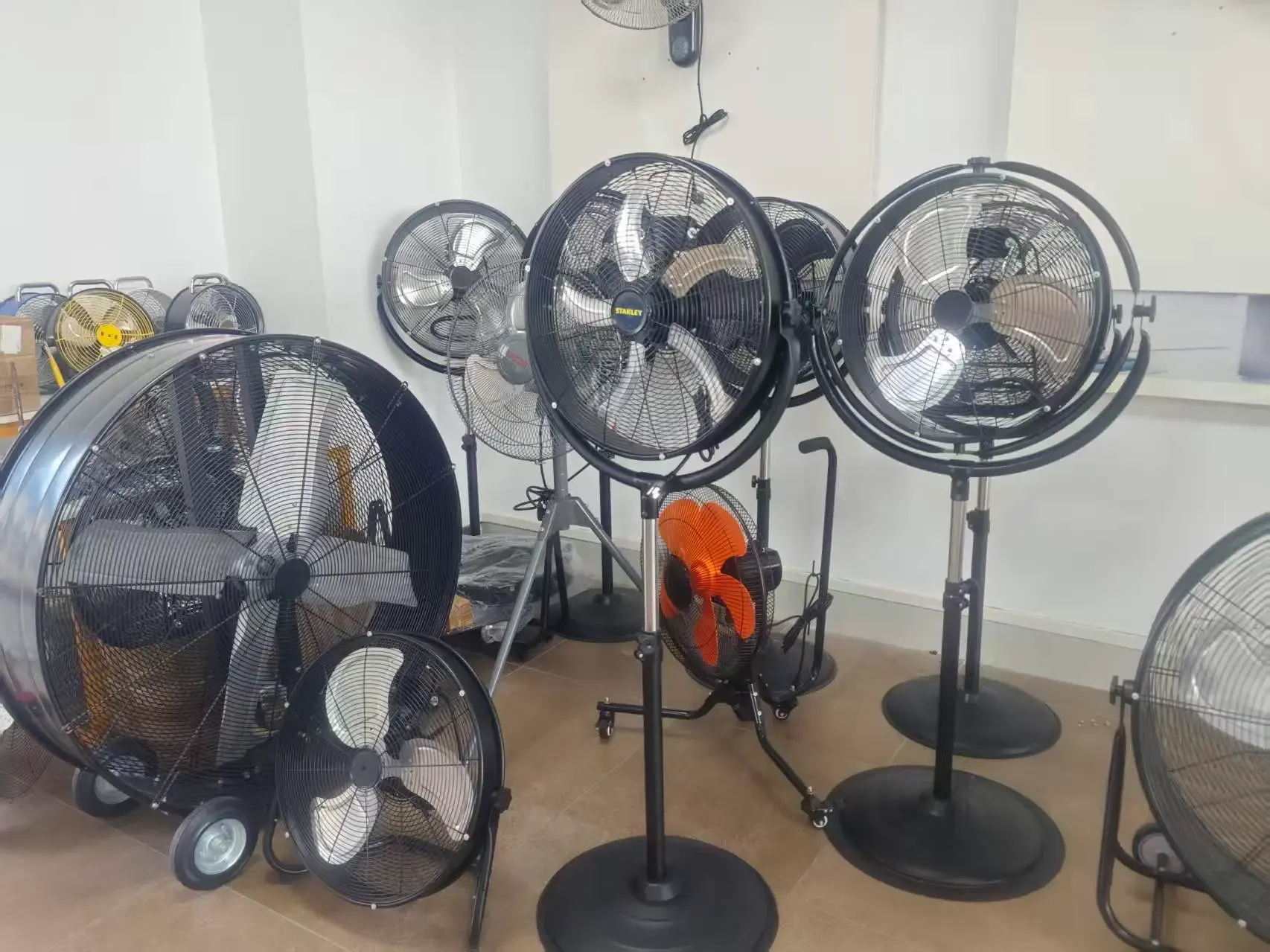
Floor fans — called ventilador de piso in Brazil and 趴地扇 in Chinese — sit low on the ground and push a wide, high-volume stream across a room. They are the volume product in hot-climate markets. A 20-inch floor fan is the reference size for residential and light commercial use; an 18-inch unit is the usual step down for price-sensitive markets.
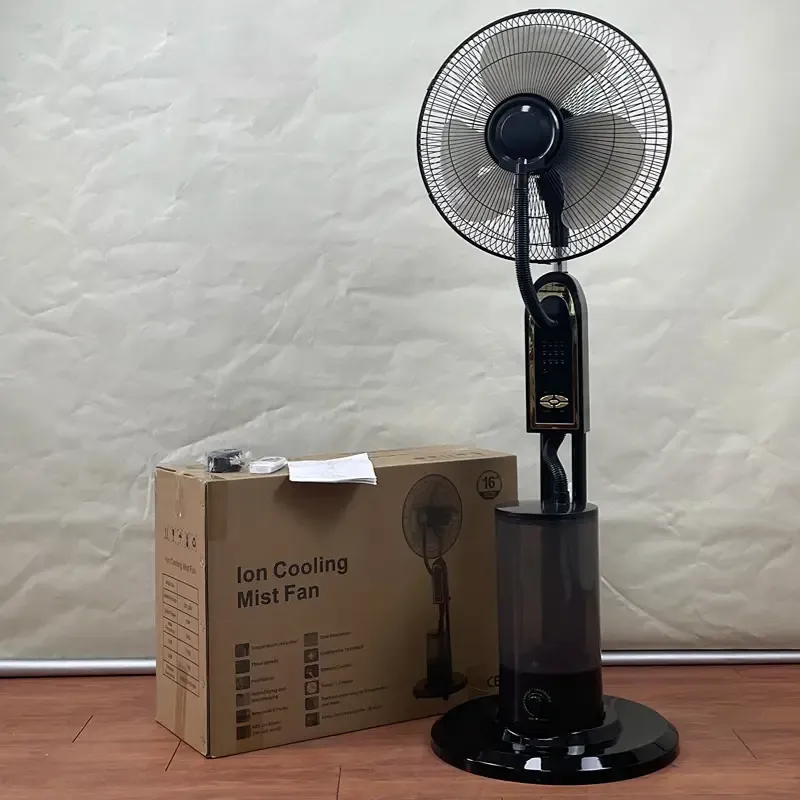
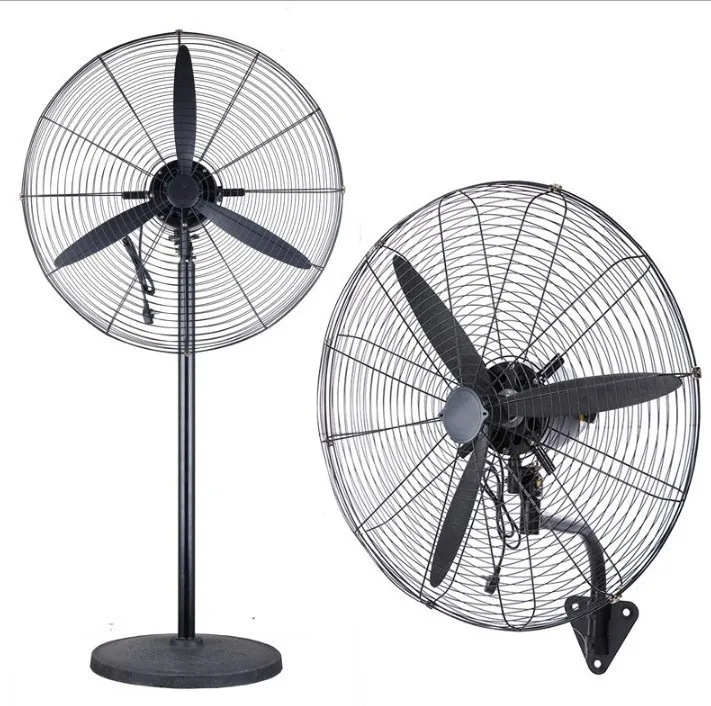
Pedestal fans stand on a pole with a tilting head, so the airflow can be aimed at people rather than at the room. They cost slightly more than floor fans for the same blade diameter because of the stand and the extra height, and they sell well wherever customers expect to direct the air.
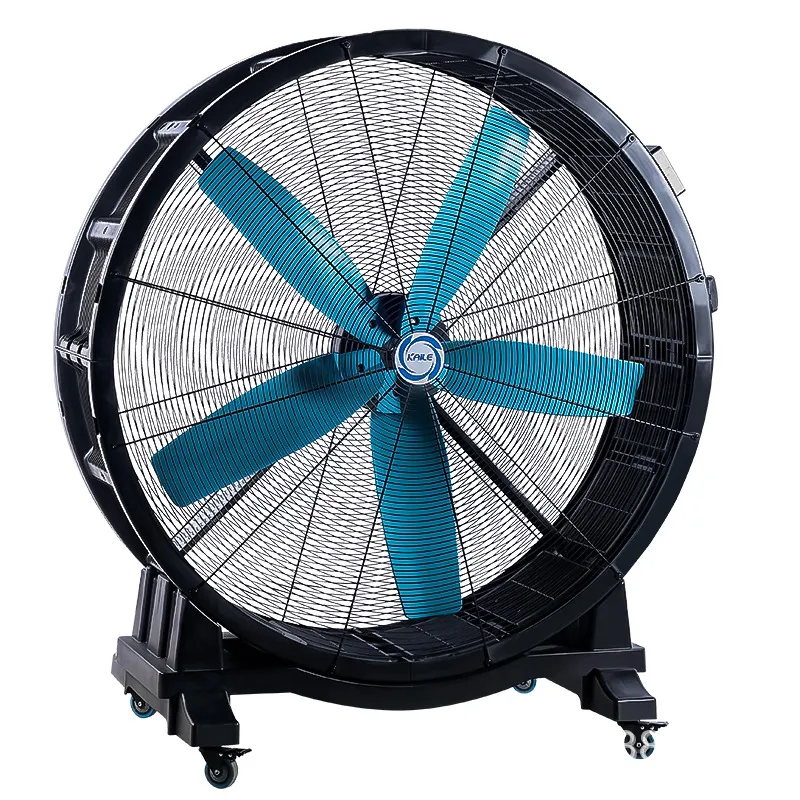
Drum fans use a cylindrical housing and a large blade to move a very high volume of air at low pressure. They are the workhorse of workshops, warehouses and garages. If your market includes industrial end users, drum fans are the type that carries the highest unit value.
Industrial ceiling fans and HVLS fans are the large-diameter, low-speed units used in factories, logistics hubs and agricultural buildings. They are a different business from portable fans: unit counts are small, engineering support matters more than price, and the buying process is project-based rather than catalog-based.
Wall-mounted fans save floor space and are common in workshops, kitchens and livestock buildings where a floor fan would be in the way.
Air membrane blowers are the specialist units used to keep inflatable structures — tents, domes, advertising shapes — pressurized. They are a niche with very little competition and steady repeat demand from event and rental businesses.
Solar and battery fans matter in markets with unreliable grid supply or outdoor use cases. They carry a higher unit price and a higher return risk, because battery quality is hard to inspect and easy to under-specify.
Fan type | Typical size | Best-fit markets | Typical end use |
|---|---|---|---|
Floor fan | 16–20 in | Brazil, Peru, Argentina, Philippines | Homes, shops, small workshops |
Pedestal fan | 16–30 in | Global, strong in warm climates | Homes, restaurants, offices |
Drum fan | 20–36 in | US, Europe, Middle East | Workshops, warehouses, garages |
Industrial ceiling / HVLS | 2.5–7.3 m | Industrial projects worldwide | Factories, logistics, agriculture |
Wall fan | 16–26 in | Southeast Asia, Africa, Latin America | Workshops, kitchens, livestock |
Air membrane blower | Continuous duty | Event, rental, advertising | Inflatable structures |
Solar / battery fan | 12–16 in | Off-grid markets, outdoor | Camping, rural households |
What "High Quality" Actually Means in Fan Construction
A fan has seven parts that decide whether it lasts three summers or ten: the motor winding, the motor type, the blades, the bearing system, the guard and housing, the magnets and silicon steel, and the control electronics. Every one of them has a cheap version and a durable version, and the difference is invisible from the outside.
Motor winding: copper versus aluminum
This is the single most common place where a cheap fan is made cheap. Copper has roughly 60% higher conductivity than aluminum. A copper-wound motor produces less heat for the same output, which means the insulation ages more slowly and the motor survives long duty cycles. An aluminum-wound motor has to be wound with a larger cross-section to carry the same current, so it is bulkier, runs hotter, and the winding terminals are more prone to oxidation and loosening over years of thermal cycling.
The practical test is weight and price. An aluminum motor of the same rated output is lighter, and a quotation that undercuts comparable factories by a wide margin on an otherwise identical spec is usually an aluminum quote. If the specification sheet does not state the winding material, that silence is itself information — ask for it in writing.
Motor type: permanent magnet versus induction
Permanent magnet synchronous motors (PMSM) use rare-earth magnets on the rotor, so there is no rotor current and no rotor loss. The result is higher efficiency, a smaller and lighter motor for the same output, and better torque at low speed. Induction motors are simpler, have no magnet cost, and are extremely well understood by every repair shop in the world.
For portable fans the choice is mostly a price decision. For larger units — especially HVLS fans and any fan running long hours — the efficiency difference turns into a real electricity saving, and the permanent magnet unit that costs more up front can be the cheaper fan over five years. Decide which one you are buying deliberately, because the two are often listed under the same product name.
Blades: metal versus plastic
Metal blades hold their shape under load and at high speed, resist warping in heat, and deliver a stable airflow figure over the life of the fan. Plastic blades are lighter, cheaper, and quieter at low speed, but they creep and deform under sustained heat and UV, which gradually changes the blade angle and quietly reduces airflow. In a hot-climate market where the fan runs eight hours a day, that degradation is not cosmetic — it is the product failing its only job.
The bearing system
Sealed ball bearings last far longer than oil-impregnated sleeve bearings, especially in dusty environments, and they tolerate the axial load that a tilted pedestal head puts on the shaft. Sleeve bearings are quieter when new and cheaper, and they are the reason a fan starts to rumble in year two. Ask which bearing type is used; a factory that builds for export will know the answer immediately.
Guard and housing: metal versus plastic
A metal guard carries a coating, and coated steel ages far more slowly than plastic. Plastic housings go brittle under UV and heat, crack at the mounting points, and cannot be repaired. This is the clearest visible difference between two fans at the same size and the same claimed airflow.
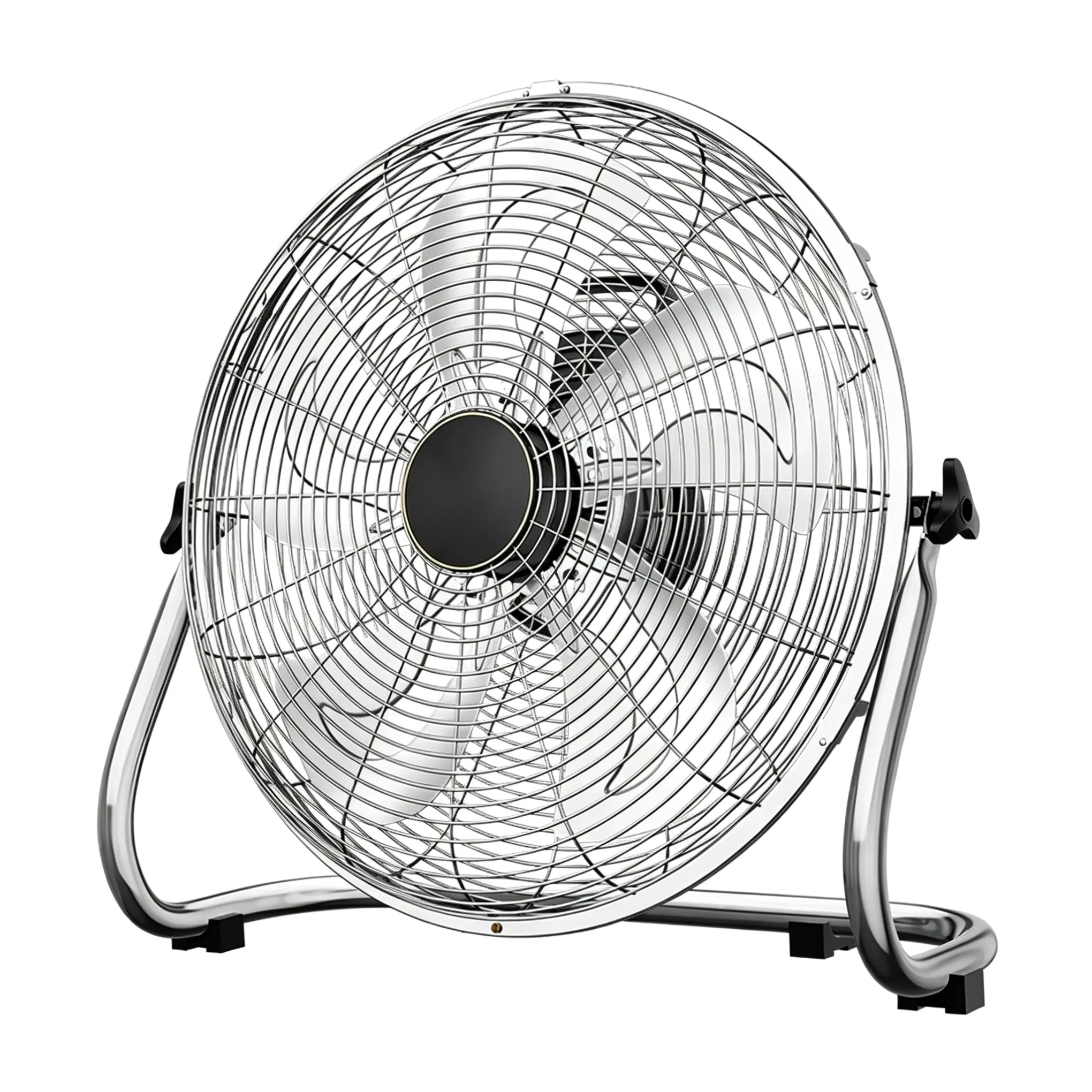
Take the 20-inch floor fan as the reference case. A 20-inch metal-guard floor fan outlasts a 20-inch all-plastic floor fan by a wide margin in any market with strong sun and long operating hours, because the plastic guard and housing are the parts that fail first. The metal unit costs more at the counter and less per year of service.
Item | Metal version | Plastic version | What it decides |
|---|---|---|---|
Guard | Coated steel, ages slowly | Brittle under UV, cracks | Safety and service life |
Housing | Coated steel, repairable | Cracks at mounting points | Structural life |
Blades | Stable blade angle | Creeps under heat | Airflow over time |
Weight | Heavier, more stable | Lighter, easier to tip | Stability at high speed |
Unit price | Higher | Lower | Purchase cost |
Cost per year of use | Lower | Higher | Real cost |
Magnets, silicon steel and the control board
Inside the motor, magnet grade and lamination thickness decide efficiency and heat. Thinner silicon steel laminations reduce eddy-current loss; lower-grade magnets lose strength faster at high temperature. On the electronics side, the control chip and the capacitor quality decide whether the fan survives voltage swings — a real problem in markets where the grid is unstable. These are the parts a buyer cannot see, which is exactly why the supplier's willingness to document them is a useful signal.
The pole and the base
On pedestal fans, tube wall thickness and base weight decide whether the fan stays where it is put. A thin pole flexes and eventually cracks at the joint; a light base lets the fan walk across the floor at high speed. Neither shows up in a specification table, and both are common cost-cutting targets.
Price Is Not the Purchase Price: Total Cost of Ownership
Fan price tracks material content almost linearly. That makes cheap fans easy to find and easy to regret, because the purchase price is only the first line of the cost sheet. The number that decides whether an import order made money is total cost of ownership — purchase price plus failure rate times after-sales cost, plus returns, plus the customers who do not come back.
The comparison is easiest to see in the same product family. An 18-inch metal industrial floor fan costs more than a plastic equivalent at the same size. It also lasts substantially longer under daily use. Spread the two prices over the years each fan actually serves and the metal unit comes out cheaper per year, before counting the labor, freight and reputation cost of handling warranty claims on the plastic one.
Cost line | Metal fan | Plastic fan | Note |
|---|---|---|---|
Purchase price | Higher | Lower | The only line most buyers compare |
Expected service life | Longer | Shorter | Driven by guard, housing, blade stability |
Failures per 1,000 units | Lower | Higher | Shows up as returns and claims |
After-sales handling | Less | More | Labor and freight usually not budgeted |
Repeat order rate | Higher | Lower | The cost that never appears on an invoice |
Market positioning changes the calculation, and it should. Brazil and Peru are price-driven markets where a large share of buyers want the lowest workable cost, which is why plastic floor fans and plastic table fans sell well there and why a metal-only catalog underperforms. That is not an argument for shipping poor quality — it is an argument for matching the build to the market instead of applying one standard everywhere. The mistake is buying plastic construction at a metal price, or metal construction for a market that will not pay for it.
How to Vet a Chinese Fan Manufacturer
Search for a China fan manufacturer and you will get thousands of results, and most of them are trading companies with a catalog. That is not automatically bad — a good trading company can consolidate a mixed order efficiently — but you need to know which one you are dealing with, because it decides who is accountable when a batch fails.
Does the factory actually build the fan?
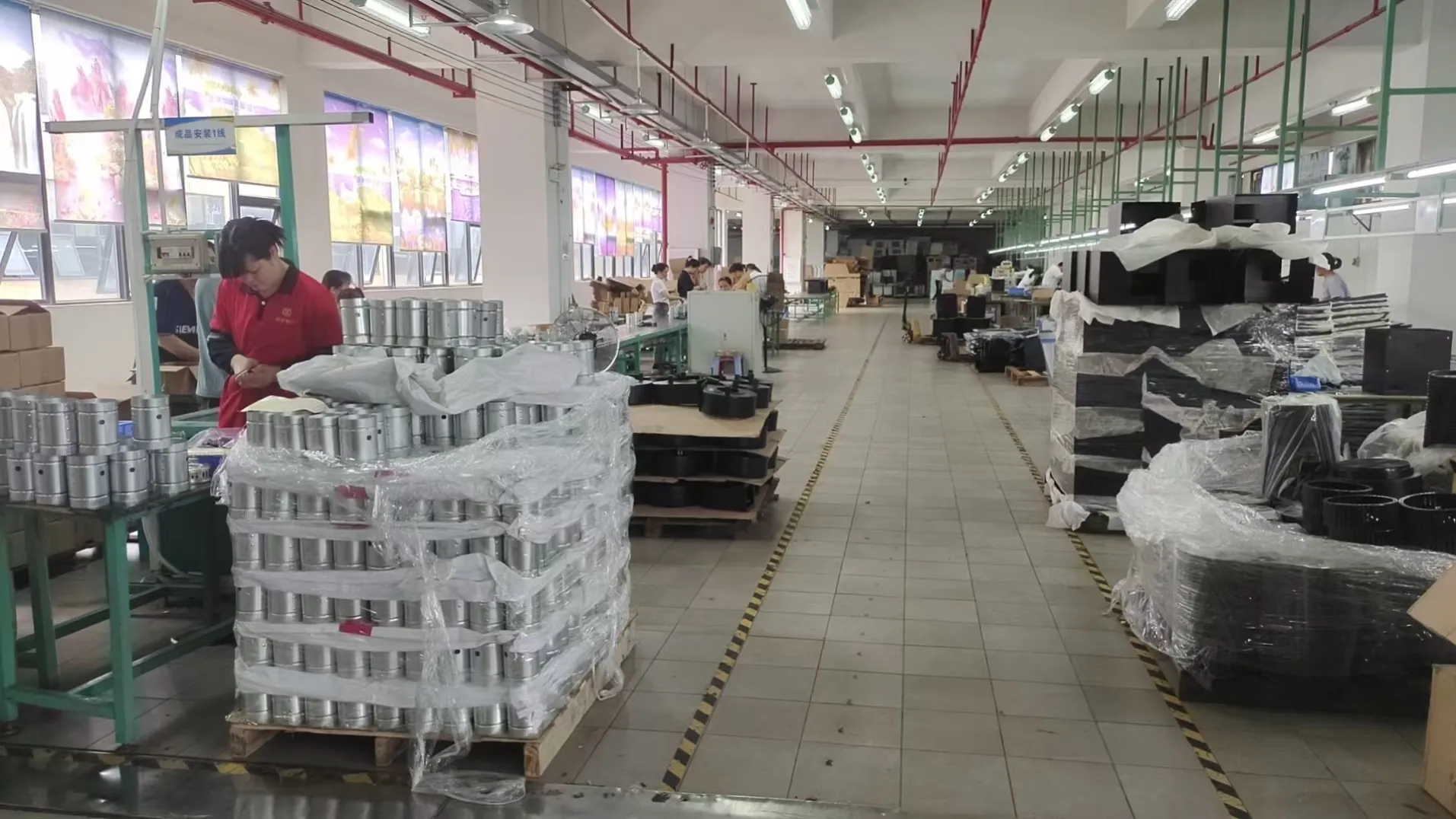
A manufacturer with real production depth controls these stages in-house:
- Component preparation and incoming inspection — motors, blades, guards, bases and electronics checked before assembly, not after.
- Motor assembly — including automatic winding machines for the coil. Hand-winding at volume is a quality-variance signal.
- Controller and electronics assembly — the control board fitted and tested as a unit.
- Final assembly — the fan built, balanced and adjusted.
- Aging test — every unit or a defined sample run under load before packing.
The deeper a supplier's control over raw material and component production, the more control it has over both cost and quality. A factory that winds its own motors can tell you what copper weight went into a unit. A trading company cannot.
Can they build to your sample?
Sample-based customization is the difference between buying a catalog item and building a product line. A factory that supports 来样设计 — build-to-sample — can match a target fan's airflow, noise, control behavior and appearance, and can add functions your market needs. Ask what they have customized before, and ask for the specific change rather than a general claim.
Do they have real private-label cases?
If you intend to sell under your own brand, ask for evidence of fans already produced for other brands: packaging with a brand on it, a model list, photographs of a production run. Factories that do private label will have this and will show it. Factories that only trade will describe it in the abstract.
Check | What good looks like | Red flag |
|---|---|---|
Winding | In-house, automatic winding machines | Cannot state copper weight |
Aging test | Defined duration, records kept | "We test every unit" with no record |
Build-to-sample | Can quote against your sample | Only offers catalog models |
Private label | Photos, model list, packaging | Describes capability without evidence |
Incoming inspection | Documented, rejects recorded | Inspects only finished goods |
Factory tour | Welcomes video or visit | Redirects every question to sales |
Quality Assurance and After-Sales
Quality inspection is a process, not a certificate on a wall. What you want to confirm is that inspection happens at defined points — incoming components, in-process assembly, and finished goods — and that the factory keeps records you can ask to see. A factory that can produce an inspection record for a specific batch is a factory that inspects.
After-sales is the second half. Confirm the warranty period in writing, what it covers and what it excludes, and who bears the freight on a warranty replacement. On a first order, the practical question is simpler: what is the spare-part policy? Fans fail at the switch, the capacitor and the bearing far more often than at the motor. A supplier who will ship a carton of spares with the container solves most of your after-sales problem before it starts, at trivial cost.
Certifications: What CE Really Proves
Importers often treat CE certification as a quality guarantee. It is not, and the misunderstanding causes real losses, because a fan can carry a valid CE mark and still be a fan that fails in year two.
CE certification for a fan rests mainly on two directives:
- LVD (Low Voltage Directive) tests electrical safety — insulation, dielectric withstand, fire resistance. It confirms the product will not electrocute the user or catch fire in normal use.
- EMC (Electromagnetic Compatibility) tests electromagnetic interference — that the fan is not disturbed by other appliances, and does not disturb them.
Both are compliance thresholds. They answer "is this product legal to sell and safe to plug in?" They do not answer "will this motor still be running in three years?" A compliant fan and a durable fan are two different claims, and only one of them is tested by a lab.
What the certificate proves | What it does not prove |
|---|---|
Electrical safety under LVD | Motor service life |
Dielectric withstand and insulation | Winding material (copper vs aluminum) |
Fire resistance of materials | Bearing quality |
EMC — emissions and immunity | Blade and housing durability |
Legal market access | Actual airflow after two summers |
Where quality actually shows up is thermal protection inside the motor. There are three grades, and the difference matters more than any label:
- No thermal protector. The motor has nothing to stop it overheating. This is the cheapest build and the one that fails by burning out.
- One-shot thermal fuse. It opens once at a set temperature and the motor is dead — functional protection, but the fan is scrap.
- Resettable thermal protector. It opens when the winding exceeds its design temperature and closes again once the motor cools. The fan keeps working. This is the build to specify.
Motor temperature rise is also regulated by market. Brazil requires temperature rise below 85 K; the European market requires below 80 K. A supplier who knows these numbers without looking them up is a supplier who builds for export. A supplier who has never heard of them is building for the domestic market and hoping you will not check.
Packaging and Container Loading
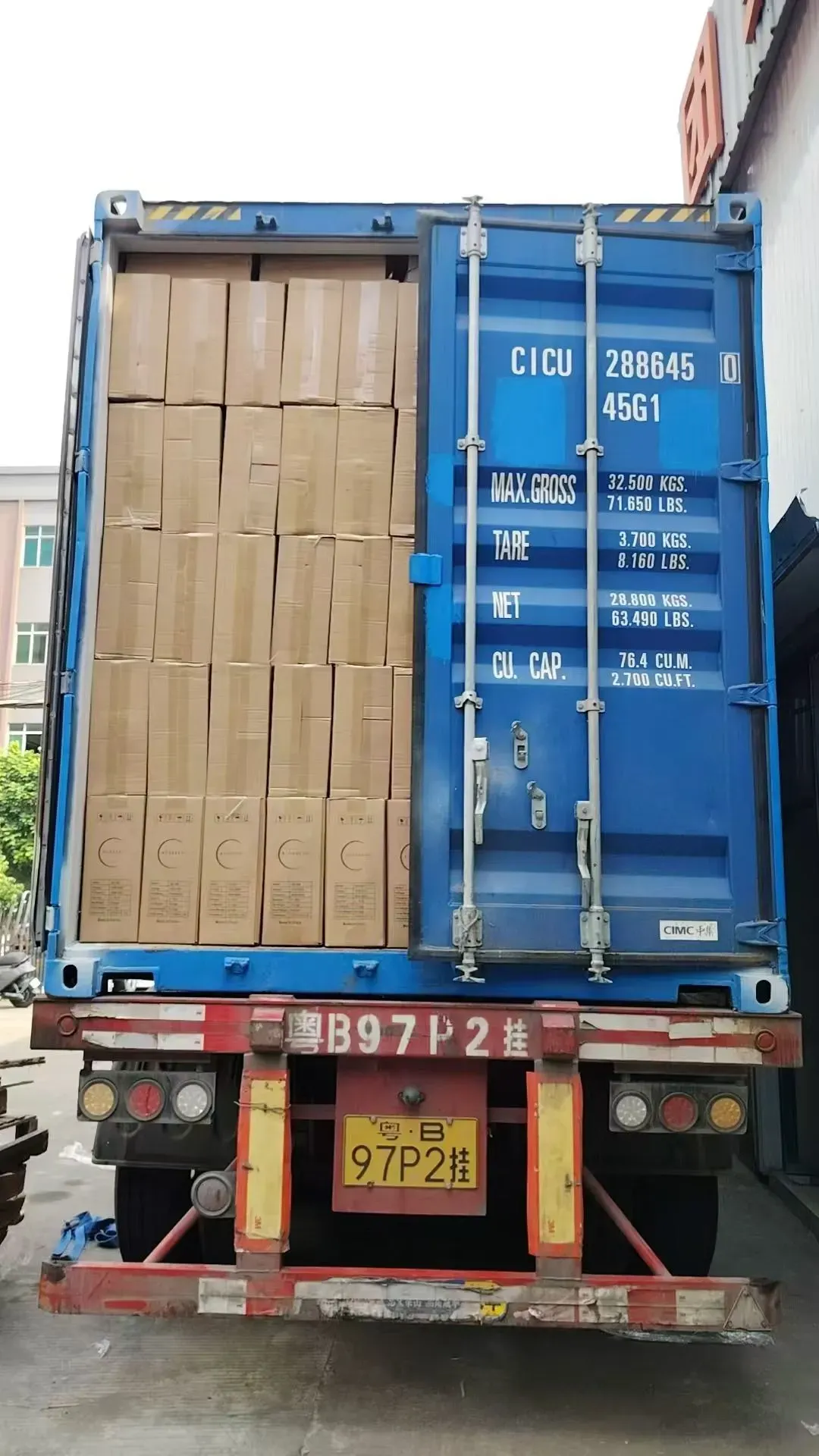
Bulk fan orders ship by container, and the reason is arithmetic: ocean freight is charged per container, not per fan, so the more units fit in a 40HQ the lower the freight cost on every unit you sell. Packaging design and carton configuration therefore change your landed cost as much as the unit price does.
Fans ship in cartons, and the carton configuration — how many units per carton — changes how many cartons fit in the container. The same fan in a 6-pack carton and a 4-pack carton loads very differently.
Product | Carton configuration | 40HQ loading quantity (approx.) |
|---|---|---|
16-inch pedestal fan | 6 units per carton | 3,200 units |
16-inch pedestal fan | 4 units per carton | 3,500–3,800 units |
20-inch floor fan | Standard export carton | 1,000 units |
18-inch floor fan | Standard export carton | 1,500 units |
Two things follow from this table. First, ask for the loading quantity in writing before you compare quotations — two factories quoting the same unit price can differ by 15% on landed cost because of carton design alone. Second, smaller fans load far more densely than larger ones, which is why an 18-inch floor fan can be the more profitable line in a price-sensitive market even though its unit price is lower.
Mixed container loading is worth asking about. If you carry both floor fans and pedestal fans, a supplier who will build a mixed container lets you test several models on one freight bill instead of committing a full container to a single SKU.
Frequently Asked Questions
What is the MOQ for fans from China? Around 500 units for most portable fan types, depending on the model and the customization. Industrial ceiling fans and HVLS fans are project products and start much lower — typically 10 units.
What is the production lead time? Around 45 days for a standard container order from a Chinese fan factory. Customized models, new tooling or a new controller design add to that lead time, so confirm the schedule before you commit to a retail launch date.
When should I place an order? The practical window is October to December. Production takes about six weeks, ocean freight about two months, and after customs clearance the goods are ready to distribute in January or February — ahead of the hot season in most target markets. Ordering in spring means paying for air freight or missing the season.
Who buys fans in bulk from China? Home appliance distributors, including online sellers on Amazon and offline retail suppliers such as Walmart vendors; industrial ventilation equipment distributors and system integrators; and companies buying for their own facilities. Each needs a different mix of models, documentation and customization.
How do I check quality before the container ships? Inspect at the factory before loading, not on arrival. Check winding material, bearing type, thermal protector grade, guard and housing material, and run an aging sample. Confirm the loading quantity and carton count against the packing list at the same visit.
Is a cheaper quotation worth switching suppliers for? Only after you know what was removed to get there. The usual places a fan is made cheaper are winding material, bearing type, thermal protection, guard thickness and blade material. Ask which of those changed, and price the answer into your after-sales cost.
Conclusion
Importing high-quality fans from China is a specification problem before it is a price problem. The fans that fail in the field are not usually counterfeit — they are legitimate products built to a lower specification than the buyer assumed, and the gap sits in the winding, the bearing, the thermal protector and the guard material, none of which appear in a product photo.
Work the checks in order. If you import fans from China for the first time, start by deciding the fan type your market actually needs. Specify the construction — copper winding, resettable thermal protection, metal guard where duty is heavy, and the motor type that matches your price point. Verify that the factory builds the fan rather than resells it, and ask for evidence of private-label work. Treat CE as a compliance floor and test for durability separately. Then compare quotations on landed cost per container rather than unit price.
Do that, and the cheapest fan stops being the one with the lowest number on the quotation. For the industrial end of the range, our HVLS fan selection guide covers sizing and motor choice in more depth, and the industrial ceiling fan range shows the specifications in full. If your line is portable fans, the floor fan and pedestal fan ranges cover the volume models, and this comparison of HVLS and floor fans explains where each type actually belongs.