Floor fan
How to Choose a Reliable Floor Fan Manufacturer 2027 | 6 Checks
Six checks for vetting a floor fan manufacturer in 2027: motor reports, price sanity, real certificates, QC flow, OEM references and airflow testing.
Quick answer: Vet a floor fan manufacturer on six points before placing an order: the motor (copper or aluminum winding, backed by a test report), a price that sits inside the normal market band, certificates you can actually verify, a documented QC flow from incoming material to aging test, OEM references from brands you recognize, and in-house airflow and noise testing equipment. Skip any one of these and the "saving" usually comes back as returns, customs problems or field failures.
Why Supplier Vetting Matters More Than Ever
Every summer, factories, warehouses, sports venues and livestock farms place large orders for cooling and ventilation equipment. Industrial floor fans win on total operating cost — far below evaporative coolers, central air conditioning or negative pressure systems — which is why they have become the default choice for workshops, logistics warehouses, gymnasiums and poultry operations.
The problem they solve is real. In summer peak, the perceived temperature inside a tall factory building routinely passes 40°C. Frontline productivity drops by more than 15%, and temperature- or humidity-sensitive production lines start seeing yield fluctuations and condensation faults in equipment.
Demand like that attracts bad supply. Price dumping, substituted components, inflated specifications and forged certificates have all become routine, and buyers who get caught end up with industrial floor fans that fail in their first season. Knowing how to check a floor fan manufacturer is now a core procurement skill, not a nice-to-have.
First, Fix the Terminology
"Floor fan" covers several products, and suppliers quote them differently. Before comparing prices, agree on what you are buying.
Term | What it usually means | Typical size |
Floor fan / industrial floor fan | Low-profile fan that sits on the ground and tilts to aim | 14–20 in |
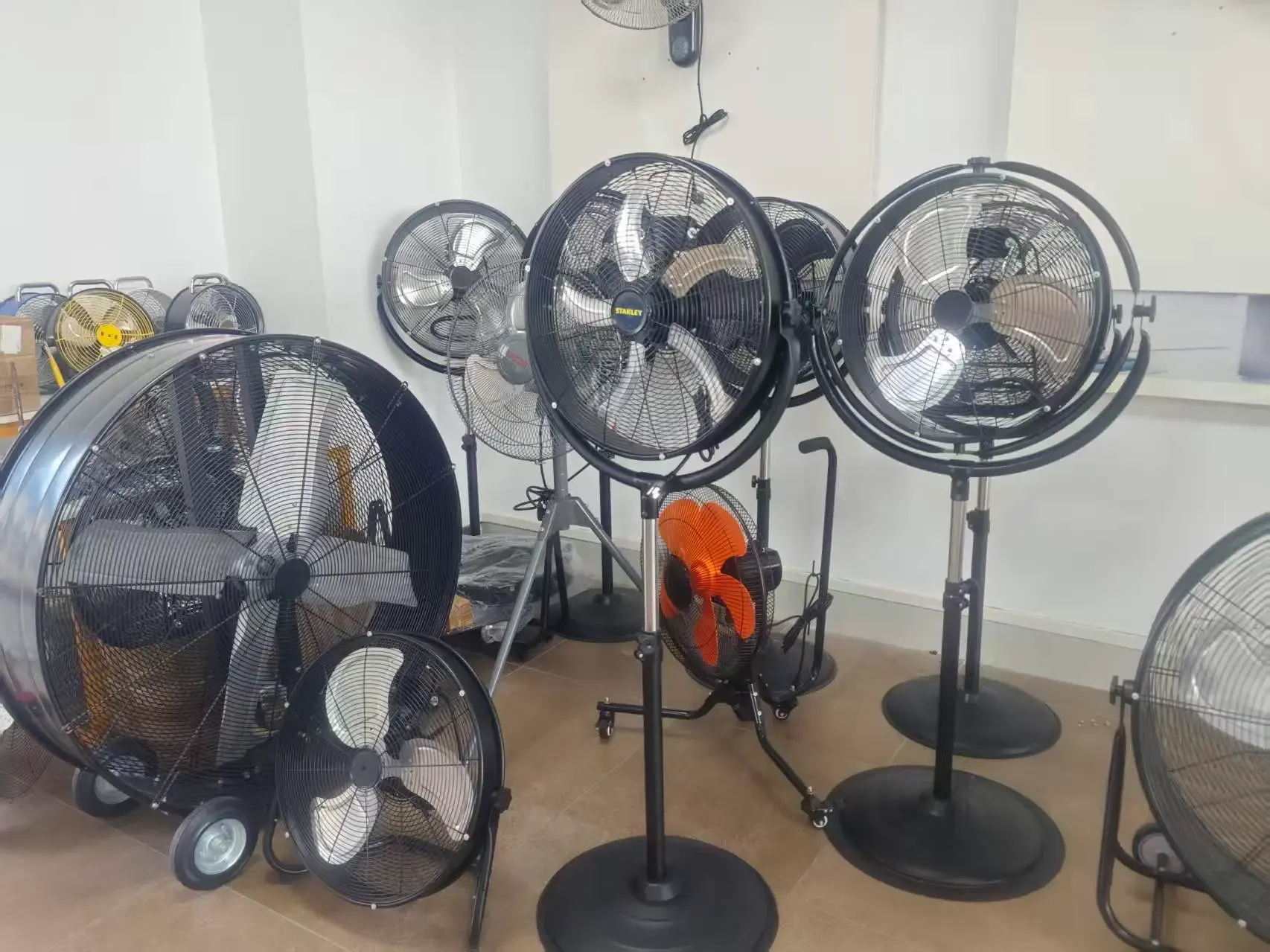
Drum fan / barrel fan | Cylindrical housing, high velocity, best for spot cooling and drying | 18–36 in |
Pedestal fan | Fan head on a stand, oscillating, delivers air from a higher point | 16–30 in |
Air mover / blower | Very directional, used for drying and ventilation | 12–20 in |
A floor fan manufacturer that also builds drum fans and pedestal fans will usually quote all three from the same motor platform. That matters later, when you need spare parts and consistent replacement units.
Six Sourcing Traps to Watch For
1. Motor substitution: aluminum winding sold as copper
The most common trap in the category. Aluminum winding has lower conductivity and poorer heat dissipation, so the motor runs hotter, loses torque and dies earlier — usually with abnormal noise or a seized rotor. Ask for the winding material in writing and for a motor test report, not a verbal assurance over a chat window.
2. Inflated performance figures
Airflow, static pressure and noise are often copied from a same-size competitor's datasheet without a single measurement being taken. The result is a floor fan that cannot cool the area it was specified for, or one that is far louder than the workplace noise limit allows.
3. Forged or borrowed certificates
Fake ISO documents, or UL and CE certificates that belong to a different model, are common. The consequence is not abstract: your shipment fails import review and you carry the customs risk.
4. No real QC process
If a factory has no incoming material inspection and no aging test before packing, batch consistency is luck. The first container may be fine. The third one will not be.
5. Cheap housing, guard and blade material
To hit a low price, some suppliers drop to thinner steel or lower-grade plastic in the housing, guard and blades. The fan becomes unstable at high speed and its service life drops sharply.
6. No large-project experience
A supplier with no record on high-specification projects will accept the order and only then discover the requirements. The buyer absorbs the loss.
The Six-Check Framework for Vetting a Floor Fan Manufacturer
Check 1: Motor type, winding and lifespan data
The motor is the core of fan quality. Confirm the winding material and winding type, then request the material inspection report plus the motor quality test report. Compare the motor's rated temperature rise and insulation class against the duty cycle you actually need — a continuous 12-hour shift is a different requirement from intermittent use.
Check 2: Price inside the normal market band
A price far below the market usually means downgraded material somewhere in the bill of materials. A price far above it may mean the supplier does not manufacture that series at all and is brokering it. Get two or three comparable quotes against the same specification sheet and see where each one lands.
Check 3: Certificate authenticity and completeness
Verify both management system certification and product certification, and confirm the certificate model numbers match the product you are buying. Prefer source manufacturers with a complete set — a system certificate alone does not prove a product is listed.
Sundream Fan holds ISO 9001 and ISO 14001 system certification, and its products carry UL, CUL, TUV, CE, CCC, RoHS and REACH certification. Its floor fans, pedestal fans, table fans, exhaust fans and kitchen range hoods ship to Europe, North America, Southeast Asia and Brazil.
Check 4: Full-process quality control
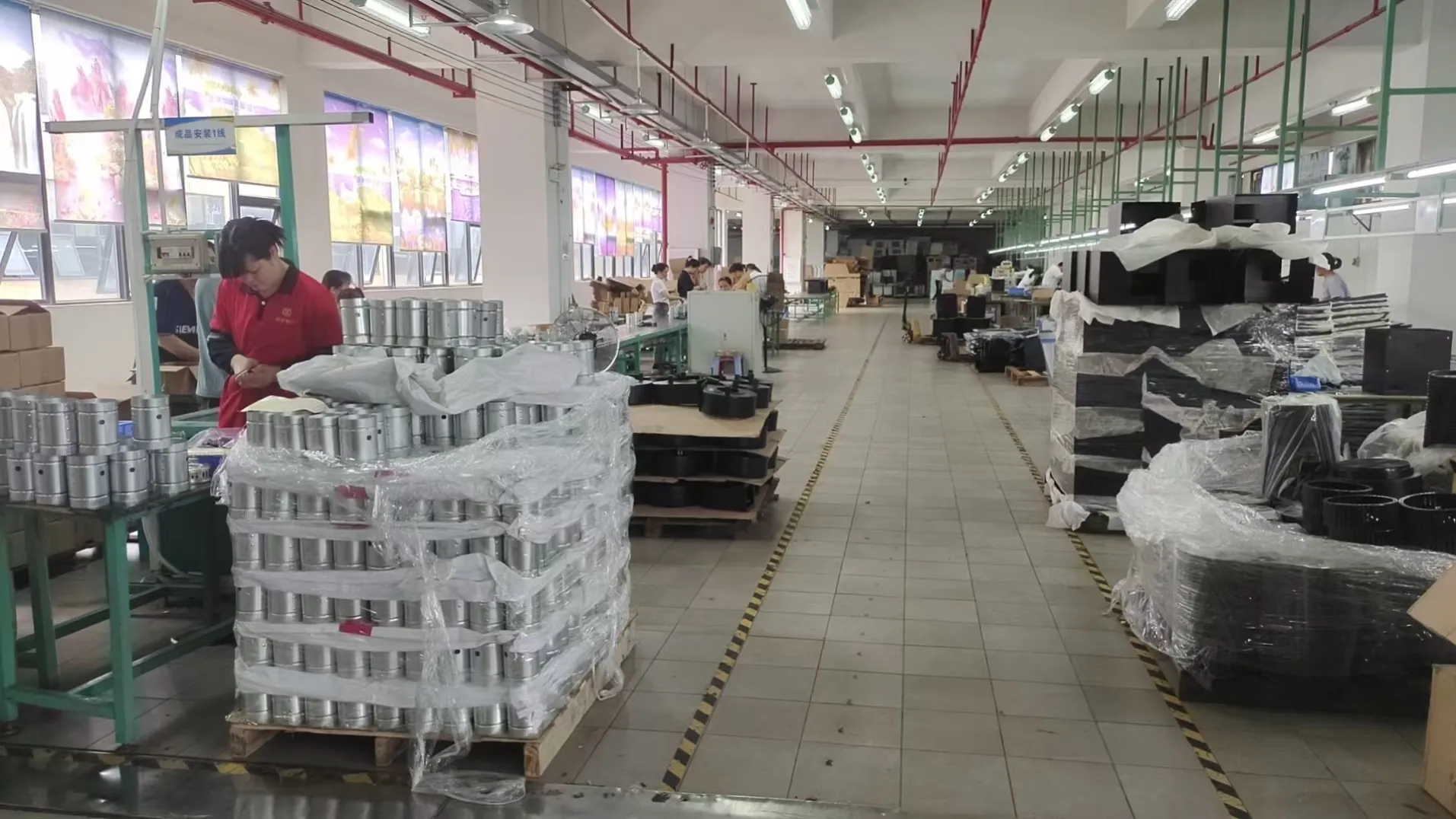
Ask for the QC flow in writing. A workable four-stage closed loop looks like this:
- IQC — incoming material inspection
- In-process — 100% inspection of semi-finished units
- Finished goods — 100% inspection before packing
- QA outbound — sampling inspection including an aging run
Any factory that cannot describe its own flow in these terms does not have one.
Check 5: Brand and project references
Ask which brands the factory has produced for. OEM experience is the fastest proxy for process discipline, because brand owners audit their suppliers far more aggressively than a one-off buyer can. Sundream Fan's floor fan and pedestal fan lines are sold through retail chains including Home Depot and Walmart — a channel that does not tolerate inconsistent quality.
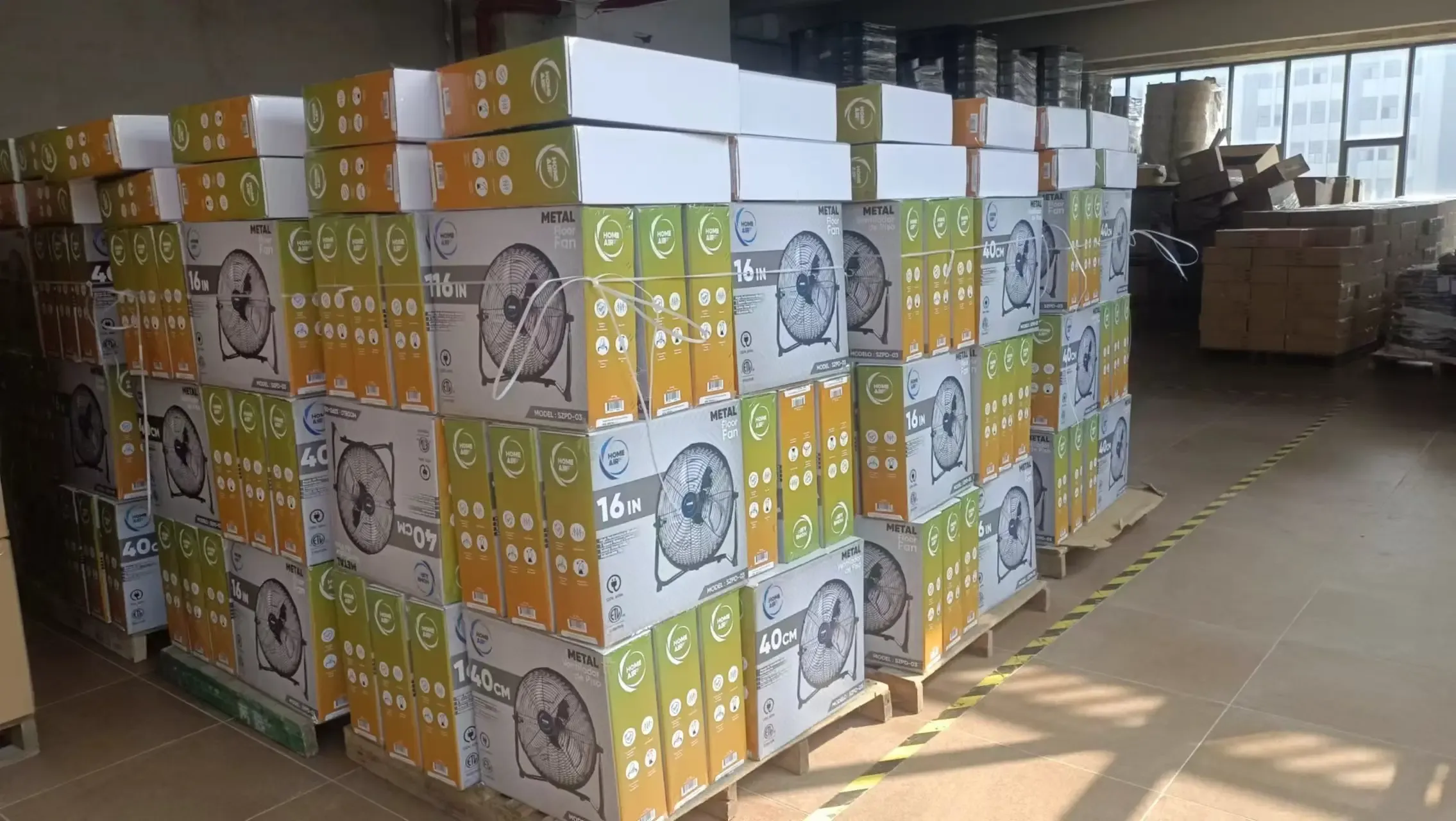
Check 6: In-house airflow and noise testing
A legitimate floor fan manufacturer owns airflow and noise test equipment. Every performance figure on the datasheet should come from a measurement, not from a competitor's catalogue. Ask about the test setup as well: chamber size, measuring distance, voltage and speed setting all change the number.
Receiving Inspection: The Last Gate
When the container arrives, do not sign it off on a visual check alone. Sample to standard, verify the key performance figures against the agreed specification, confirm the bearing model matches what was quoted, and run a short aging test on a few units. A bearing swap is one of the cheapest substitutions a supplier can make and one of the fastest ways to lose a fan in the field.
About Sundream Fan
Sundream Fan is a floor fan manufacturer and ventilation equipment supplier based in Zhongshan, Guangdong, China. The factory builds floor fans, drum fans, pedestal fans, table fans, exhaust fans and kitchen range hoods for household, commercial and industrial cooling.
| |
Location | Zhongshan, Guangdong, China |
Main products | Floor fans, drum fans, pedestal fans, table fans, exhaust fans, kitchen range hoods |
System certification | ISO 9001, ISO 14001 |
Product certification | UL, CUL, TUV, CE, CCC, RoHS, REACH |
Export markets | Europe, North America, Southeast Asia, Brazil |
Retail channel experience | Products supplied to Home Depot and Walmart lines |
Services | OEM and ODM, custom voltage / plug / speed configuration, packaging customization |
For a buyer, the practical value is not the certificate list itself. It is that a factory with this profile can answer the six checks above with documents instead of assurances — and that is the difference between a supplier and a middleman.

FAQ
How do I verify a copper winding without opening the motor?
Ask for the material inspection report and a motor test report at quotation stage, then confirm on a sample during receiving inspection. Winding resistance measured against the specification is a quick field check. A motor that runs noticeably hotter than a comparable unit at the same airflow is a warning sign.
Is a lower price ever acceptable?
Yes, if you can see where the cost came from. A smaller MOQ, simpler packaging or a standard color instead of a custom one are all legitimate savings. A quote that is 30% below every other offer on an identical specification sheet is not a saving — it is a specification change nobody told you about.
What MOQ should I expect for OEM floor fans?
It depends on the customization. Standard models with a custom carton can start low. A custom housing color, voltage, plug type or blade design pushes the MOQ up, because it requires a dedicated production run. Ask for the MOQ per configuration, not one blanket number.
Do I need UL or CE for my market?
UL or CUL for North America, CE for the EU and UKCA where applicable, CCC for China, and RoHS plus REACH for material compliance in Europe. Confirm the requirement for your destination before the order — retrofitting certification onto a finished production run is expensive and slow.
How long should a sample evaluation take?
Give it at least a week of intermittent running. Measure airflow and noise yourself if you can, check for vibration at maximum speed, and listen for bearing noise after several hours. Most motor problems show up within the first few days.
Conclusion
Choosing a floor fan manufacturer is a documentation exercise, not a negotiation exercise. Motor reports, certificate numbers that match the model, a QC flow you can name, brand references and real test equipment — a supplier that has all five will not be the cheapest quote you receive, and it will be the one that does not cost you a season.
Sundream Fan is a floor fan manufacturer building industrial floor fans, drum fans and pedestal fans in Zhongshan and supports OEM and ODM programs. Send us your specification, target market and annual volume, and we will come back with a configuration sheet and the test reports behind it.
Publishing Notes (do not publish)
URL slug:
/how-to-choose-floor-fan-manufacturer/Alternative:
/reliable-floor-fan-supplier-china/Meta title (58 chars): How to Choose a Reliable Floor Fan Manufacturer | 6 Checks
Meta description (149 chars): Six checks for vetting a floor fan manufacturer in 2027: motor reports, price sanity, real certificates, QC flow, OEM references and airflow testing.
Primary keyword: floor fan manufacturer
Secondary keywords: industrial floor fan · floor fan supplier · floor fan factory · China floor fan manufacturer · OEM floor fan · drum fan manufacturer · wholesale floor fans · high velocity floor fan · industrial fan manufacturer · custom floor fan
Keyword balance note: "floor fan" appears in the H1, the first 100 words, four H2s and the conclusion. The head term "floor fan manufacturer" appears 9 times across roughly 1,660 words (≈0.5% exact-match); "floor fan" in all forms appears 21 times (≈1.3%). "Drum fan" and "pedestal fan" are used as genuine product distinctions, not padding.
Internal links:
- "industrial floor fan selection guide" → the pedestal / floor fan selection guide article
- "pedestal fan" → pedestal fan product category
- "drum fan" → drum fan product category
- "exhaust fans" → exhaust fan category
- "OEM and ODM" → OEM/ODM service page
- "Sundream Fan" → about / manufacturer page
Image alt text:
Floor fan manufacturer quality checks – motor, certification and QC
Copper winding motor inspection at a floor fan factory in Zhongshan
100% finished goods inspection line for industrial floor fans
Airflow and noise test chamber for floor fan performance measurement
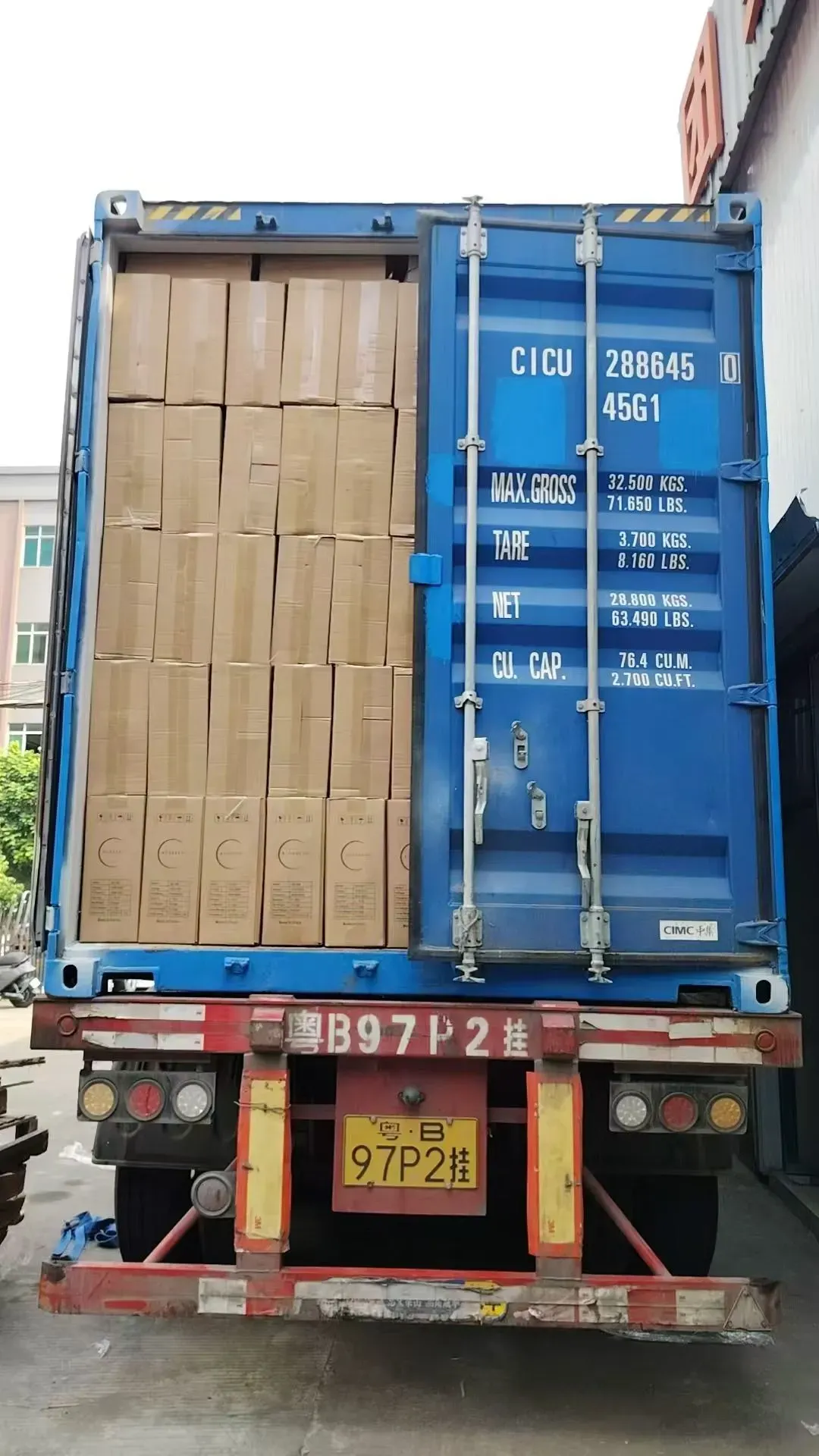
Industrial drum fans and floor fans ready for container loading
ISO 9001 and UL CE certified floor fan production workshop
Schema:
Article + FAQPage + Organization (factory profile block) + BreadcrumbListOn-page checklist: primary keyword in H1, first 100 words, at least three H2s and the meta title; keep density between 0.8% and 1.2%; the six-check list is a featured-snippet candidate; if the CMS supports gated content, a downloadable QC checklist is the natural lead magnet for this page.