Ceiling Fan
Wholesale Industrial Fans: 5 Best Sellers to Stock in 2026
Whosale Five fans to stock for Black Friday 2026: 18-inch drum and 3-in-1 fans, a 16-inch remote pedestal fan, a 650 mm horn-blade fan and a 7.3 m HVLS ceiling fan.
Quick answer: The five fans worth stocking for Black Friday 2026 are the 18-inch drum metal floor fan, the 18-inch 3-in-1 pedestal fan, the 16-inch household pedestal fan with remote (and its misting version), the 650 mm horn-blade fan, and the 7.3 m HVLS ceiling fan. They cover the whole buyer list: online marketplace sellers, appliance distributors, and ventilation integrators who install on site. Drum and 3-in-1 fans sell on price and portability, the horn-blade fan on durability, the HVLS fans on coverage per unit and energy saved.
Black Friday is close. Whether you distribute wholesale industrial fans, sell home appliances, or run an integration business that installs on site, these are the five models that should be on your purchase order this season. Every one of them is a current production model, and every one has a track record in a specific channel — which is the part that matters more than the spec sheet.
# | Product | Blade | Form | Best channel | What it wins on |
1 | 18-inch drum metal floor fan | 450 mm, 3 or 5 | Floor, tilting | Marketplaces, distribution, installers | Concentrated throw at a low unit cost |
2 | 18-inch 3-in-1 pedestal fan | 450 mm, 3 or 5 | Pedestal, wall or floor | Amazon-type platforms | One SKU that covers three listings |
3 | 16-inch pedestal fan with remote | 400 mm, 5 | Pedestal, telescopic | Home appliance retail | Remote, 2.5 m cord, misting option |
4 | 650 mm horn-blade fan | 650 mm, 3 | Pedestal or wall | Industrial distribution | Durability and replacement demand |
5 | HVLS ceiling fan, 7.3 m | 7.3 m, 5 | Ceiling | Integrators and projects | Coverage per unit and energy saved |
1. 18-Inch Drum Metal Floor Fan
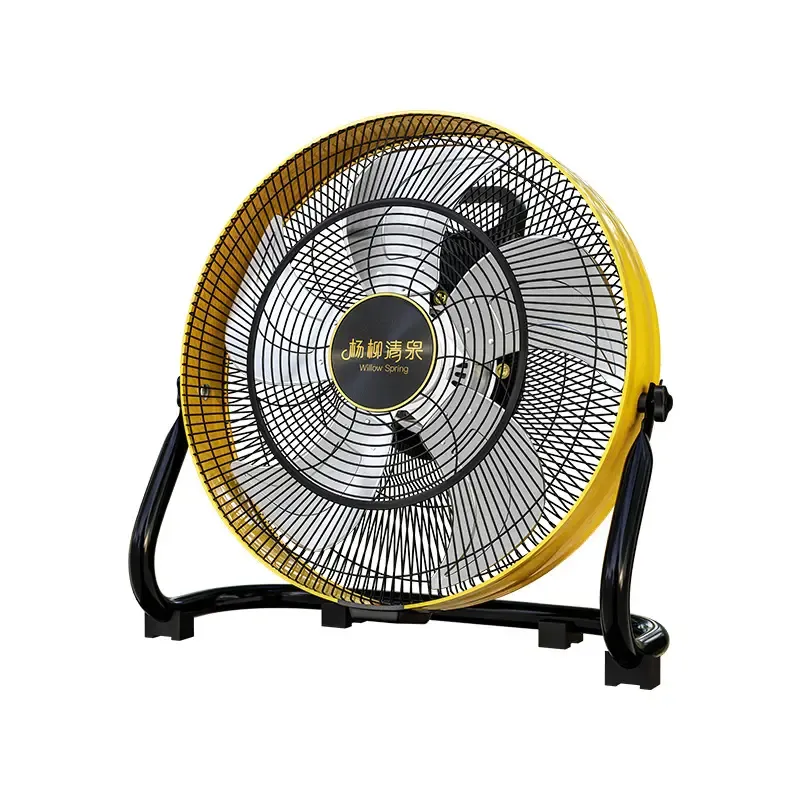
Blade: 450 mm (18 inch), 3 or 5 blades. Built for: industrial cooling, home and commercial use.
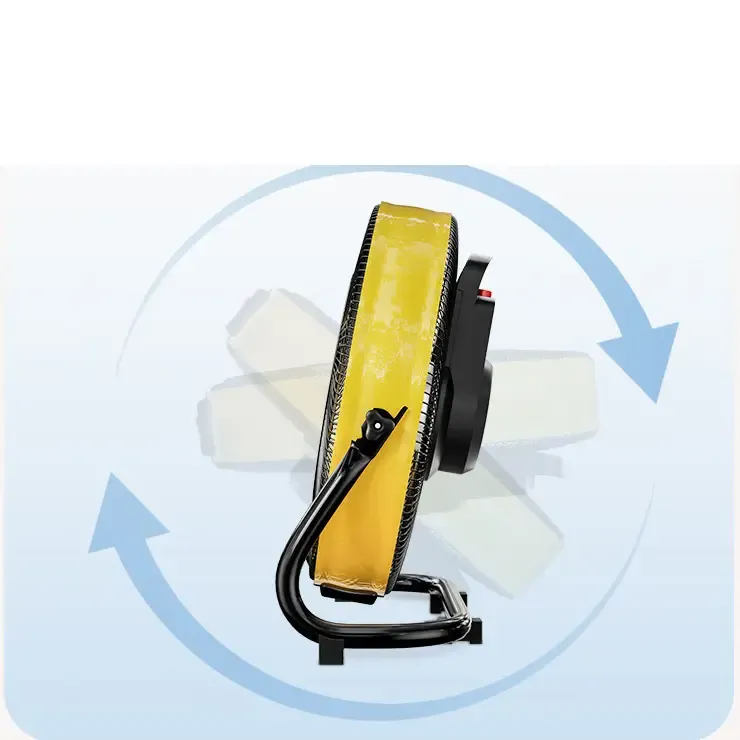
Aluminum blades, a metal blade guard, a thin barrel-shaped body, and an adjustable tilt angle.
The barrel housing is the whole point. A cylindrical duct pressurises the airflow, so the air comes out concentrated instead of spreading — it reaches further than a conventional floor fan of the same power. That is why this shape has largely replaced the older flat metal floor fan: same motor, more useful throw.
This is the volume model, and it is the entry point to the drum fan range. It suits platform sales, offline distribution, and integrator installation, because it is cheap to ship, easy to display, and needs no explanation at the point of sale.
2. 18-Inch 3-in-1 Pedestal Fan
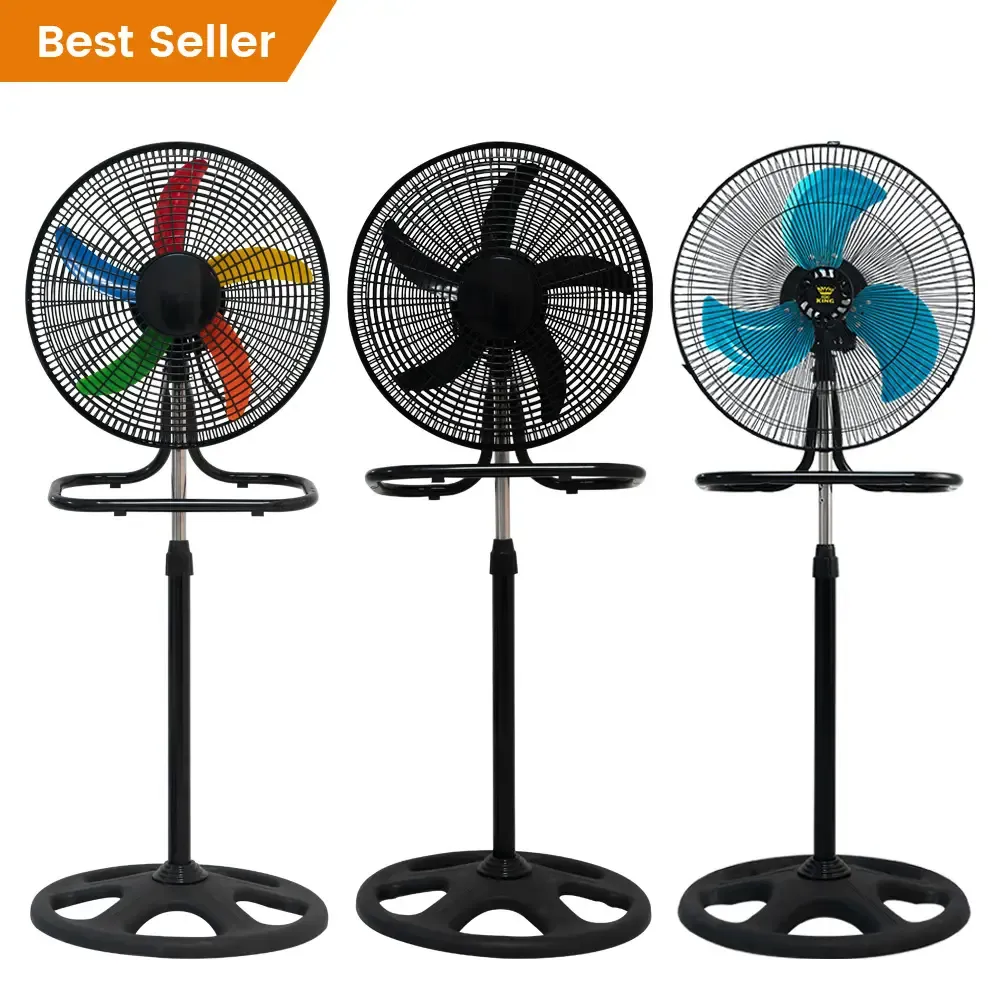
Blade: 450 mm (18 inch), 3 or 5 blades. Built for: industrial and commercial use.
One machine, three configurations: pedestal fan, wall fan, and floor fan. The head detaches and the legs come off, which is what makes the third configuration possible.
This is the best seller on Amazon and similar platforms, and it is popular with buyers in Argentina, Brazil, North America and Europe — markets where a single SKU that covers three listings is worth more than three SKUs that each cover one. 120° oscillation and 30° tilt give a wide delivery angle from one position.
If you are still working out which configuration your market will actually use, the pedestal fan vs wall mount fan comparison covers the mounting height and coverage difference between the two.
Bulk orders are welcome, and we customise. The plastic 3-in-1 version is the one to ask about if your market is price-sensitive or if the end user has to carry the fan between rooms: same three configurations, much lower weight, easier to move.
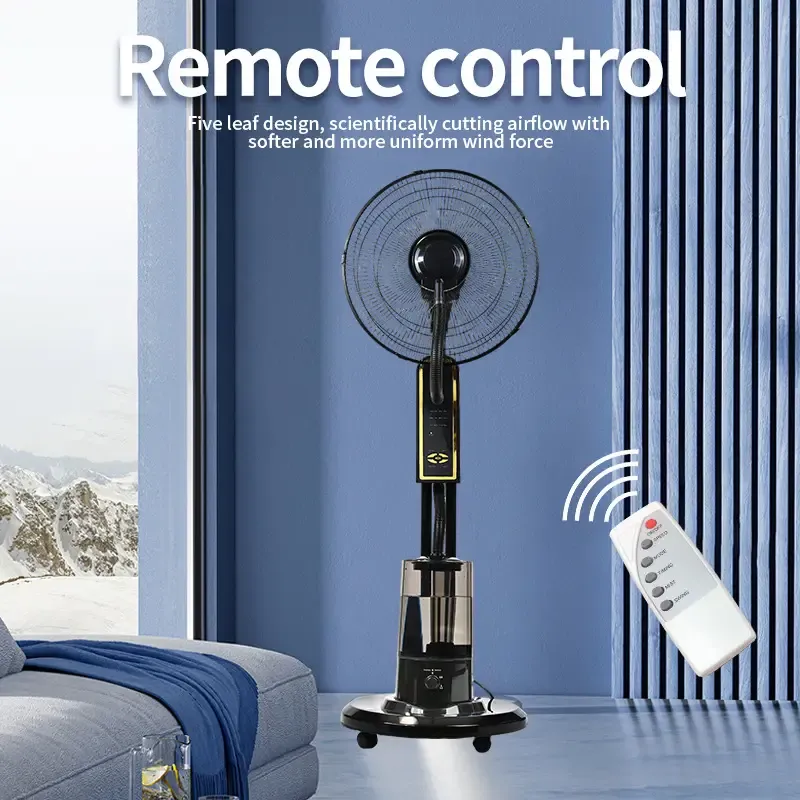
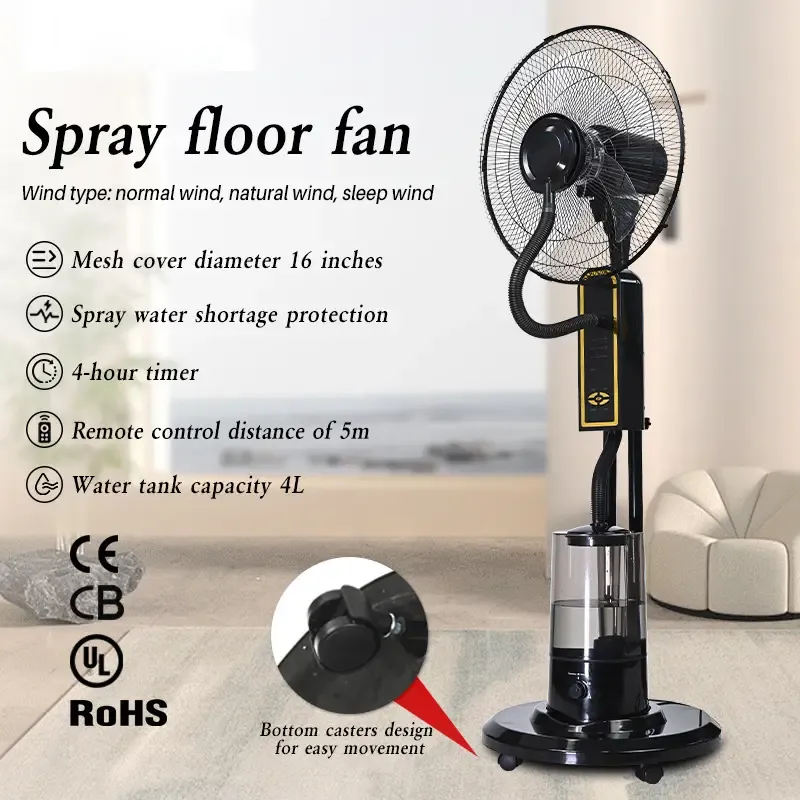
3. 16-Inch Household Oscillating Pedestal Fan with Remote
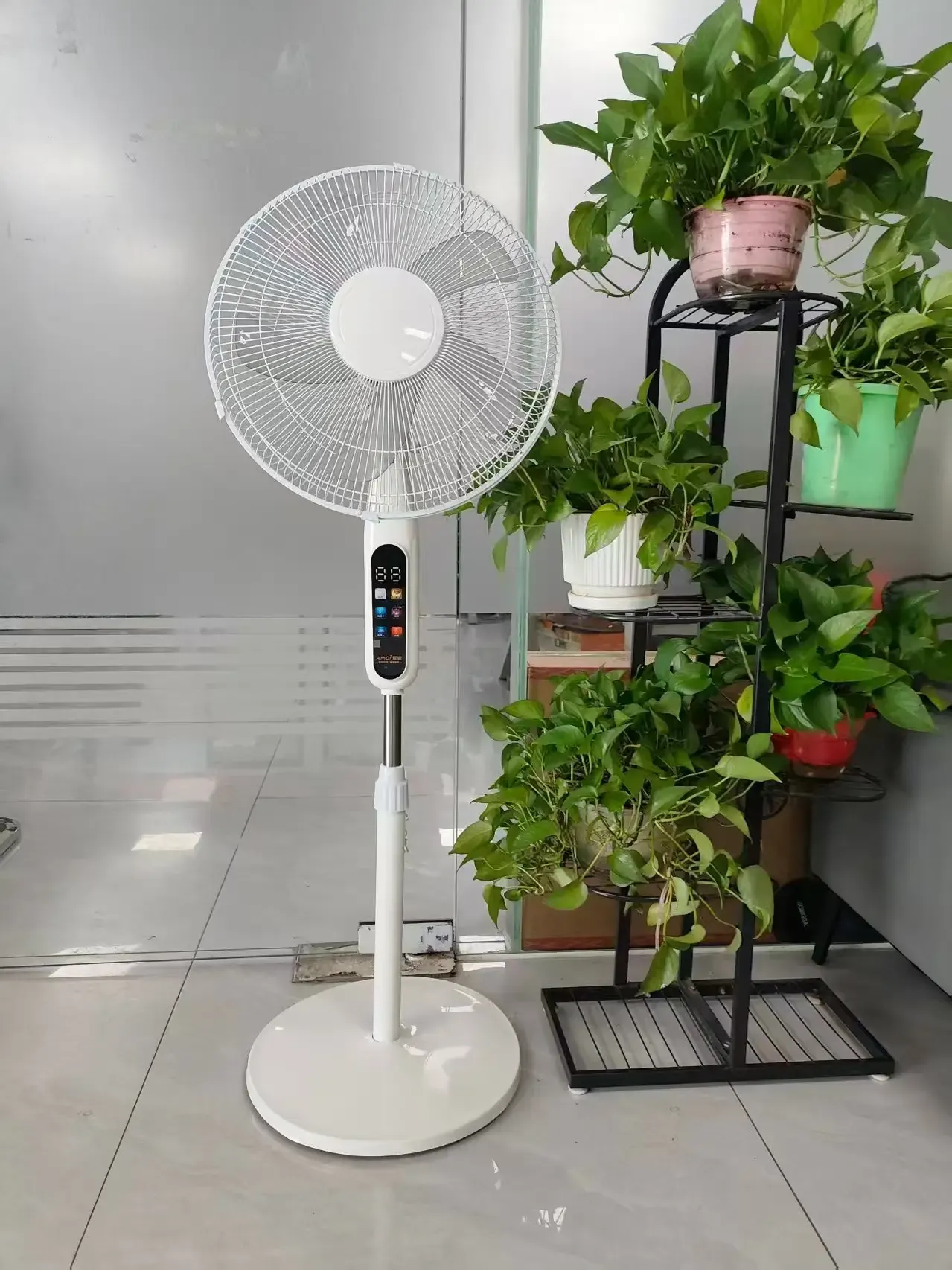
Blade: 400 mm (16 inch), 5 blades. Built for: home use.
A remote-controlled oscillating stand fan is one of the steadiest sellers in the home appliance category, and the spec is what carries it: 3–5 m remote range, a telescopic pole, and a large control panel display. Inside there is a pure copper motor and aluminum blades, with a 2.5 m power cord — longer than the 1.5 m most household fans ship with, which matters in a room where the socket is never where you want it. 85° automatic oscillation and 30° manual tilt adjustment.
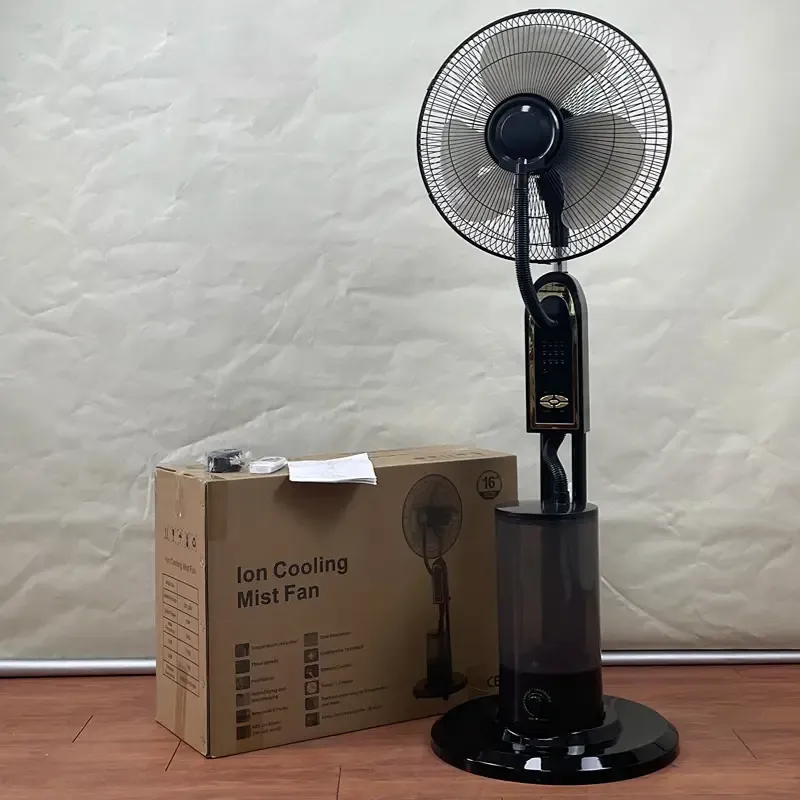
The misting version
The misting pedestal fan is the same platform with a misting function and a large water tank added. It moves air and drops the temperature at the same time, and the domestic pitch is aimed at people who want to avoid air-conditioning sickness — the dry throat and the fatigue that come from sitting in cooled, dehumidified air all day. That is also why it is sold as a cheaper alternative to an expensive air conditioner.
The market for this one is bigger than the market for industrial misting fans, because it is a product every household wants to buy in a hot summer rather than a product only a factory buys. If you are looking for a household misting fan manufacturer, ask us — it is the same production line as the fan above.
4. 650 mm Horn-Blade Fan, Pedestal or Wall
Blade: 650 mm (26 inch), 3 blades. Built for: industrial cooling, farms, warehouses, factories, workshops.
A high-power oscillating fan with a thick, coarse-wire blade guard, a ball-bearing motor, and a 3 m power cord. The deep-curved horn blades are what give it the airflow, and the heavy guard is what survives being knocked about in a workshop.
The dual-use part is the useful part: it ships as a pedestal fan but mounts on a wall as a wall fan, which raises the delivery height without buying a second product. In a warehouse or a livestock shed, air delivered at 2.5 m does a different job from air delivered at floor level.
This is the most durable of the five, and the one with the most stable long-run sales — it is not a seasonal impulse buy, it is a replacement purchase. That is the profile you want in a stock item.
A note on the domestic listing: in China it is also marketed for formaldehyde removal. The mechanism is dilution by continuous air exchange, not filtration, so if you repeat that claim in a regulated market, describe it as ventilation rather than as removal.
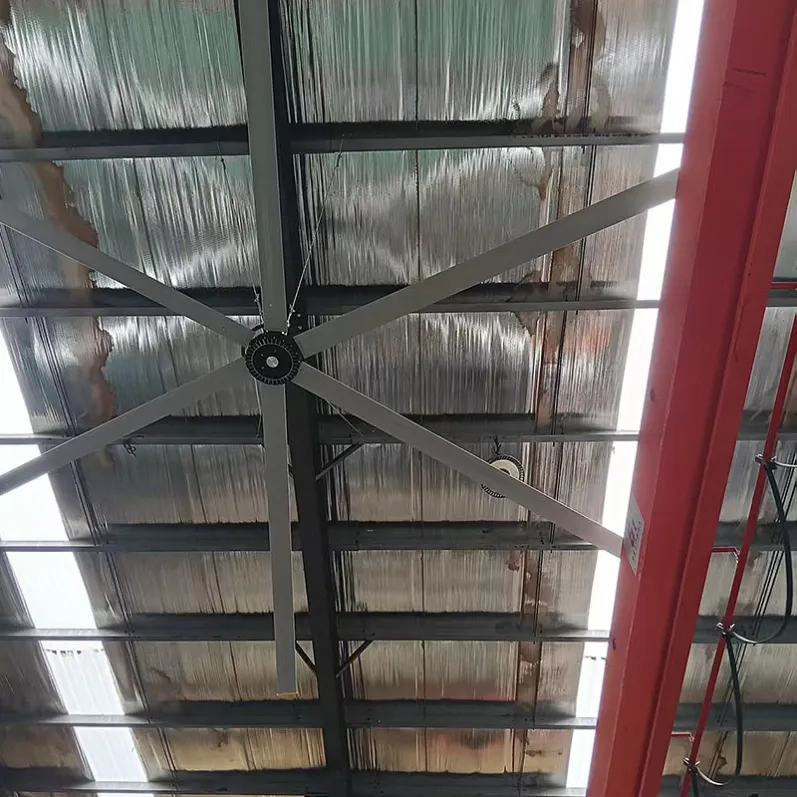
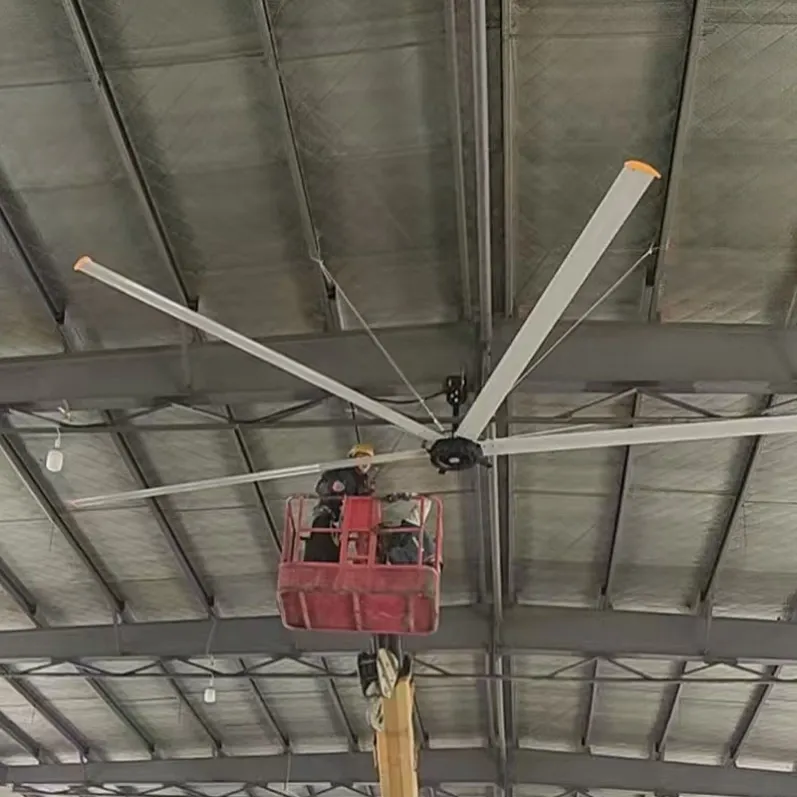
5. 7.3 m HVLS Ceiling Fan
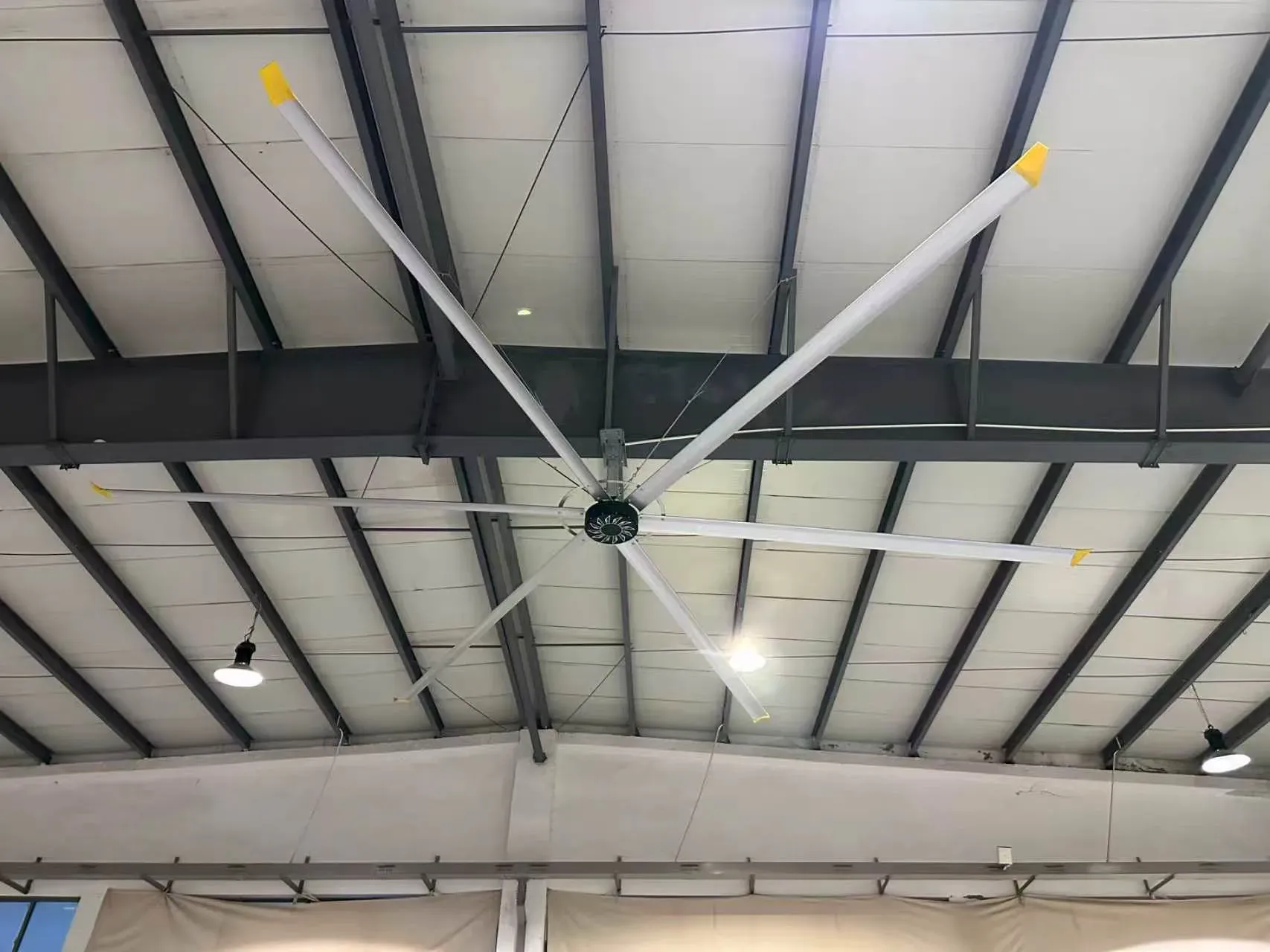
Blades: 5, silver. Built for: industrial buildings, livestock sheds, gyms, warehouses — high-clearance spaces above all.
These are large-diameter, low-speed ceiling fans, and the technology behind them is the reason they sell:
- A permanent magnet motor cuts energy consumption, dissipates heat efficiently, and gives a long service life.
- The outer rotor design runs at low speed with high torque, so the load capacity is stronger and transmission efficiency is higher.
- The housing uses high-performance magnetic steel, which strengthens the magnetic field and improves how much energy the fan saves.
The HVLS ceiling fan range is built around this diameter, and it is the unit that makes HVLS worth the installation in a tall building.
Parameter | Value |
Fan diameter | 7,300 mm |
Blades | 5, silver |
Rated power | 1,500 W |
Power supply | 380 V, 50 Hz |
Rotation speed | 0–59 rpm, variable |
Airflow | ≥15,000 m³/min |
Noise | ≤40 dB |
Unit weight | 120 kg |
Coverage per unit | 800–1,600 m² |
Suitable ceiling height | 6–16 m |
Protection rating | IP55 |
At 1,500 W this moves more than 15,000 m³ of air per minute across 800–1,600 m² — which is the argument for HVLS in a tall building. A 7.3 m fan is not competing with floor fans on airflow per dollar; it is competing with the air conditioning you would otherwise need to cool that volume. It is best suited to full-area cooling of high spaces: a 10 m warehouse, an aircraft hangar, a large gym.
One caution on the sizing. This fan needs height to develop its column of air. Below about 6 m of clearance it is the wrong tool, because it stirs the top layer instead of reaching the floor. The same range also includes a smaller 4.3 m unit for ceilings of 3–5 m and 100–500 m² per fan, which is a separate specification and worth a separate conversation.
Two things to check before you buy any HVLS fan: the ceiling structure has to carry 120 kg plus dynamic load, and the fan needs 380 V three-phase on site. Both are installation decisions, not product decisions, and both are cheaper to settle before the container ships than after.
FAQ
How do I find a reliable industrial or household fan manufacturer in China?
Three routes. Search online and check what the factory actually makes rather than what it lists. Come to a trade show in China and look at the machines in person. Or skip both and contact us directly — we have more than ten years of production experience and the same again in import and export, which is the part most buyers underestimate.
How do I judge the quality of an HVLS fan?
Ask the factory for test reports or video: blade strength, motor data, and whether the unit is actually waterproof to the IP rating claimed. A supplier who cannot produce a blade fatigue test is selling you a fan, not an engineered product.
How do I import HVLS fans from China?
Find a manufacturer such as Sundream, pay the deposit, and let production run. When the order is complete the factory ships CIF, DDP or FOB, and you clear customs and collect. If you are not confident about clearance, ask the factory to recommend a broker, or appoint one locally — either works, but decide before the goods are ready, not after.
What is the MOQ?
Anywhere from 10 to 1,000 units, and it depends on the price of the model rather than on a fixed policy. An 18-inch floor fan might start at 200–500 units; HVLS fans start at 10.
Can I order just one unit? Does the factory support customisation?
Yes. We support sample customisation and testing, so if you are not ready for a bulk order you can test a single machine first. That is the normal way a new buyer starts, and it is cheaper than guessing.
Where to Start This Season
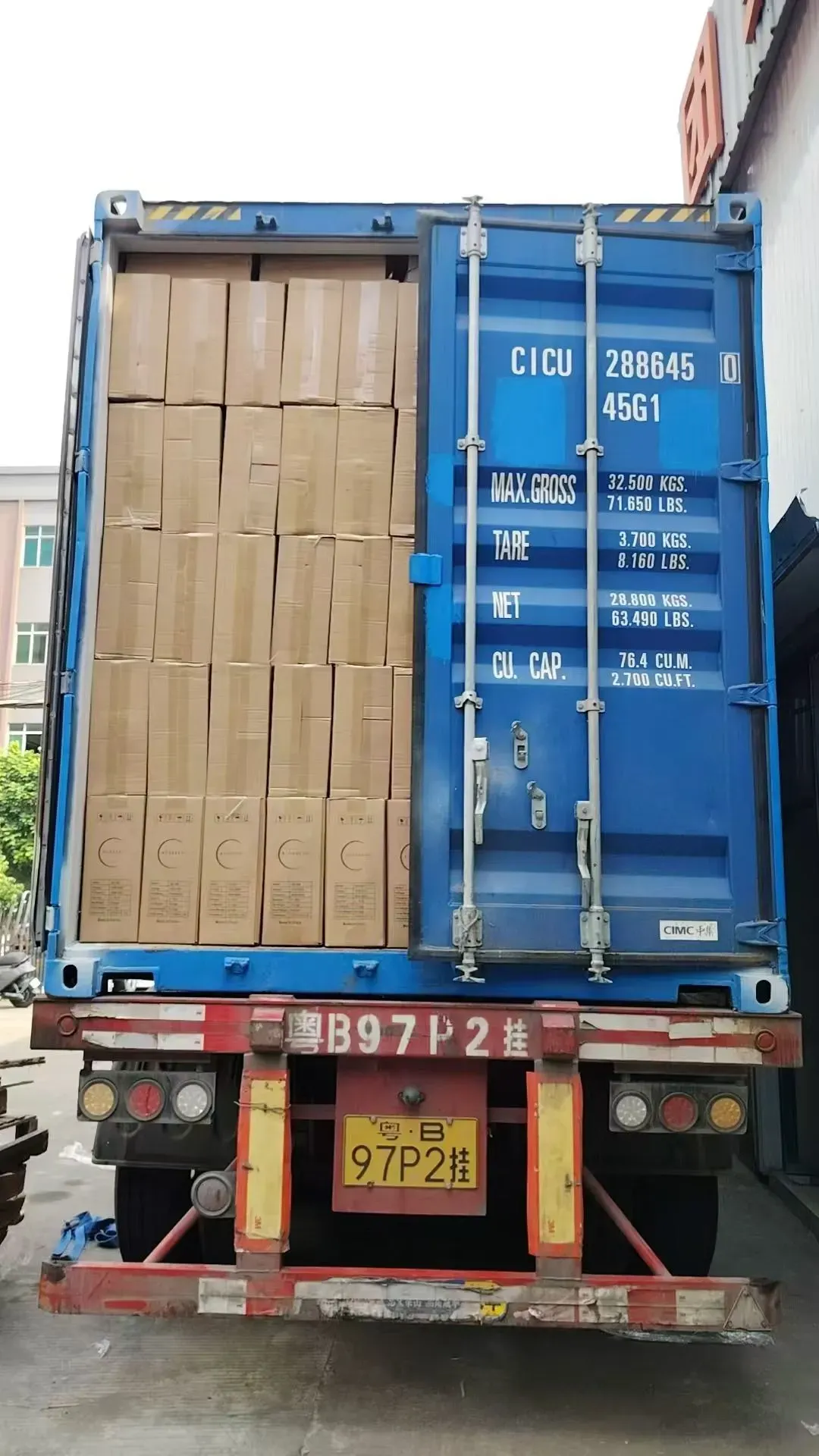
If you are building a container for Black Friday, the mix that works is drum fans and 3-in-1 fans for volume, horn-blade fans for the replacement market, and HVLS fans for the integrators and the large-project enquiries. The first two pay for the container; the last one is where the margin is.
We build all five — our own models and OEM orders with your logo. If you want to start with one unit, we support sample customisation and testing, so you can check a machine before you commit to a container.