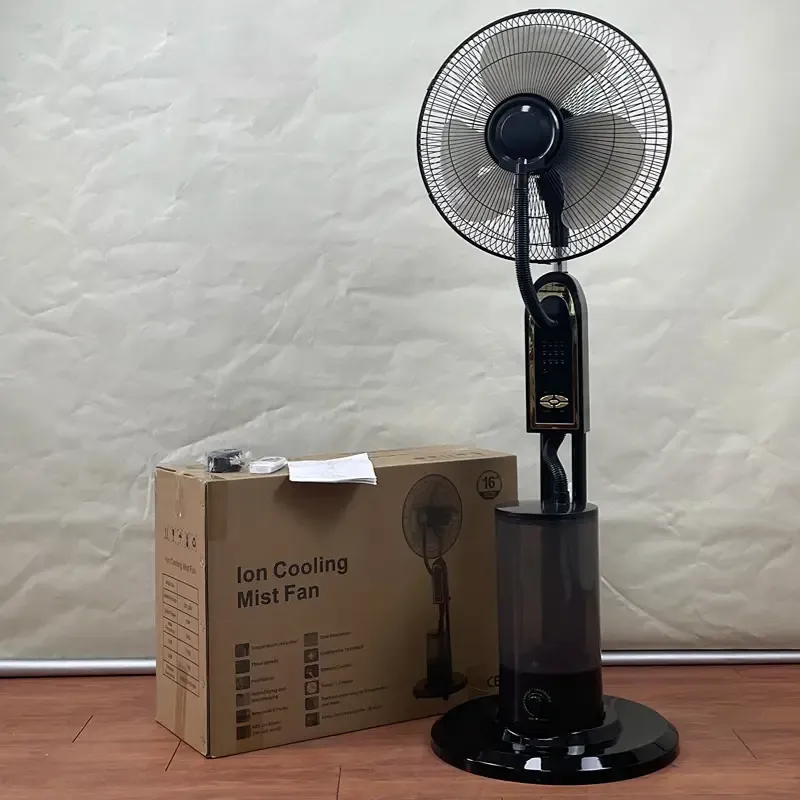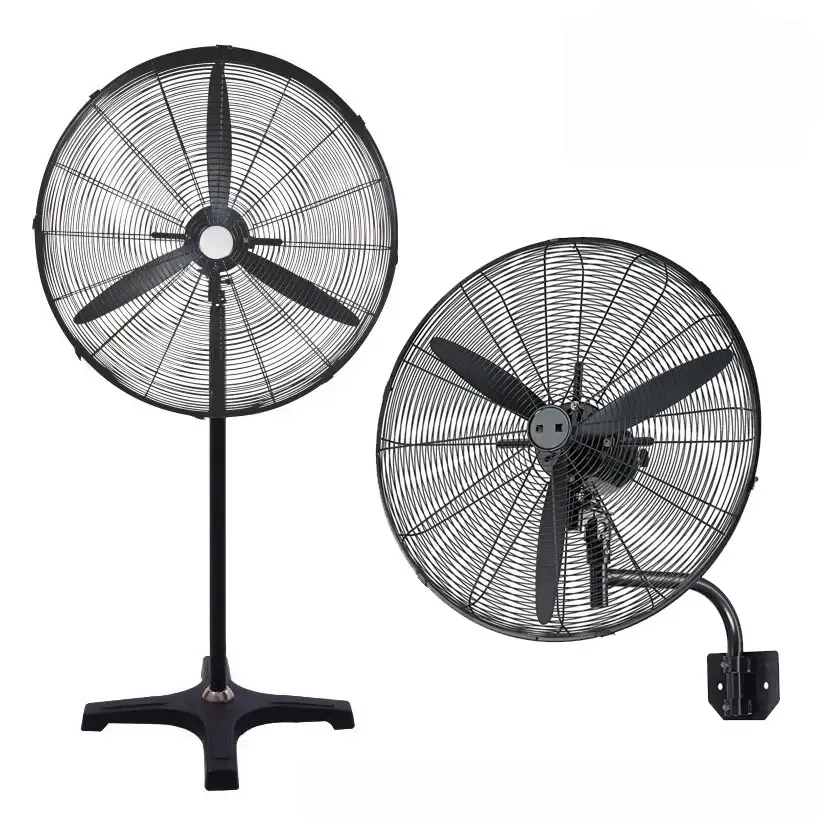
Pedestal Fan
Heavy Duty Floor Fan: 8 Types and How to Choose (2027 Guide)
Eight types of heavy duty floor fan compared by airflow, mobility and cost — 30-inch, drum, permanent magnet, pedestal, wall and HVLS — plus motor selection.
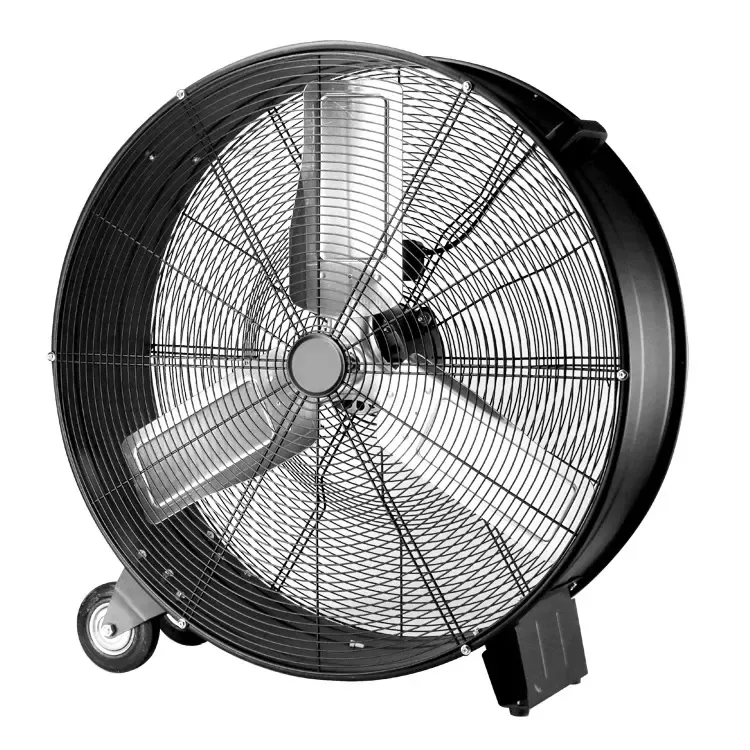
Quick answer: A heavy duty industrial fan means the large, heavy floor fans above 30 inches, plus oscillating floor fans, oversized drum fans, permanent magnet models, portable axial fans, industrial pedestal fans, wall fans and ceiling fans. High airflow, heavy machine, built for industrial cooling — in practice an alternative to industrial air conditioning, because the cooling works but the purchase cost and the power bill are both low. Choose by job: floor fans on wheels to move around, drum fans for long throw, pedestal fans for height and sweep, HVLS ceiling fans where the heat sits at roof level. Motor order is permanent magnet, then copper, then aluminum.
What Is a Heavy Duty Industrial Fan?
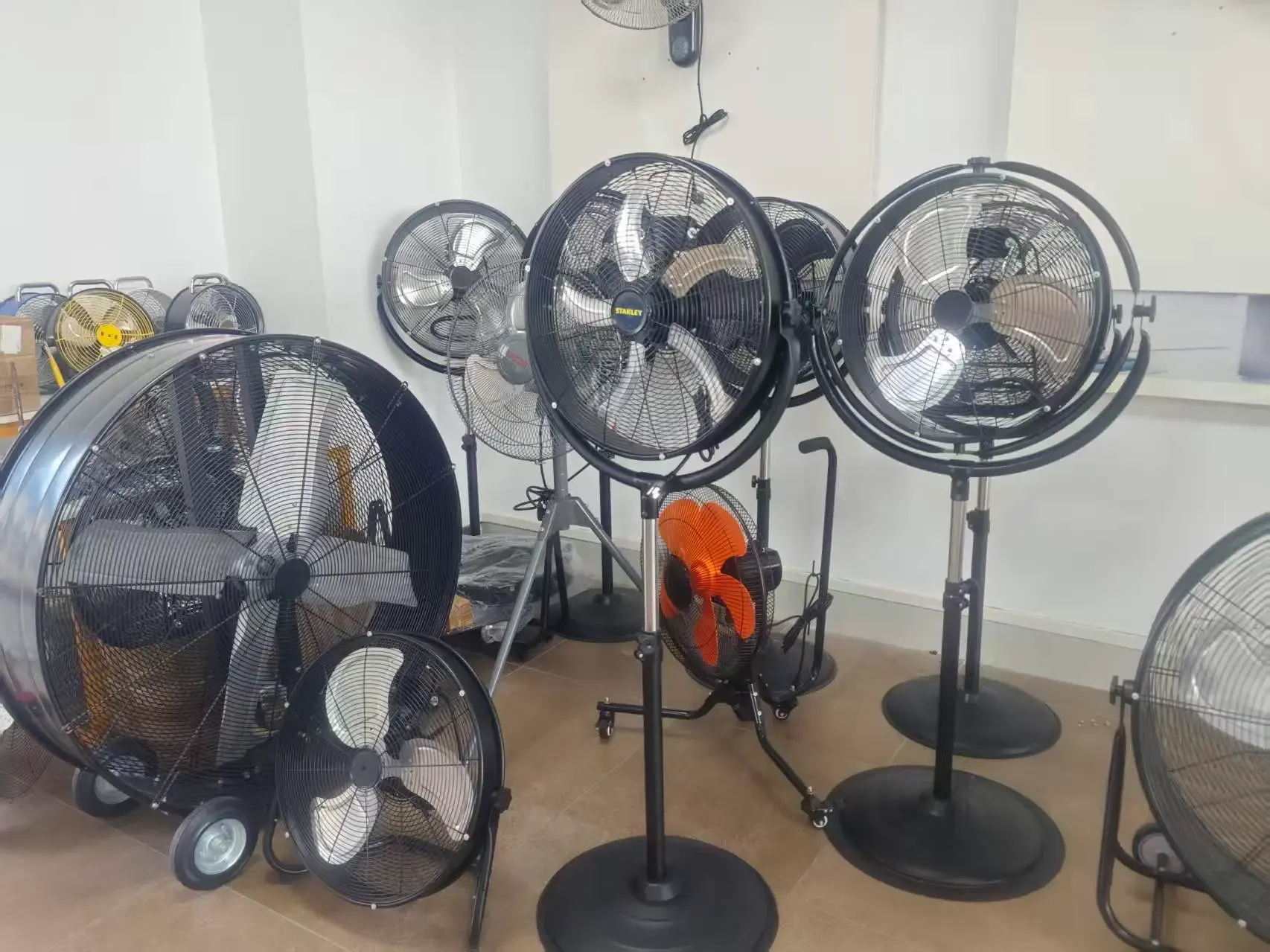
It means the large and heavy floor fans, pedestal oscillating fans, wall fans and ceiling fans — high airflow, heavy weight, made for industrial cooling rather than home use. A heavy duty floor fan is, in practice, an alternative to industrial air conditioning: the cooling effect is good, but the purchase cost and the energy cost are low, which is why it is usually the first choice when a factory buys ventilation equipment.
| Household fan | Heavy duty floor fan |
Typical size | 12–18 inch | 30–48 inch, up to 60 inch drum fans |
Frame and guard | Plastic | Steel body, metal blade guard |
Blades | Plastic | Aluminum alloy |
Duty cycle | A few hours | 10–12 hours a day, continuous duty available |
Adjustability | Head tilt | Tilt, height, oscillation, wheels |
Buyers | Consumers | Factories, warehouses, farms, gyms, retail |
The Eight Types of Heavy Duty Industrial Fan
1. Industrial floor fans above 30 inches
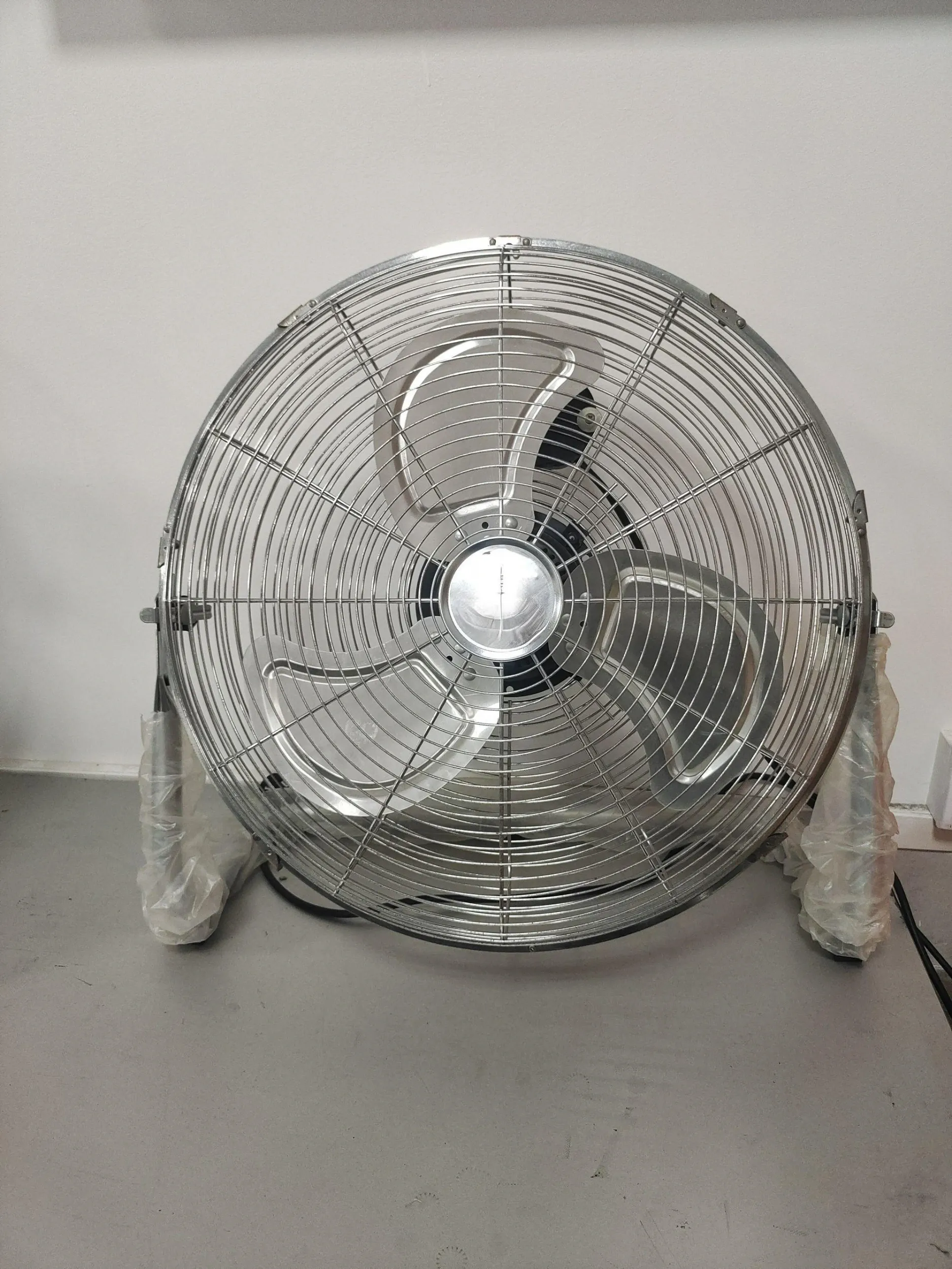
Heavy machine, fitted with wheels so it can be moved, steel body, aluminum alloy blades, full metal blade guard, and the head tilts up and down only. This is the most common type — which is why buyers search for a big fan on wheels rather than a fixed unit.
How common: 5 out of 5. Best for: shopping malls, workshops, long-distance air delivery.
Because the head only tilts, you aim it once and it stays aimed. If the work moves, you move the fan. Where the job is drying rather than cooling — a wash bay, a floor hosed down every night — the same machine sells as one of the commercial floor drying fans, and the requirement shifts to air speed at floor level.
2. Oscillating floor fans
The upgrade model. The head sweeps left and right, which solves the pain point of a standard floor fan — it cannot sweep sideways — and saves you the trouble of carrying the fan to a new position.
How common: 3 out of 5. Best for: factory floors and mall floors that need air swept sideways.
In a warehouse aisle oscillation is wasted, because the air just hits the racking. Along a packing line or a shop floor where people stand at intervals, it replaces two or three fixed fans.
3. Oversized drum fans
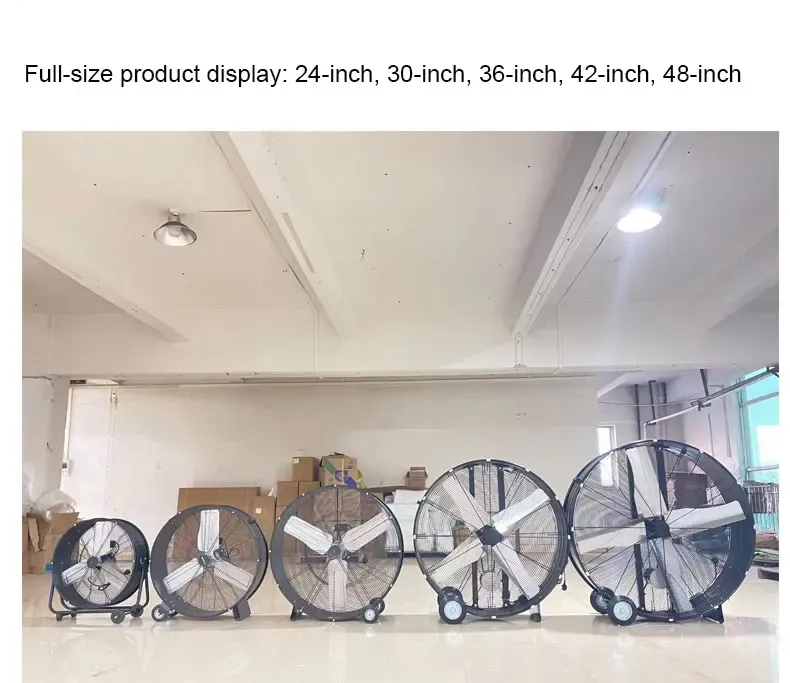
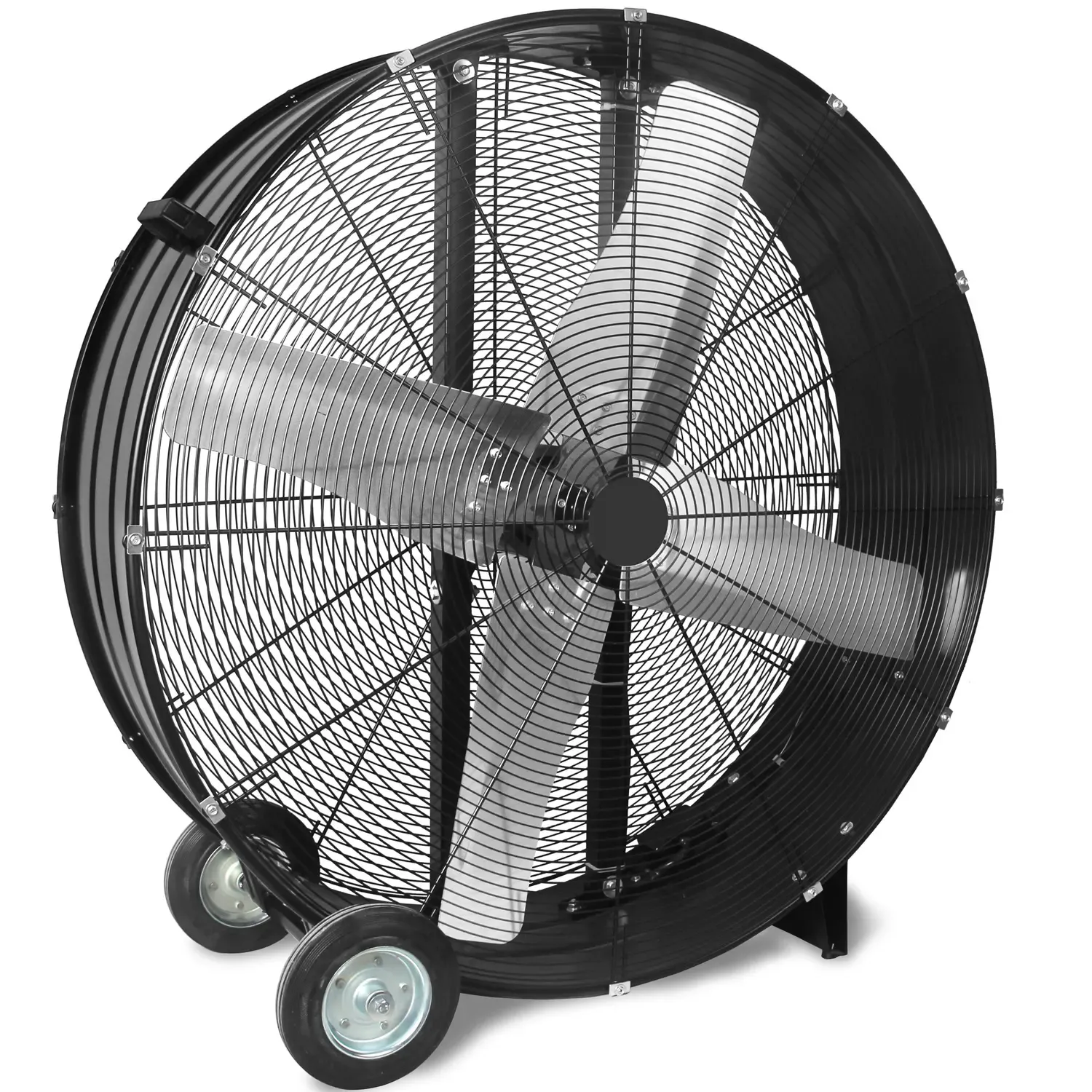
Belt drive and a steel barrel body, so the motor sits outside the airstream and a large blade turns at lower RPM to move a very big volume. High power, huge airflow. On this type the drum fan motor and the drive parts matter more than on a direct-drive fan — a cheap bearing set or belt fails before the motor does.
How common: 3 out of 5. Best for: cooling industrial equipment.
Sizes run from a 30-inch heavy duty drum fan through 42-inch and 48-inch drum fans up to 60-inch units; past 48 inches buyers are usually searching for a giant floor fan, and the purchase becomes a building decision rather than a workshop one.
4. Permanent magnet floor fans
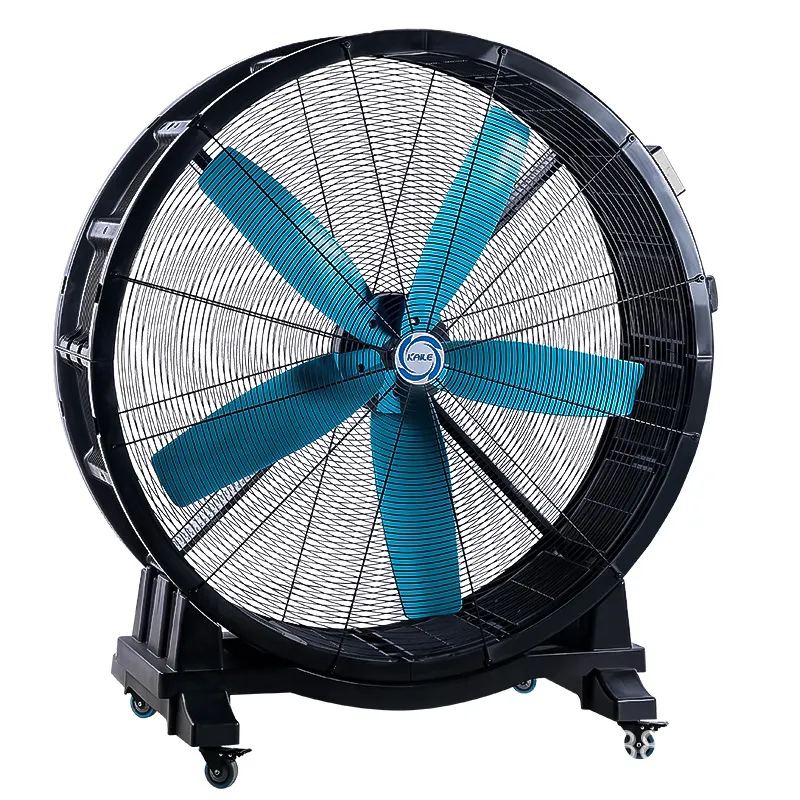
High air speed from a permanent magnet motor: low energy draw, and it can run for long periods. This is the type that makes an industrial high velocity floor fan possible without a bigger power draw, and it is the same electronics behind floor fans with DC motor ratings.
How common: 3 out of 5. Best for: industrial equipment cooling and workshop cooling.
The price is higher. Specify it when the fan runs all day or when the electricity bill is yours — on one fan for one season the saving is small, on twenty fans for five years it pays back the difference.
5. Portable axial fans
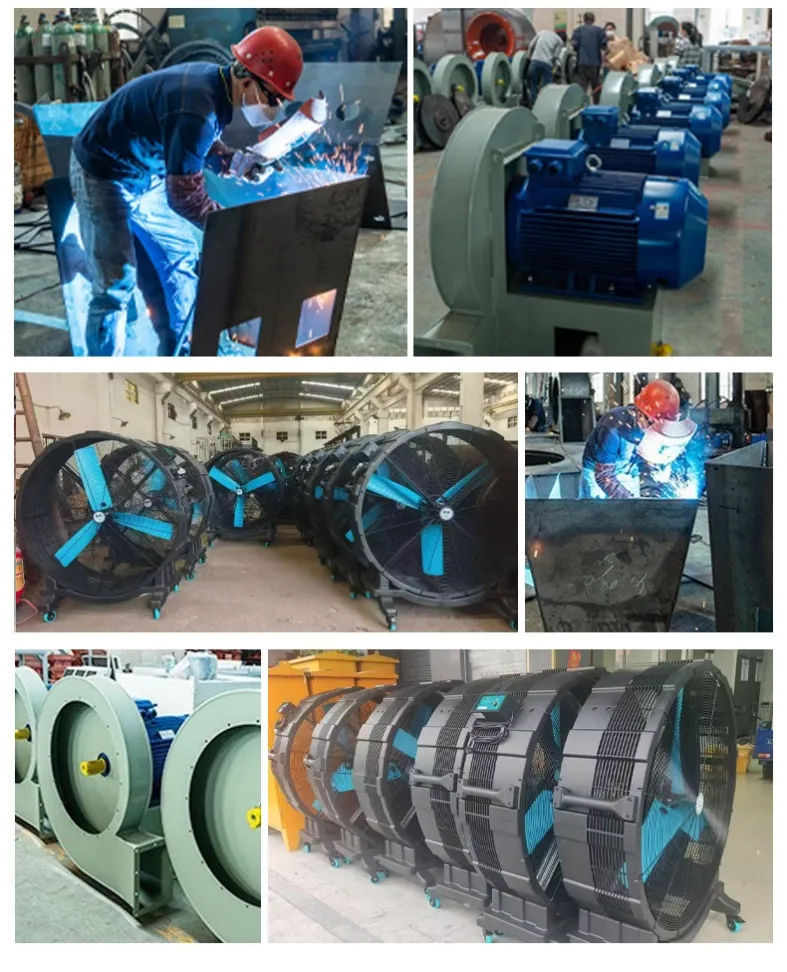
A long tubular body with the blade inside, so the air comes out concentrated rather than spread. Smaller sizes carry a handle, which makes them easy to pick up and carry.
How common: 5 out of 5. Best for: industrial cooling, concentrated delivery, extra-long throw.
The tube is the point. A conventional floor fan spreads its air within a few metres; a portable axial fan keeps it in a column and pushes it much further, which is why it turns up in welding bays and machine rooms.
6. Industrial pedestal fans
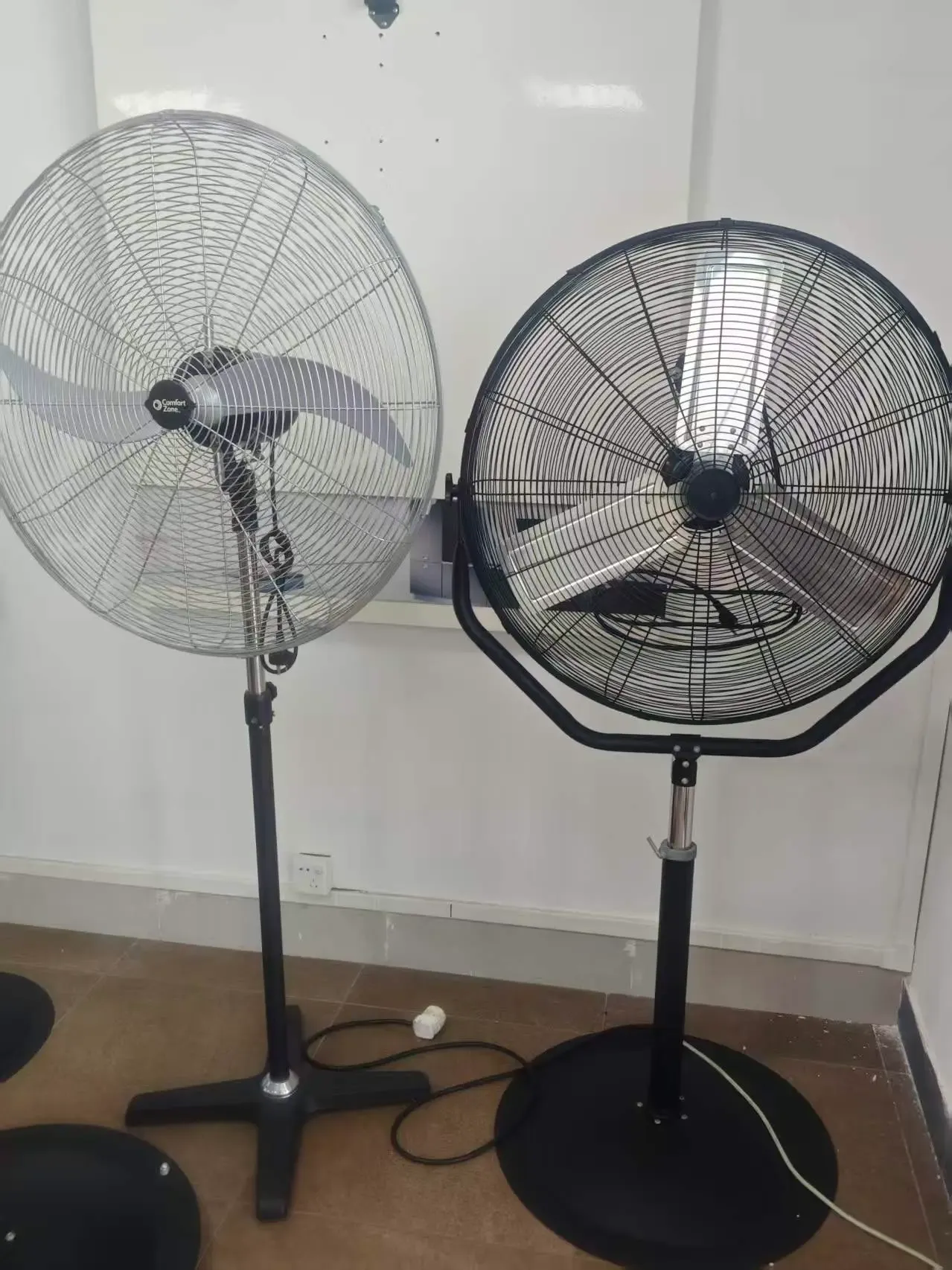
There are many types of pedestal fan, but the industrial ones share one trait: they deliver air higher up, and both the head angle and the column height adjust, with left-right oscillation as standard.
How common: 5 out of 5. Best for: industrial and commercial spaces that need air swept sideways at working height.
If you want remote control, say so at the quotation stage — a pedestal fan with remote is a different control box, not something you add later. Buyers comparing floor standing fans with floor fans of the same diameter usually find the pedestal version costs more, and the reason is cost, not markup: the oscillation gearbox and the taller base are real parts.
7. Horn-blade, aluminum-blade and 3-in-1 pedestal fans
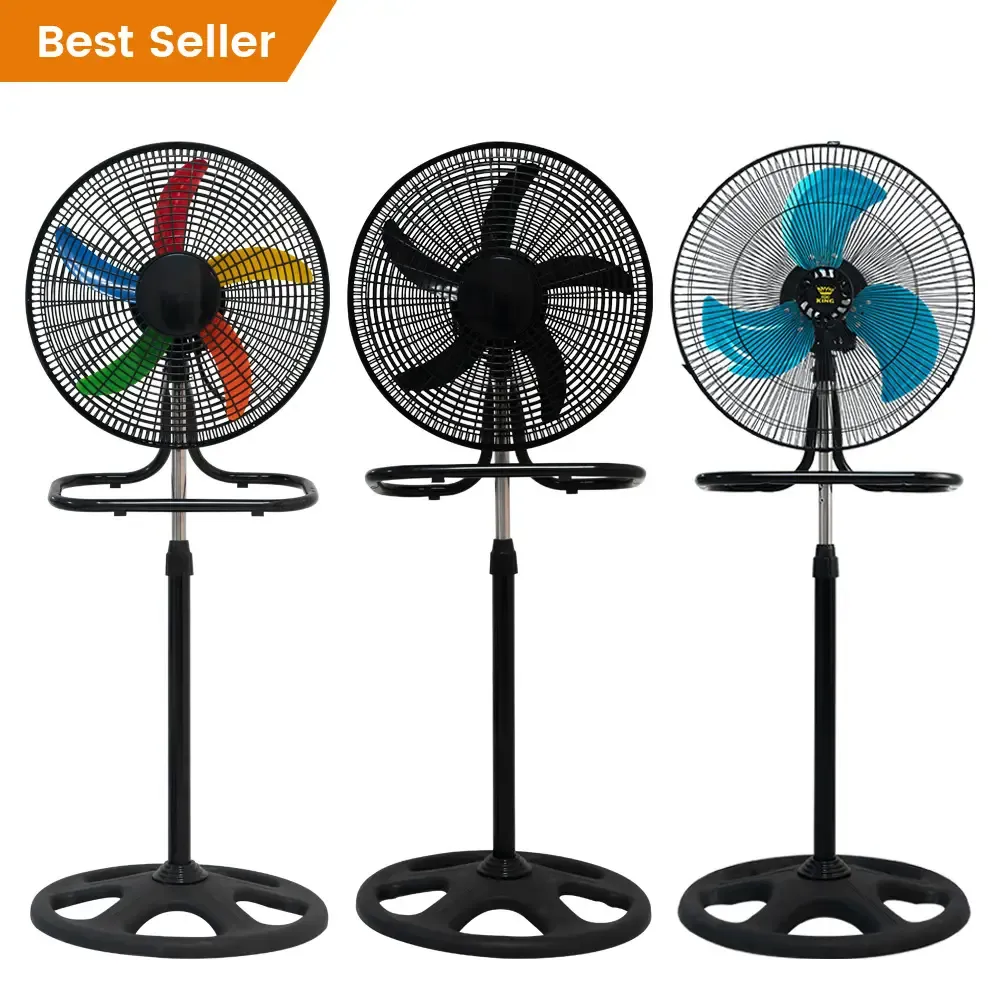
Three variants from the same family. A horn-blade fan (cow-horn fan in the trade) uses a deep curved guard that throws air further at the same power. An aluminum-blade pedestal fan holds its blade shape at speed where a plastic blade flexes. A 3-in-1 pedestal fan converts — the head comes off the column and works as a floor fan.
How common: common in export catalogs. Best for: distributors who want one model to cover several uses.
8. Wall fans and ceiling fans
These do not sit on the floor, and in some buildings they are the only option.
An industrial wall fan — an industrial wall fan 24 inch is the common size — mounts at height and takes no floor space at all. A permanent magnet wall fan adds low energy draw, high power, long continuous running and a higher delivery angle, at a higher price.
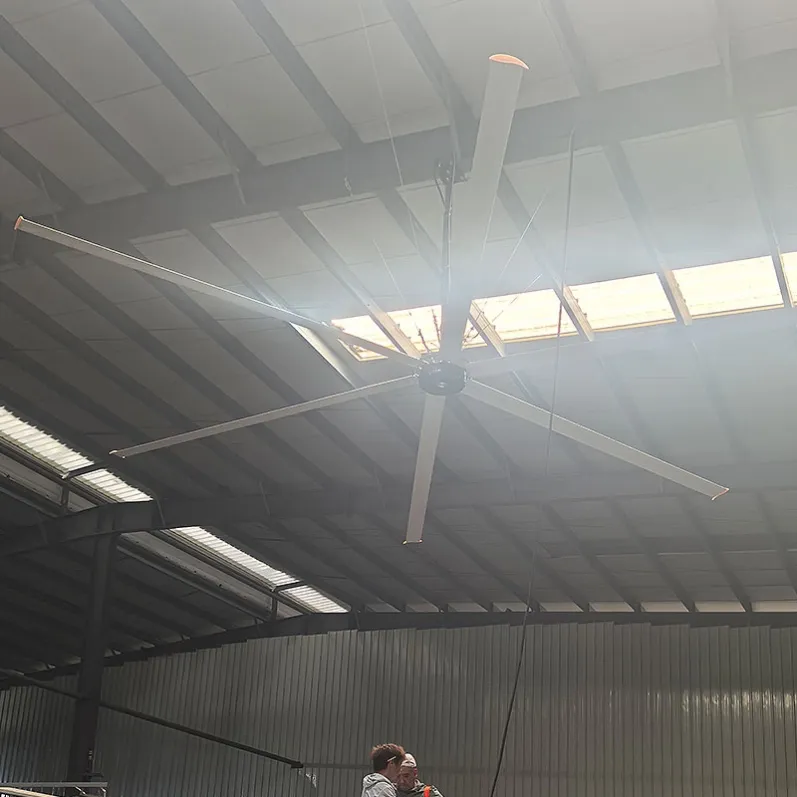
Above that, HVLS ceiling fans: permanent magnet motors driving 3 to 7.4 m blades, which solves the problem of hot air not circulating at the top of a high building. One HVLS fan plus several pedestal fans is a common pairing, and usually cheaper than covering the same volume with floor fans alone.
How common: 5 out of 5 in high-ceiling warehouses. Best for: factory air delivery, high-bay warehouses.
Which Type Fits Which Job
Type | Typical size | Airflow | Mobility | Best for | Relative cost |
Large floor fan | 30–36 inch | High, wide spread | On castors | Malls, workshops, long throw | $ |
Oscillating floor fan | 30 inch | High, swept | On castors | Packing lines, mall floors | $$ |
Drum fan | 30–60 inch | Highest volume | On wheels or fixed | Equipment cooling, loading bays | $$$ |
Permanent magnet floor fan | 24–30 inch | High speed, low draw | On castors | All-day workshop cooling | $$$$ |
Portable axial fan | 12–20 inch | Concentrated, long throw | Carry handle | Welding bays, machine rooms | $$ |
Industrial pedestal fan | 18–30 inch | High, at height | On base or wheels | Standing work, side coverage | $$ |
Horn / aluminum / 3-in-1 | 18–26 inch | High, directional | Converts to floor use | Multi-use export SKUs | $$ |
Wall / ceiling fan | 24 inch wall, 3–7.4 m HVLS | Building-scale | Fixed | High-bay warehouses | $$$–$$$$ |
Relative cost is a band, not a quote — the spread inside one row of heavy duty floor fan types is wider than the spread between rows. Buyers asking for big fans for shop use usually land in the first three rows; where the brief is to buy an industrial fan for warehouse cooling, the usual mix is drum fans at the doors and HVLS overhead.
How to Choose a Heavy Duty Floor Fan
Calculate the airflow and mix the sizes
Use the airflow formula and combine sizes rather than buying one type only — one HVLS fan with several pedestal fans is the standard pairing.
- Spot cooling: 1,500–2,500 m³/h per workstation, at 2–3 m/s on the worker.
- Whole-space ventilation: floor area × ceiling height × air changes per hour.
A 40 × 20 × 6 m workshop at eight air changes needs 38,400 m³/h. Five 30-inch floor fans deliver that if they are lined up along the airflow path; one HVLS fan plus two pedestal fans does it more quietly and uses less floor. The full method and the air-change table are in our industrial floor fan selection guide.
Choose the motor — it is a budget choice
Motor choice is budget choice, and the order of quality and price is fixed: permanent magnet > copper > aluminum. Most buyers choose copper: long running life, high efficiency, moderate price. Permanent magnet costs most and runs cheapest. Aluminum is acceptable for light duty, and stepping down to it is a fair trade when copper prices run high — what is not fair is paying copper money for aluminum winding.
Decide which functions are worth the money
Oscillation, remote control and misting each cost money and each only pays in one setting. Oscillation pays where people are spread sideways, and is wasted in an aisle. Remote control pays where the fan is mounted high. Misting pays in dry heat, and only with water supply and drainage. Adding functions to a heavy duty floor fan SKU raises the landed cost of every unit in the container, so confirm the market wants them before you commit a production run.
Choose the factory — last on the list, first in importance
It comes last on this list, but it is an important item. A good fan factory gives you three things: high-quality ventilation equipment, good service, and a low after-sales rate. That is worth more than a small price difference. Ask for the motor test report and the winding material in writing, ask the bearing grade, the steel gauge of the body and guard, and the certificate number that covers the model. If you do not know how to judge a factory, our guide to choosing a floor fan manufacturer covers the six checks.
FAQ
Do I have to use a copper motor?
Not necessarily — it depends on the situation. Copper is the default because it runs cooler and lasts longer, but when copper prices rise sharply the quoted price for a heavy duty floor fan rises a lot with them, and stepping down to aluminum is a reasonable compromise. What is not reasonable is paying copper prices for aluminum winding, which is why the test report matters.
Why does a pedestal fan cost more than a floor fan of the same size?
Cost decides it. The pedestal version adds an oscillation function and a base, and that makes it a lot more expensive. If you need the height and the sweep, the price is justified; if you only need air at floor level, a floor fan does the job for less. For the full comparison, read this.
What should I check before buying a pedestal fan?
Packing and assembly. To save volume, pedestal fans ship partly disassembled — column, base and head separate — so the buyer assembles them. Confirm that you or your customer has the hands-on ability to put it together, and confirm how many units fit per carton, because that number decides your freight per unit.
How is a heavy duty floor fan different from an air mover?
An air mover — also sold as a floor blower fan — moves a high-velocity column of air at short range: drying a floor, venting a confined space. A heavy duty floor fan moves a large volume across a wide area. Wet floors or fumes in a tank, use an air mover. A hot workshop full of people, use a floor fan or a drum fan.
Can a heavy duty floor fan run 24 hours?
A copper or permanent magnet motor in this class is built for continuous duty, and factories commonly run them 10–12 hours a day. Aluminum-winding units are the ones that fail under that schedule, usually as a hot motor and a slowing blade rather than a sudden stop. For two shifts or 24 hours, write copper or permanent magnet into the specification.
Conclusion
Four decisions, in this order: how much air the space needs, which type sends it in the right direction, which motor matches the running hours, and which factory can prove what it sells you. Get the first three wrong and the fan disappoints. Get the fourth wrong and it fails in the second summer.
If you do not know how to choose, contact us. As a professional fan manufacturer we will give you some suggestions — send the floor area, the ceiling height and how many people you are cooling, and we will size it and quote it.