Sep 18, 2026Ceiling Fan
High-Speed Floor Fan vs. HVLS Fan: Which One Is Right for Your Facility?
Confused between a high‑speed floor fan and an HVLS fan for your warehouse or workshop? Compare airflow, coverage, energy use, and real‑world applications to make the best choice.
High-Speed Floor Fan vs. HVLS Fan: Which One Is Right for Your Facility?
Introduction
When choosing a cooling and ventilation solution for your warehouse, construction site, or livestock farm, many facility managers find themselves torn between a high‑speed floor fan and an HVLS fan. In stuffy warehouses and workshops, the right fan can still create a refreshing, natural environment. But there are key differences between ordinary high‑speed floor fans and the giant, low‑speed industrial ceiling fans used in large buildings.
This article explains those differences and helps you find the right ventilation and cooling solution to create a more comfortable, employee‑friendly environment – ultimately boosting productivity in your facility.
About High‑Speed Floor Fans
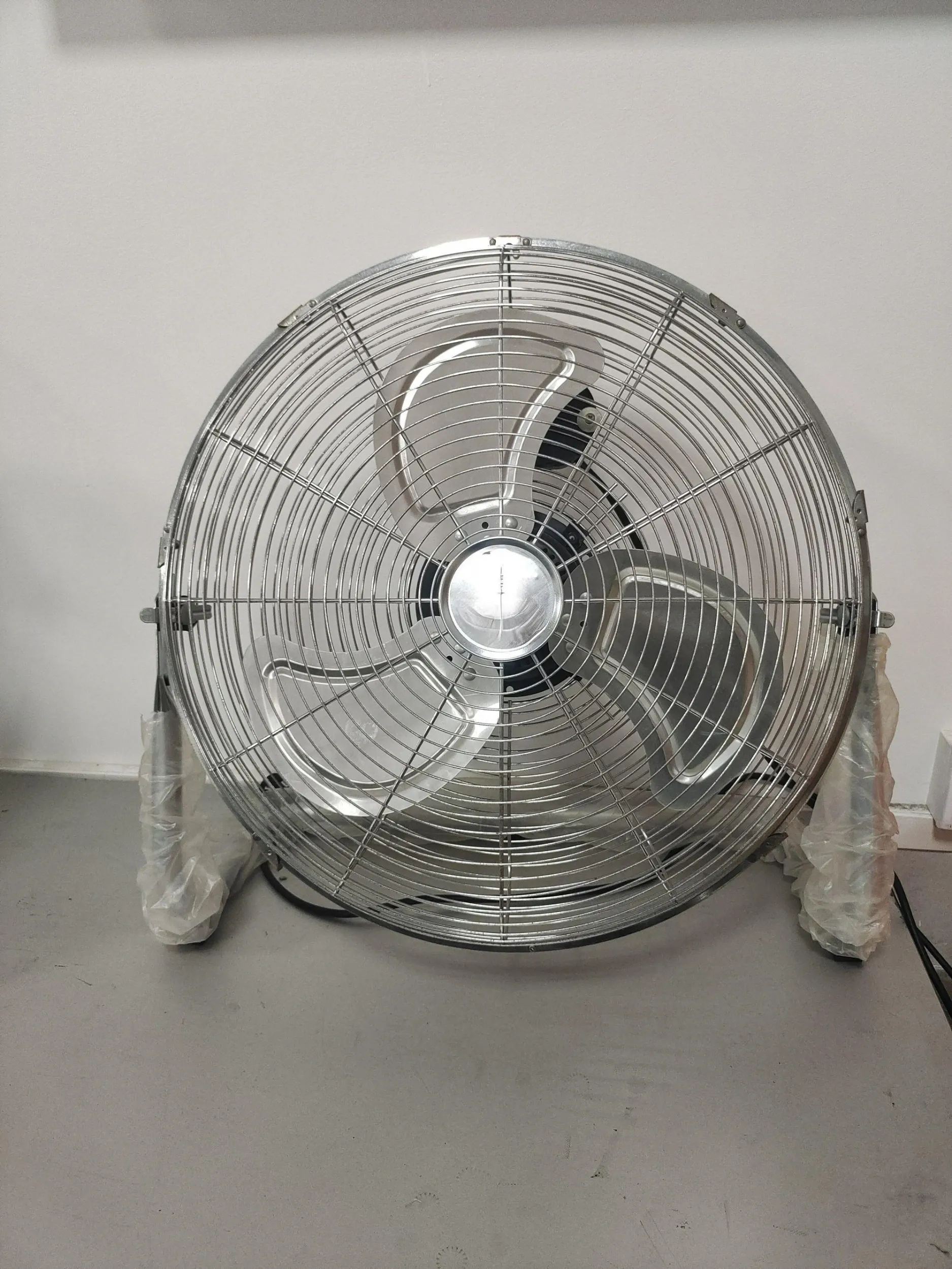
High‑speed warehouse fans are the type most of us are familiar with. Floor fans are a common example of this category. These fans are designed to deliver a concentrated stream of air with strong force and long throw distances – up to 10 metres. Most have three or four blades and are typically used close to the people they serve.
Most high‑speed fans rotate at speeds ranging from 200 RPM to roughly 1000 RPM. As a rule, smaller fans spin faster, while larger ones turn slightly slower as their size increases.
Example:
A 14‑inch floor fan has a power rating of 50W, a speed of 1300 RPM, thickened aluminium blades and a sturdy guard, a high‑quality pure copper motor, and a noise level of 45‑50 dB(A).
Why does speed matter? For smaller, high‑speed fans, higher RPM pushes air over longer distances, providing better circulation and greater airflow volume across a wider area.
Key advantages of floor fans:
- Built‑in handle for easy portability.
- Extra‑long 3‑metre power cord for flexible placement.
- Adjustable tilt angle of up to 130° for directional airflow.
- Focused, concentrated airflow for specific zones.
About Low‑Speed HVLS Fans
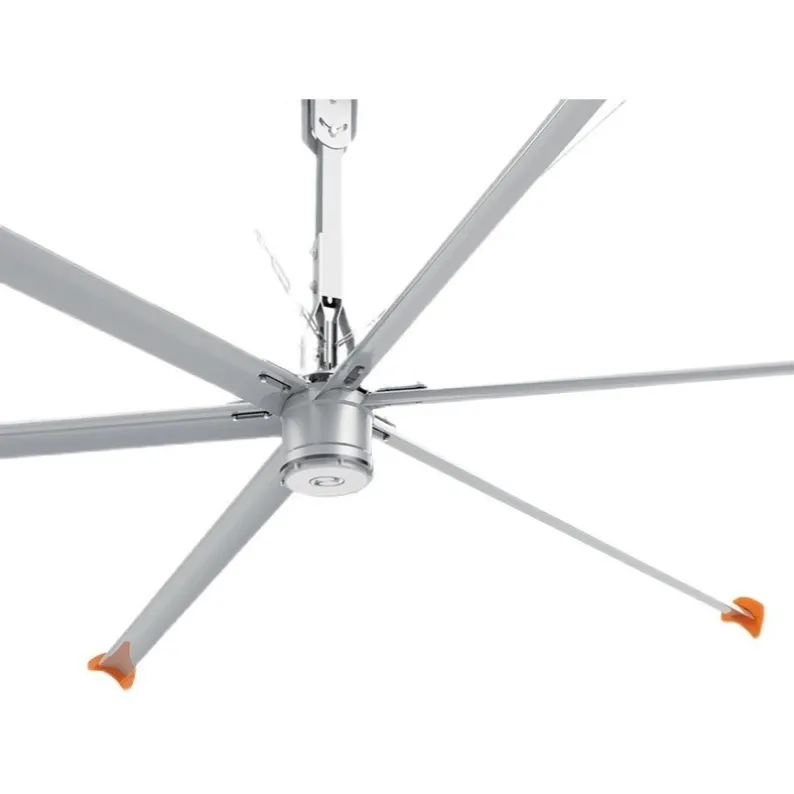
As the name suggests, low‑speed fans operate at much lower speeds. Just how slow? A 7.3‑metre‑diameter HVLS industrial fan runs at speeds between 0 and 60 RPM.
This reduction in speed also brings lower energy consumption. Because less power is required to turn the blades, low‑speed fans are an excellent choice for anyone wanting to maintain high airflow while keeping electricity bills low.
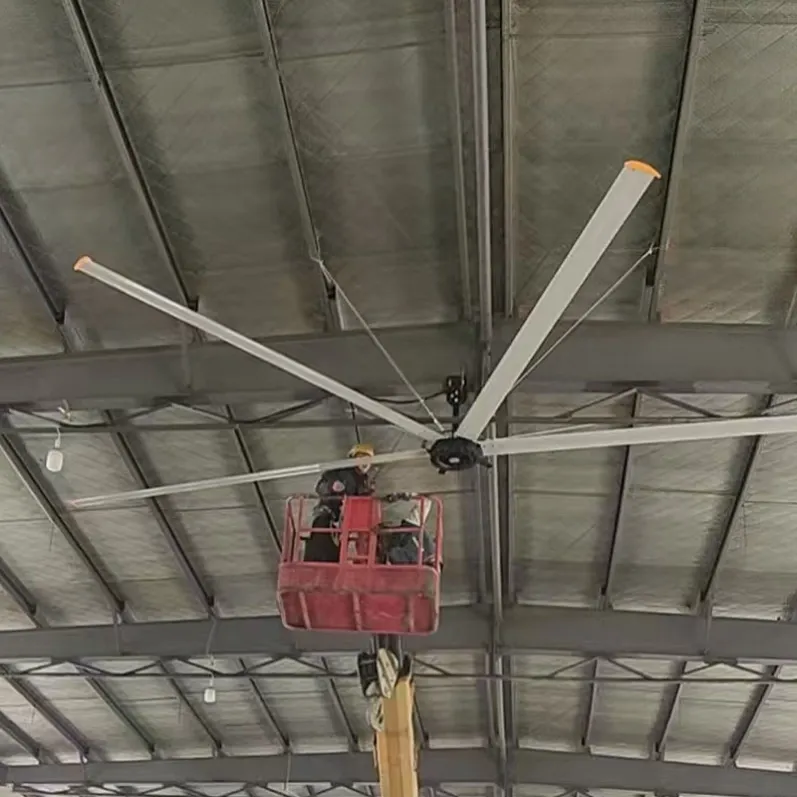
Low‑speed fans are almost always associated with HVLS (High Volume, Low Speed) industrial ceiling fans. These range from 3.6 to 7.3 metres in diameter. Although they require larger motors, they are remarkably energy‑efficient.
Their large blades move massive volumes of air in huge spaces like warehouses and workshops. Thanks to their specially designed blade profiles and drive systems, they don’t need to rotate quickly to generate effective airflow.
Key advantages of HVLS fans:
- Energy‑efficient and environmentally friendly.
- Extremely wide coverage – can serve an entire workshop.
- No floor‑space occupation – fixed ceiling‑mounted installation.
-
High‑Speed Floor Fan vs. HVLS Fan: How to Choose the Right Equipment?
Higher speed doesn’t always mean better – the right choice depends on your specific application and space.
Aside from the obvious speed difference, the main distinction lies in the coverage area each fan type can serve. A floor fan creates airflow for an area of roughly 15 to 30 square metres. In contrast, a larger low‑speed ceiling fan can circulate air across an area of up to about 1,900 square metres.
Below is a quick comparison of their characteristics and typical applications:
Aspect | High‑Speed Floor Fan | HVLS Fan |
|---|---|---|
Fan Type | High‑speed | Low‑speed |
Blade Diameter | 30 – 50 cm | 6 – 10 metres |
Energy Efficiency | Moderate | Excellent |
Motor Power | Standard motor power | Larger motor power |
Typical Use Case | Spot cooling, small warehouses | Whole‑warehouse or full‑workshop cooling |
Installation | Floor‑standing, portable | Fixed ceiling‑mounted |
Conclusion
Choosing the right fan isn’t just about looking at speed – you need to consider all the factors that matter for your facility.
The difference between a floor fan and an HVLS fan can be summed up as follows:
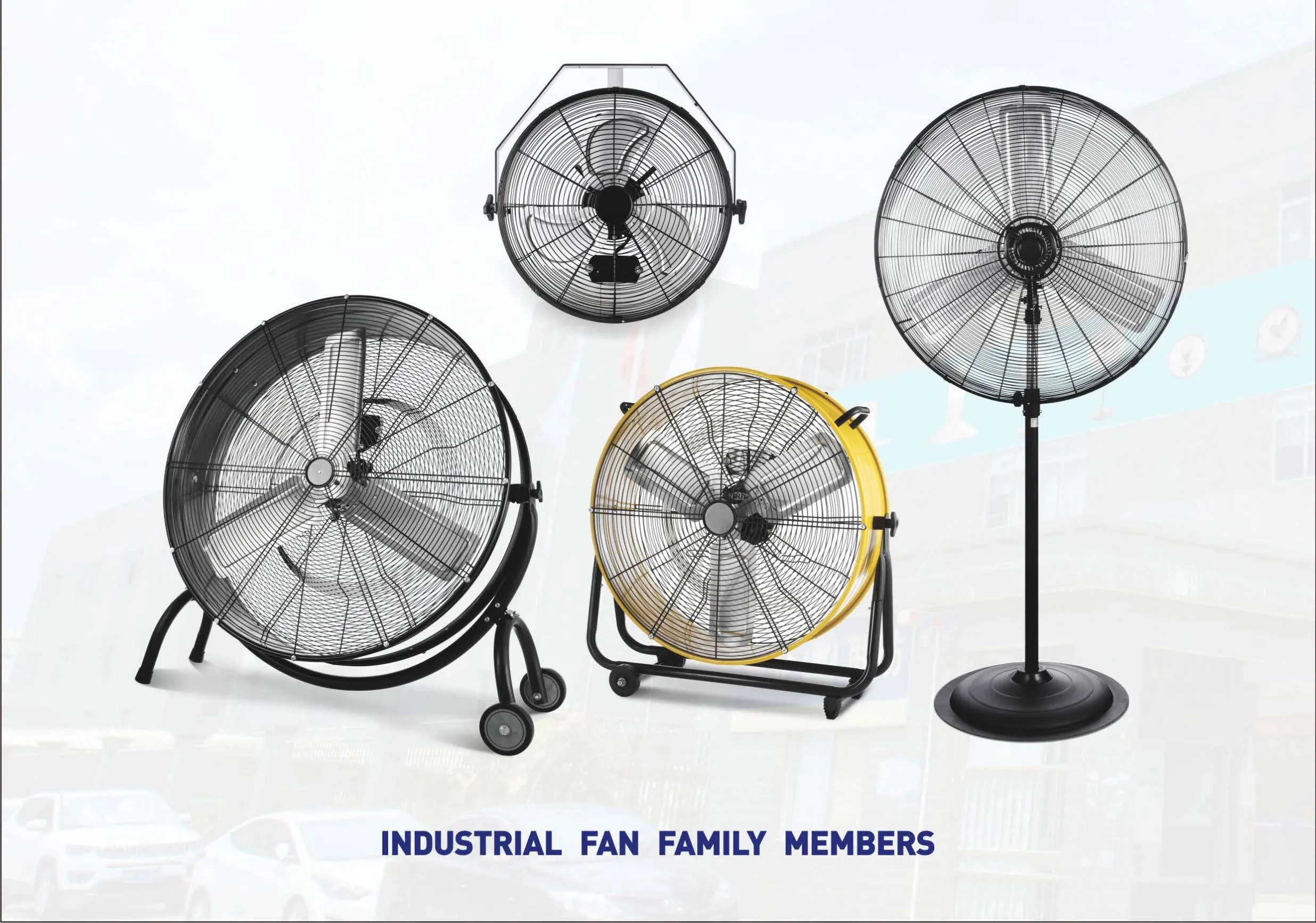
- Floor fans are more flexible and suitable for spot‑cooling applications. They work well in both residential and industrial settings.
- HVLS fans (or industrial ceiling fans) are designed for whole‑area cooling, such as an entire workshop.
Of course, you can also combine both types to achieve even better cooling and airflow results.
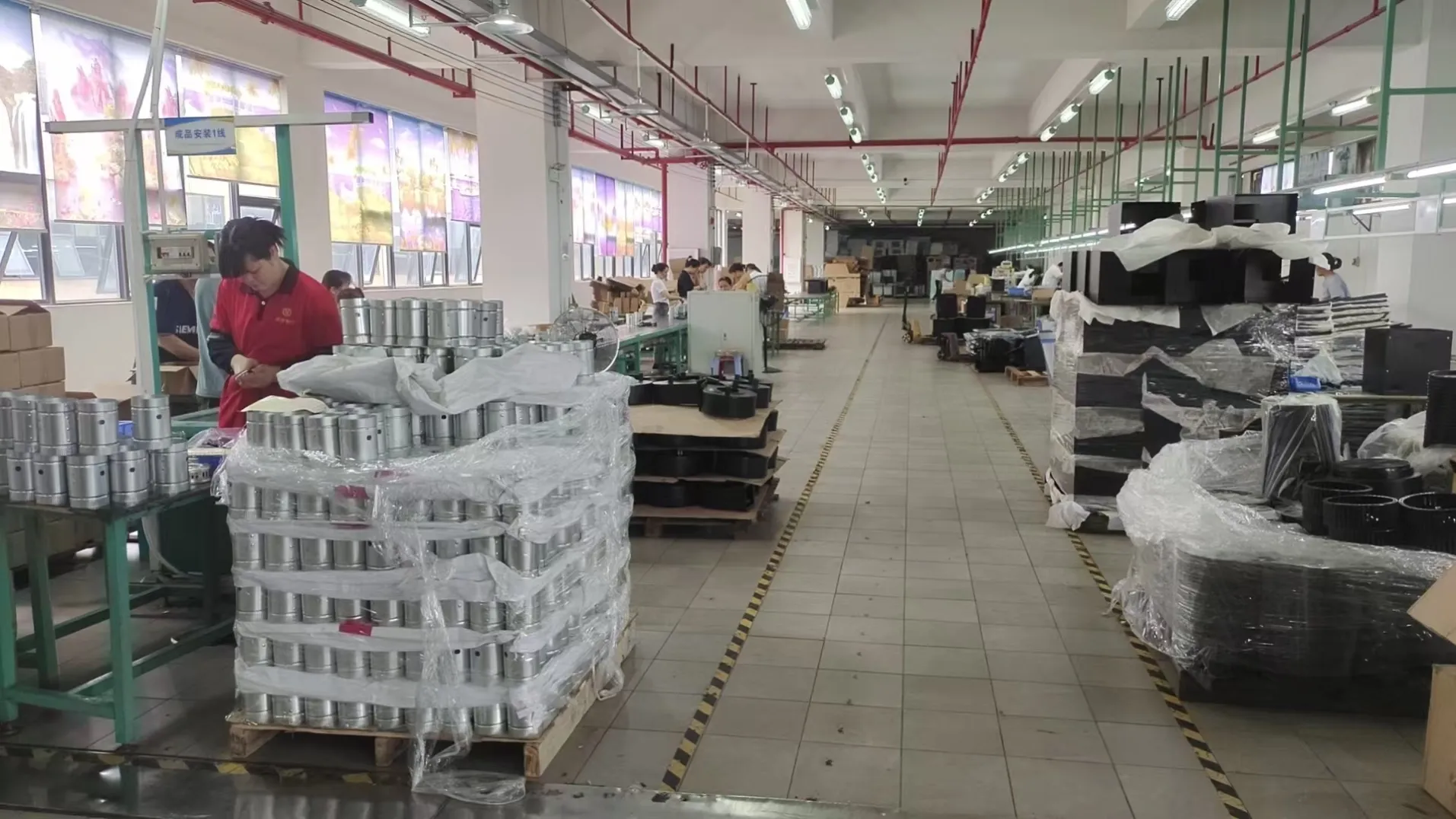
If you’d like to learn more about high‑speed floor fan prices or other product information, feel free to contact us. We are a professional fan manufacturer and support customisation to meet your specific needs.