Sep 18, 2026Ceiling Fan
Industrial Ceiling Fan vs Floor Fan: Which Is Better for Workshop Ventilation? (2026 Guide)
Industrial ceiling fan vs floor fan: Which cooling solution fits your workshop best? Compare coverage, energy efficiency, airflow, and cost to make the right ventilation decision for your facility.
Industrial Ceiling Fan vs Floor Fan: Which Is Better for Workshop Ventilation? (2026 Guide)
Introduction
Temperature and air movement issues within factory buildings have become a focal point of concern for business managers. Faced with hot and stuffy production environments, many companies first think of purchasing floor fans to solve the problem. Meanwhile, many procurement officers who have learned about industrial ceiling fans are caught in a dilemma: how exactly should you choose between an industrial ceiling fan and a floor fan? Both seem to deliver air and provide cooling, but in reality, they differ vastly in terms of coverage area, energy consumption costs, and the specific problems they solve.
The core function of both industrial ceiling fans and floor fans in a workshop is to accelerate air circulation and carry away heat and moisture. However, their suitable application scenarios and effects are completely different.
What Is a Floor Fan?
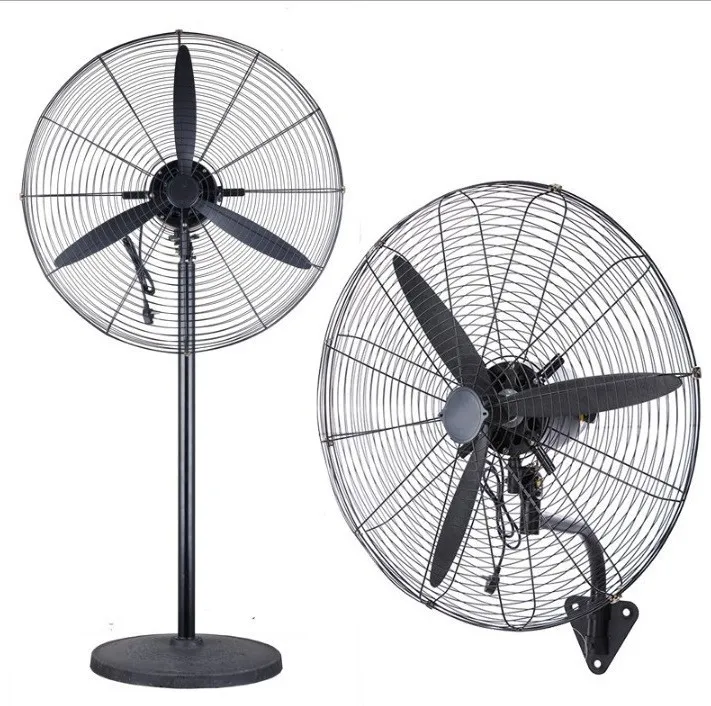
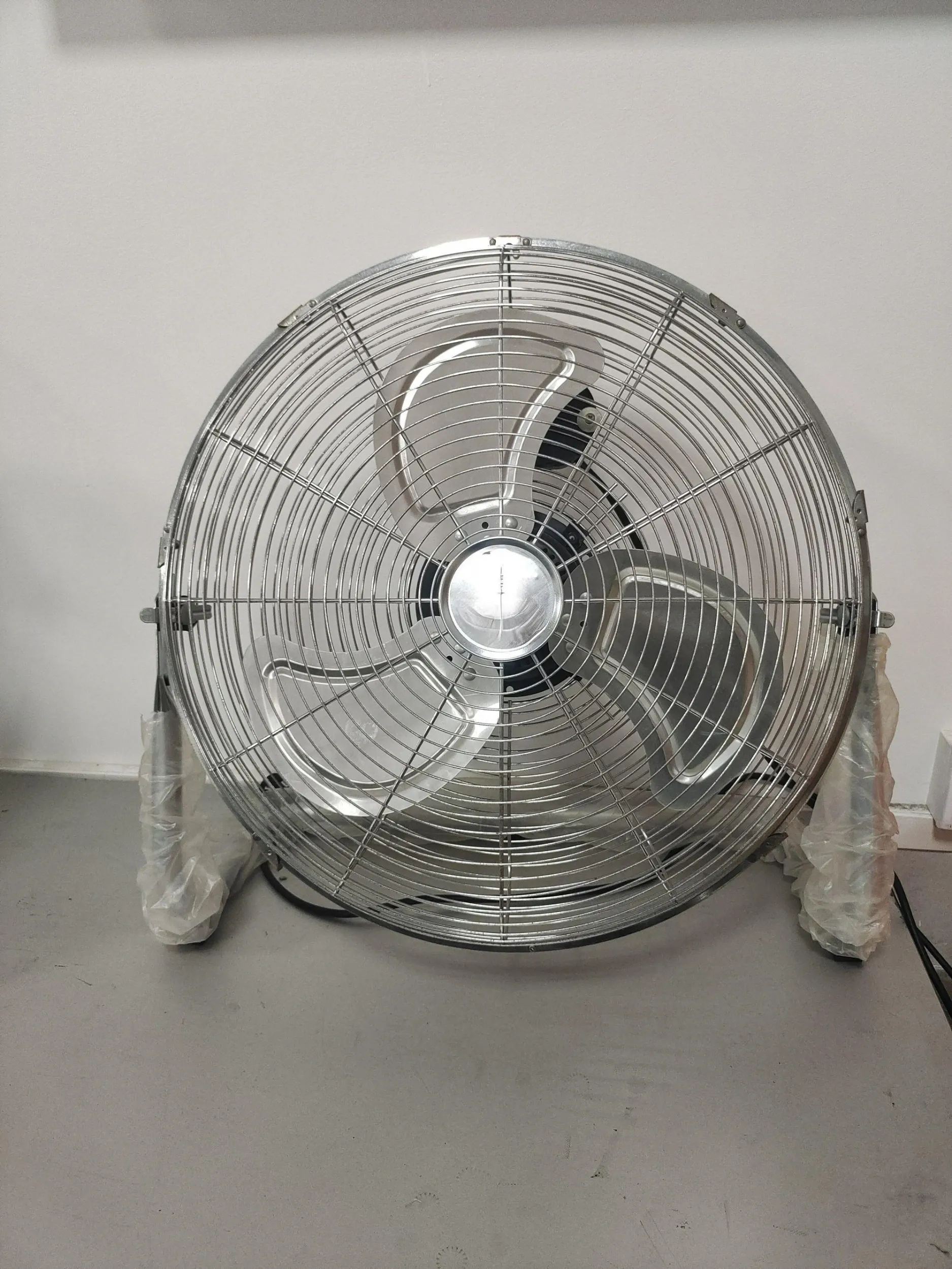
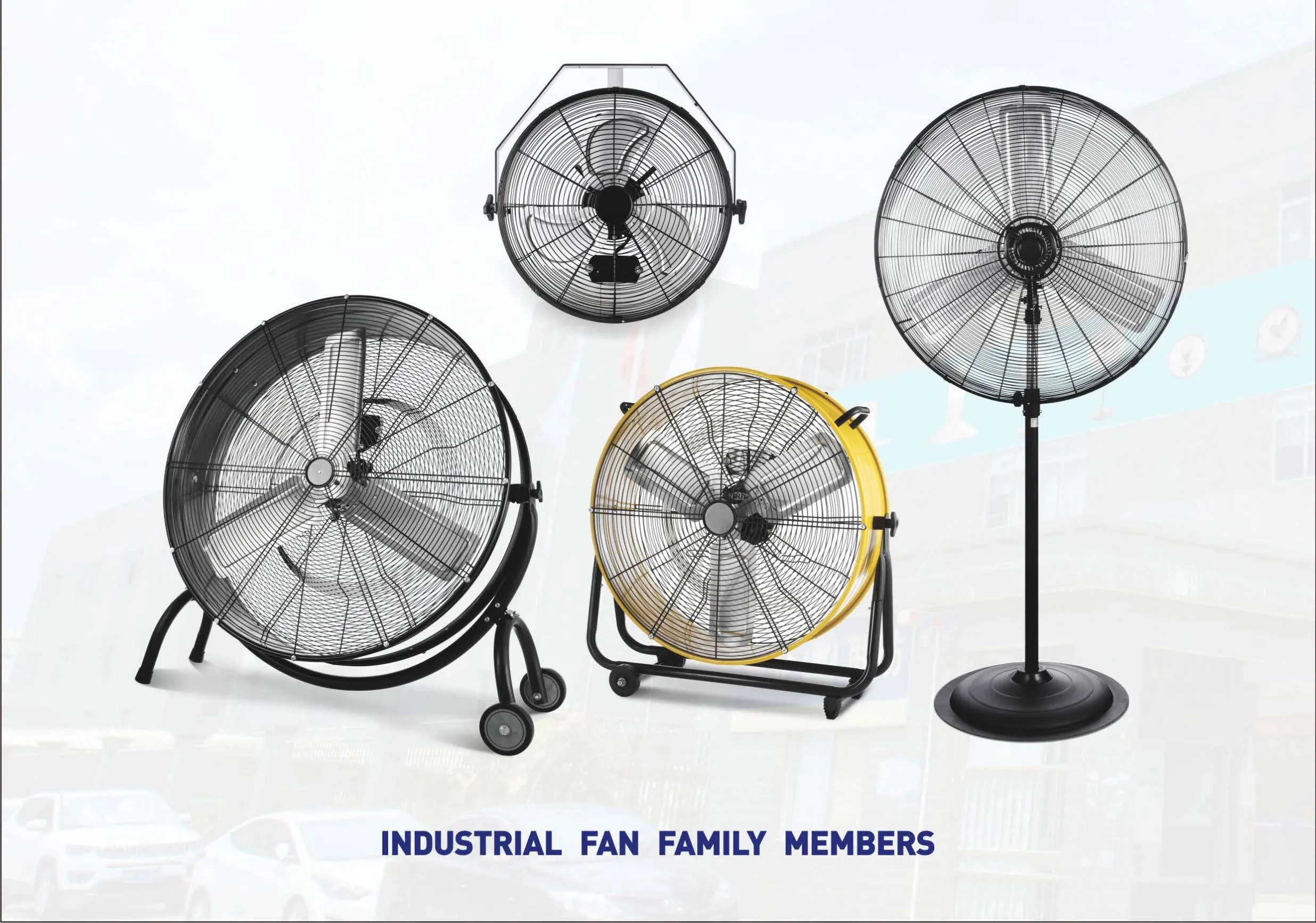
A floor fan, also known as a pedestal fan, is a household appliance with an AC motor at its core. It is characterized by high air volume and low noise. It generates wind by using electrical energy to drive the fan blades, and is suitable for ventilation and cooling in places like homes, warehouses, and workshops. Its stand-mounted design allows it to be placed stably on the ground. It supports multiple speed settings and an oscillation function, offering a wider coverage range than a high-velocity floor fan. Product specifications range from 12 inches to 20 inches, with size differences affecting the air delivery range and suitable application scenarios. In environments without air conditioning, choosing a larger model is recommended to improve cooling efficiency.
Using a capacitor motor is more energy-efficient than a shaded-pole motor. Pairing the low-speed setting with a timer switch can further reduce energy consumption. A floor fan is compact and flexible to install, making it suitable for small-area, localized air delivery. For instance, targeting a single workstation for cooling can quickly bring coolness to a small zone. However, its shortcomings are also obvious: the effective coverage of one floor fan is typically only 3-5 square meters. A 1,000-square-meter workshop would require at least 200 units to achieve basic coverage. Not only is the upfront procurement cost high, but the subsequent electricity bill is also a significant expense. An ordinary floor fan has a power rating of about 60-80W. With 200 units running simultaneously, the hourly power consumption reaches 12-16 kWh, and the monthly electricity bill can easily exceed two thousand dollars.
That said, a floor fan is quite flexible. Equipped with wheels, it can be easily moved to a specific area for cooling. It supports directional air delivery and cooling. Compared to a ceiling fan, it is more flexible and convenient, capable of directing airflow straight at a heat source for more efficient cooling.
Floor fans support the customization of various features. A misting system can be added to a floor fan for effective cooling. Floor fans can also be equipped with solar photovoltaic panels, making them suitable for outdoor use.
What Is an Industrial Ceiling Fan?
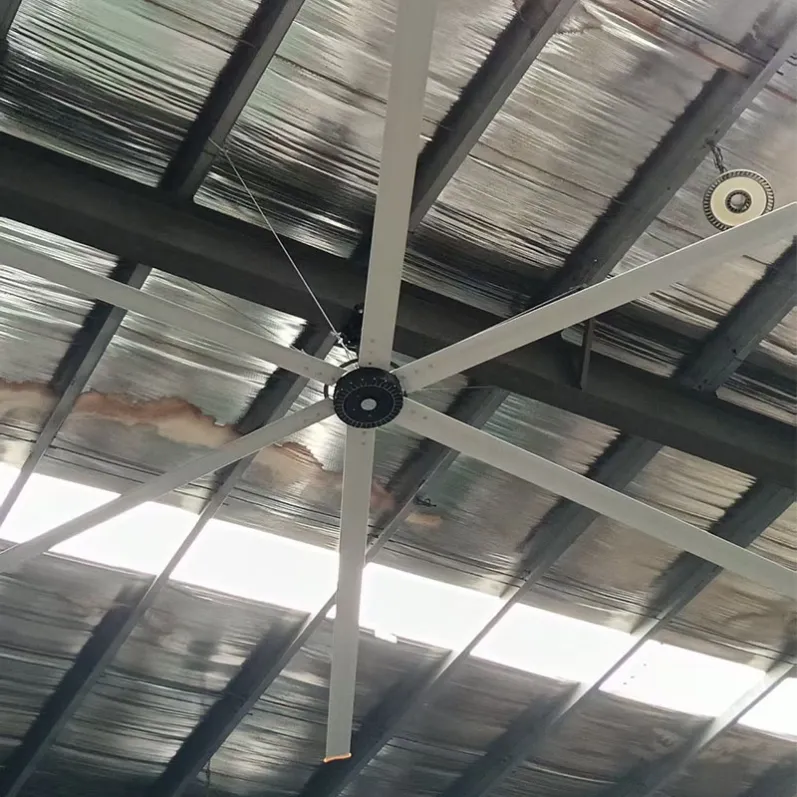
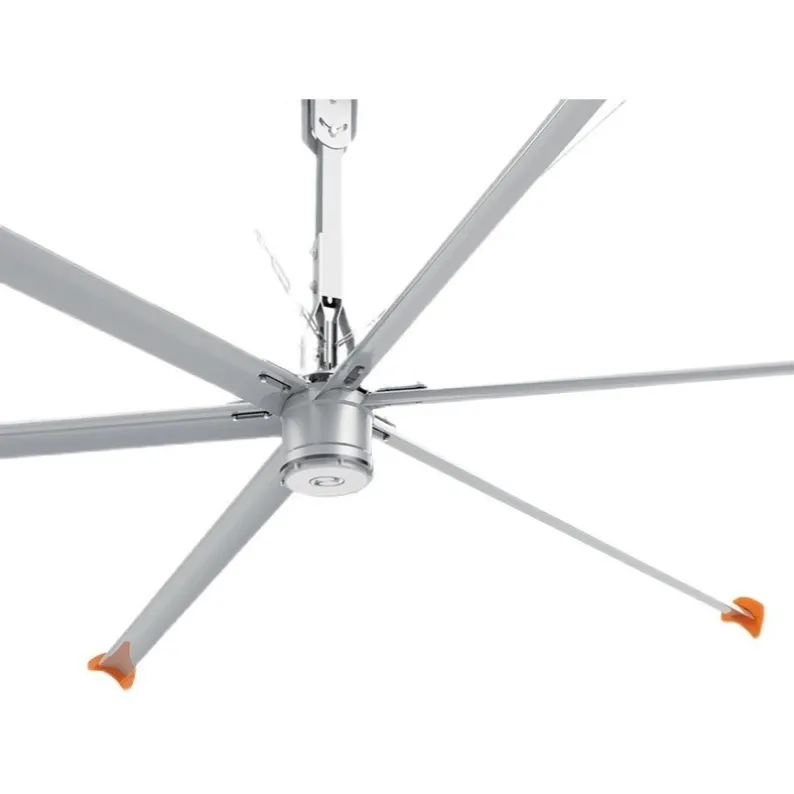
A ceiling fan refers to a fan that is fixedly installed on the ceiling. Other names for a ceiling fan include suspended electric fan. Modern ceiling fans include types such as energy-saving ceiling fans and smart ceiling fans. Entering the 21st century, energy-saving and large industrial ceiling fan technology has seen significant development. Energy-saving ceiling fans, also known as HVLS fans (High-Volume, Low-Speed fans), utilize permanent magnet synchronous motors and variable frequency drive technology. They leverage the aerodynamic principle of laminar flow through low-speed, large-diameter blades that can reach up to 7.3 meters in diameter to achieve efficient air circulation. A single unit covers a large area, and its energy consumption is significantly lower than traditional air conditioning and small fans.
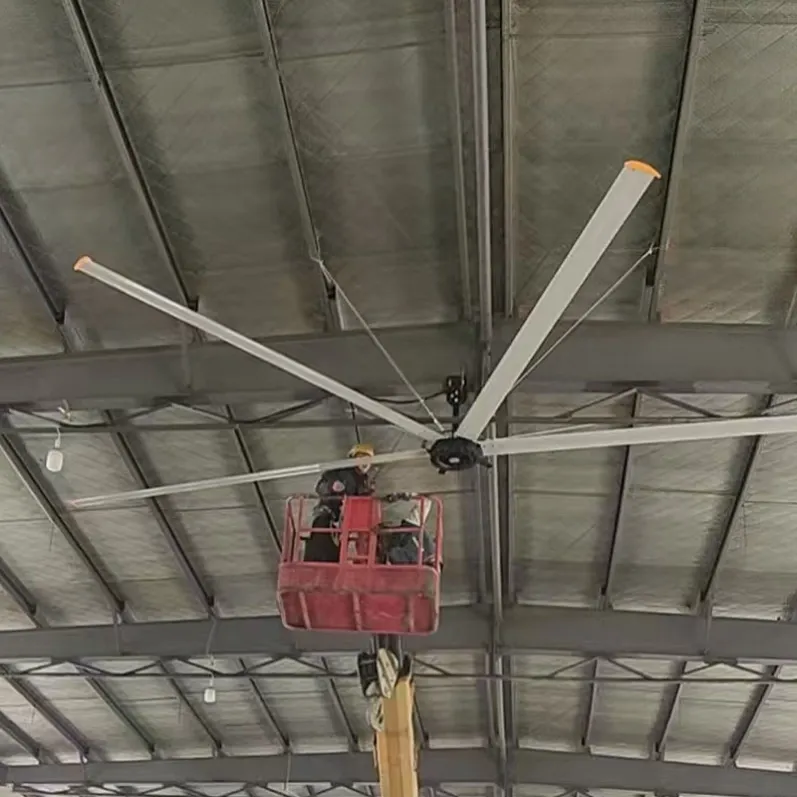
The industrial ceiling fan can be called the ultimate cooling tool for large-space workshops. With a super-large diameter of 2.8 to 8 meters and an aviation-grade blade design, a single unit can effectively cover an area of 100 to 1,000 square meters. One unit can handle a medium-sized workshop. In terms of energy consumption, an industrial ceiling fan uses a permanent magnet motor with a power rating of only 0.3-2 KW, consuming just 0.3 to 2 kWh of electricity per hour. Compared to floor fans, energy consumption is directly reduced by over 80%.
More critically, an industrial ceiling fan produces a gentle, natural breeze of 1-3 m/s, forming a comprehensive air circulation. It not only quickly carries away heat from the surface of the human body, lowering the perceived temperature by 4-6°C, but also effectively exhausts dust, oily waste gas, and humid moisture from the workshop. This solves problems such as stuffiness, heavy odors, and equipment dampness and rusting.
Beyond cooling and ventilation, an industrial ceiling fan can also solve many persistent and difficult problems in a workshop, especially deep-seated workshop issues that a floor fan cannot address. In large factory buildings, air stratification is a common phenomenon: hot air gathers at the top, while cold air settles at the bottom, with a temperature difference that can reach 5-10°C. The powerful airflow of a large ceiling fan can break up this stratification, achieving a uniform temperature distribution and controlling the temperature difference within 2°C. For workshops with volatile gases, dust, or smoke, a large ceiling fan can effectively promote air mixing and exhaust, improving air quality by over 40%.
Frequently Asked Questions
Q: How do you maintain a floor fan?
A: An electric floor fan should be lubricated regularly. Every year before use or when being stored, you can add a few drops of sewing machine oil to the front and rear bearings. The gears in the oscillation mechanism should be cleaned every three years, and the grease in the gearbox should be replaced.
When cleaning and maintaining, always disconnect the power first. Regularly use a soft cloth to wipe the body and clean the accumulated dust from the grill and blades. Some products feature a detachable design for easier cleaning of the grill and blades.
Q: How do you maintain an industrial ceiling fan?
A: Regularly clean the blades and motor every three months to prevent dust accumulation from affecting air volume and energy efficiency. Disconnect the power when cleaning. You can use a mild cleaner, but avoid corrosive liquids. Approximately once a year, inspect all parts of the ceiling fan, such as the downrod, screws, wiring terminals, and blades, for any looseness, corrosion, rust, cracks, deformation, or other abnormal conditions.
Q: Are you a fan manufacturer?
A: Yes, we are a professional fan manufacturer. We support customization, including fan size, voltage, blades, and various functional customizations.
Conclusion
Both floor fans and industrial ceiling fans can provide air delivery and cooling functions for your warehouse. An industrial ceiling fan can cool an entire workshop while being energy-saving and efficient. An HVLS fan, using a permanent magnet synchronous motor and variable frequency drive technology, achieves cost reduction and efficiency gains. If your warehouse is large and requires better overall cooling, you can choose an industrial ceiling fan.
A floor fan is more flexible and multifunctional. It supports directional airflow and cooling and is simple and convenient to maintain. If your factory area is complex and heat sources are concentrated, a floor fan can be adopted.
In fact, in the field of industrial ventilation and cooling, there is no single piece of equipment that is absolutely the best; there is only the combination solution that best fits the specific working conditions of a workshop. Blindly believing that one type of equipment is a universal cure-all is often the biggest mistake in a company's cooling upgrade. You can combine both ceiling fans and floor fans for use together. We are a professional Chinese electric fan manufacturer, supporting the customization of various fans, including high-velocity floor fans, industrial ceiling fans, and pedestal fans. You can contact us for the latest fan prices.