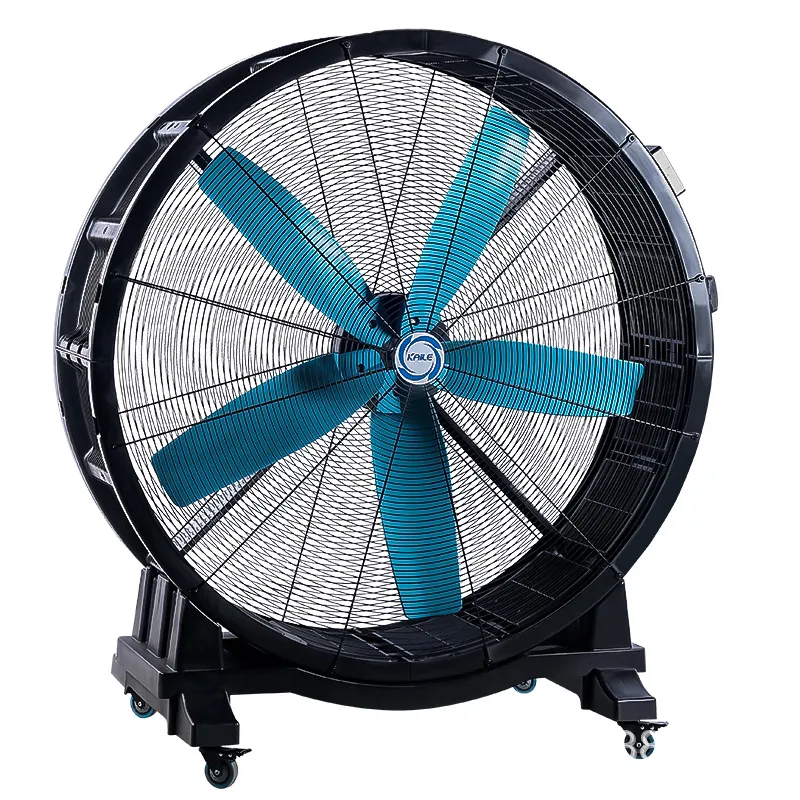
Sep 18, 2026Floor fan
Workshop Too Hot? Industrial Floor Fan Buying Guide and Maintenance TipsPost
Is your workshop too hot? Learn how to choose the right industrial floor fan. Compare CFM, copper motors, blade quality, and maintenance tips to build an effective cooling system.
Workshop Too Hot? Industrial Floor Fan Buying Guide and Maintenance Tips
Introduction
Workshop cooling is a common challenge for factories. Among cooling options like industrial ceiling fans, pedestal fans, and air conditioning, the industrial floor fan is one of the most cost-effective solutions. How do you choose the right floor fan? In short: look for high airflow, a pure copper motor, quality blades, and a reliable manufacturer. The fan should also offer good features such as low noise and versatile functions. These are the key factors for selecting a high-quality industrial floor fan.
If you are unsure how to choose the right floor fan, contact us. We are a professional Chinese fan manufacturer specializing in floor fans, pedestal fans, negative pressure fans, and industrial ceiling fans. With rich experience in fan cooling, we can provide a one-stop industrial cooling solution.
1. The Role of Industrial Floor Fans in Workshop Cooling
What Is an Industrial Floor Fan?
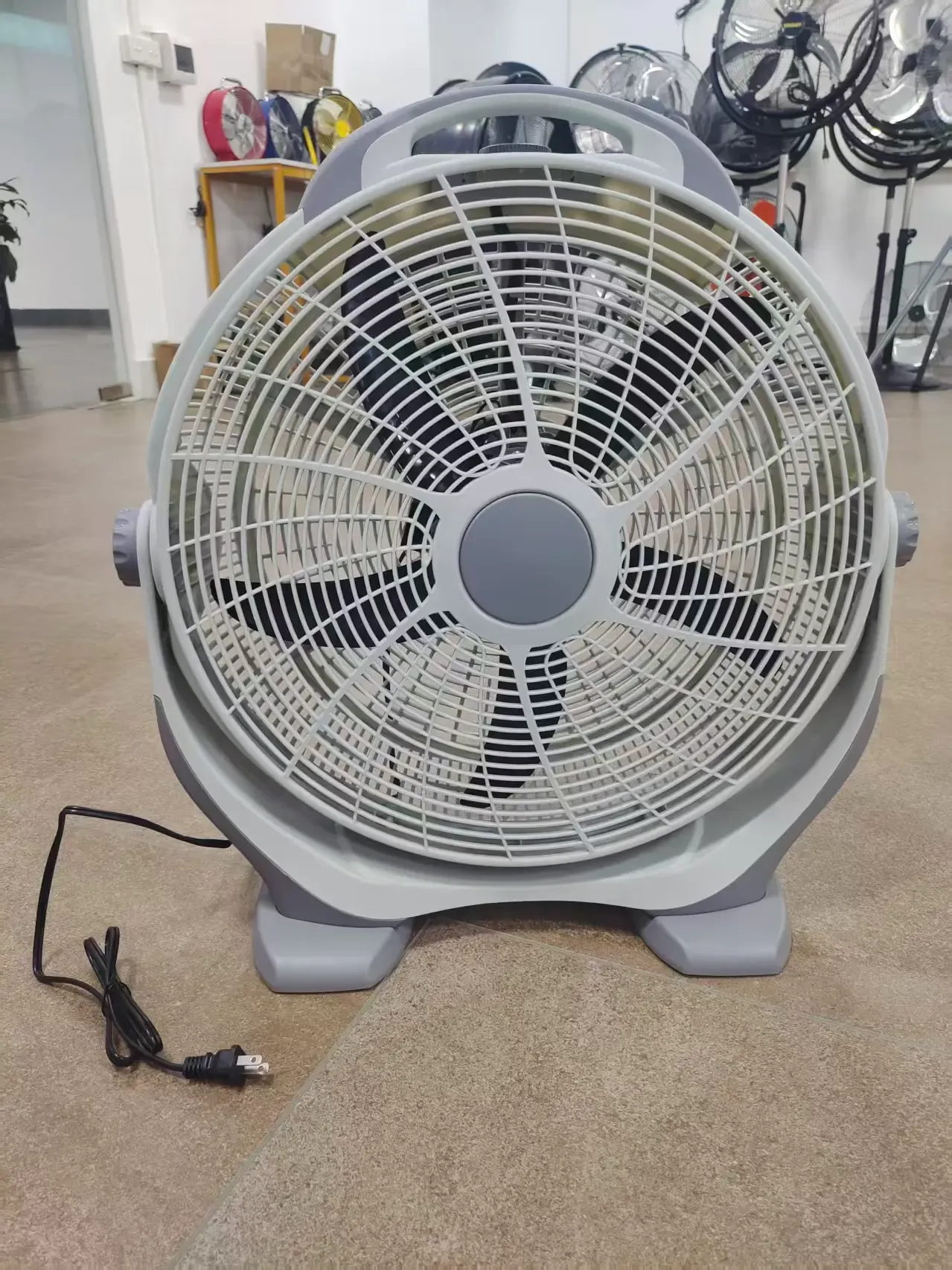
An industrial floor fan is essentially a high-speed, focused air delivery device for localized cooling. It can be used for both home and industrial cooling. Its features include powerful airflow, a low center of gravity, long air throw distance, flexible mobility, and adjustable angles. In hot environments, the core value of a floor fan is to deliver concentrated airflow to a specific area and achieve effective cooling.
2. Core Parameters for Choosing an Industrial Floor Fan
Fans on the market often look similar but have different prices. You get what you pay for—their configurations differ, which affects the price. The cost of a high-quality floor fan is higher than an ordinary fan, mainly due to the following configuration factors.
1. Airflow (CFM): More Important Than "How Far It Blows"
Many fan manufacturers advertise "8 speeds, blows 13 meters" or "powerful airflow," but the real core metric that determines a fan's actual air delivery capability is CFM (Cubic Feet per Minute). CFM is a key parameter for fan airflow performance and is often listed alongside cubic meters per minute (m³/min). For example, product specifications may show "53.94 CFM (1.53 m³/min)." CFM does not look at motor power or blade speed—it only measures how much air is actually moved per unit of time.
Household fans typically deliver around 1,000 CFM. A true industrial floor fan suitable for workshops and warehouses generally needs 3,000 CFM or more to create a continuous, stable, and penetrating airflow field. You can check this parameter in the fan's data sheet or ask the manufacturer directly.
2. Motor: The Core of Durability
Industrial floor fans are used much more intensively in workshops than in homes. Motor quality directly determines equipment lifespan.
Fan motors can be AC or DC. DC motors are suitable for small desktop fans with batteries.
For industrial fans, the preferred combination is an AC motor with mechanical control. The simpler the structure, the more stable the machine. Smart fans may suffer from frequent failures such as burned-out motherboards. Industrial floor fans typically use AC motors with simple internal structures including a rotor, coil, and capacitor. They offer stable speed, stable current, a motor that does not overheat, and bearings without abnormal noise—ideal for long-term operation.
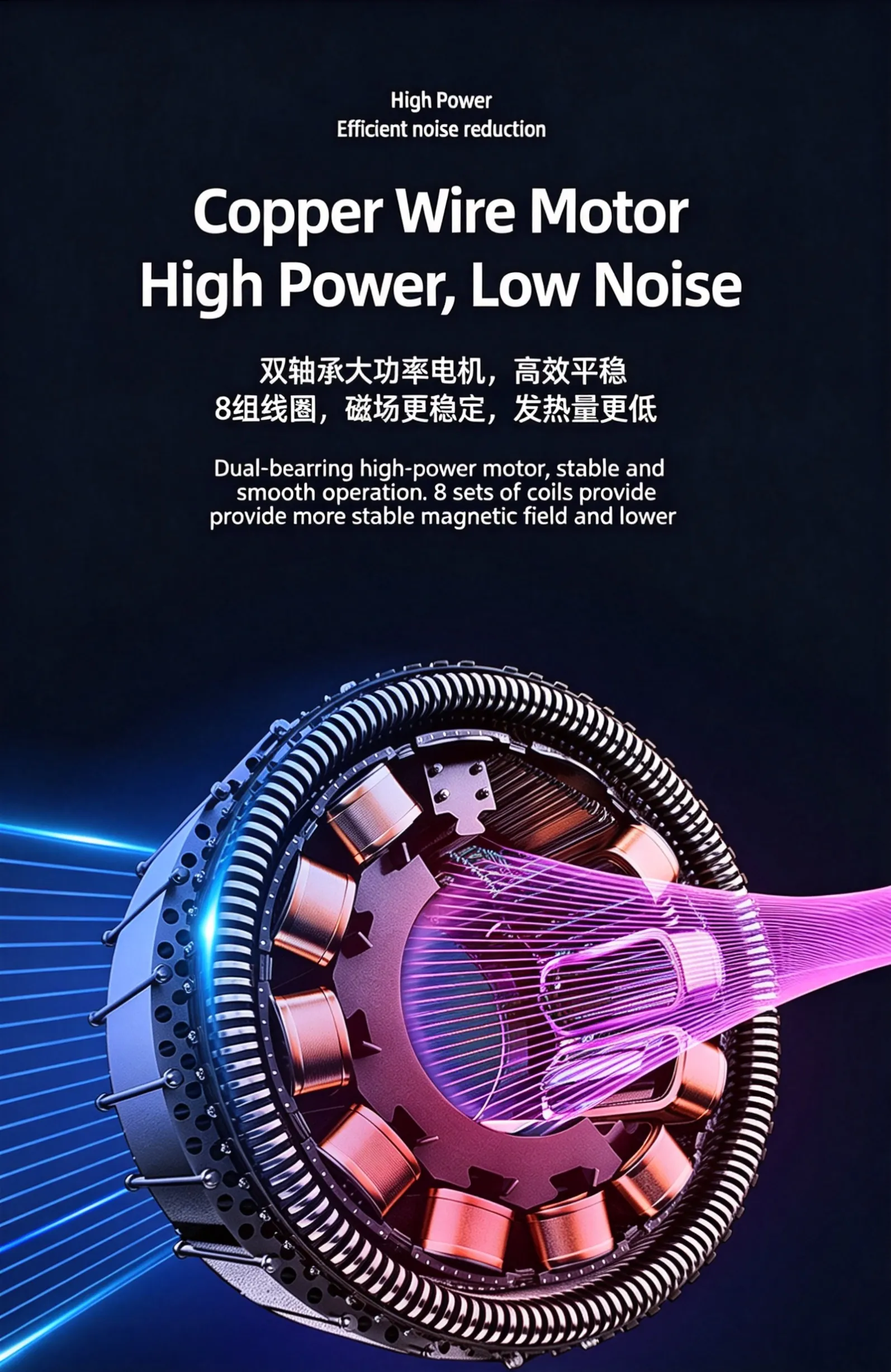
Motor coil material is another key indicator. Copper coils have better conductivity than aluminum wire, generating a stronger magnetic field. Therefore, a pure copper coil motor is more powerful, more heat-resistant, and more stable than an aluminum wire motor—perfect for hot workshop environments and long-term use.
3. Structure
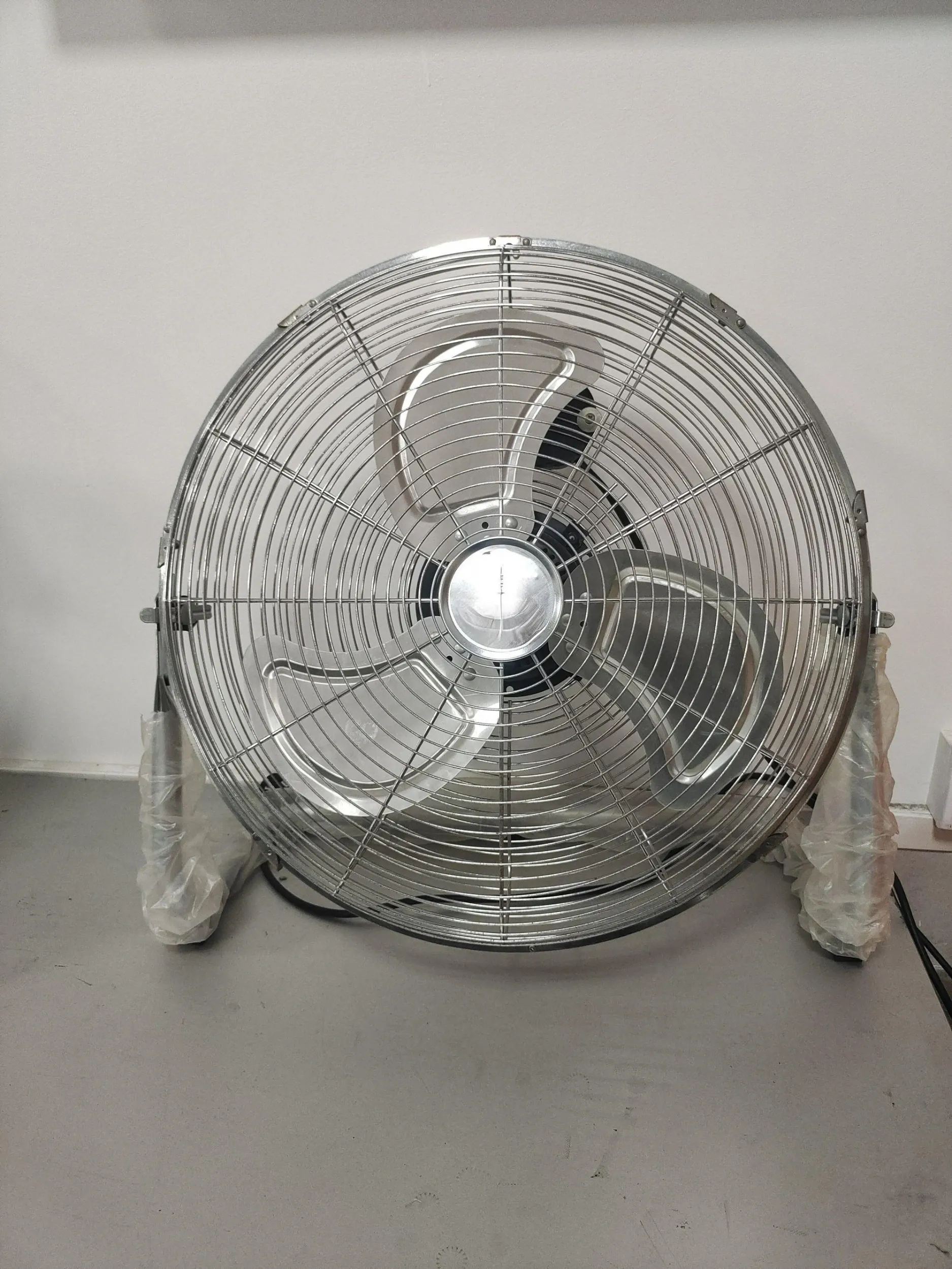
Floor fan blades generally come in three-blade and five-blade designs. More blades can enhance airflow. Conventional floor fan blades are usually flat; angled blades combined with a powerful motor can increase airflow. Thicker and longer blades can strengthen airflow. Fan size is determined by blade length and can be classified into 10-inch, 12-inch, 14-inch, 16-inch, and 18-inch sizes. Different sizes have different prices. Floor fans of 16 inches or larger are more suitable for factory use.
Workshop environments are complex, so base weight and protective design are important. Floor fans usually have a handle for easy movement, so the fan should not be too heavy. At the same time, it needs a stable base bracket and appropriate base weight to prevent shaking and vibration, which can affect airflow and cause safety hazards.
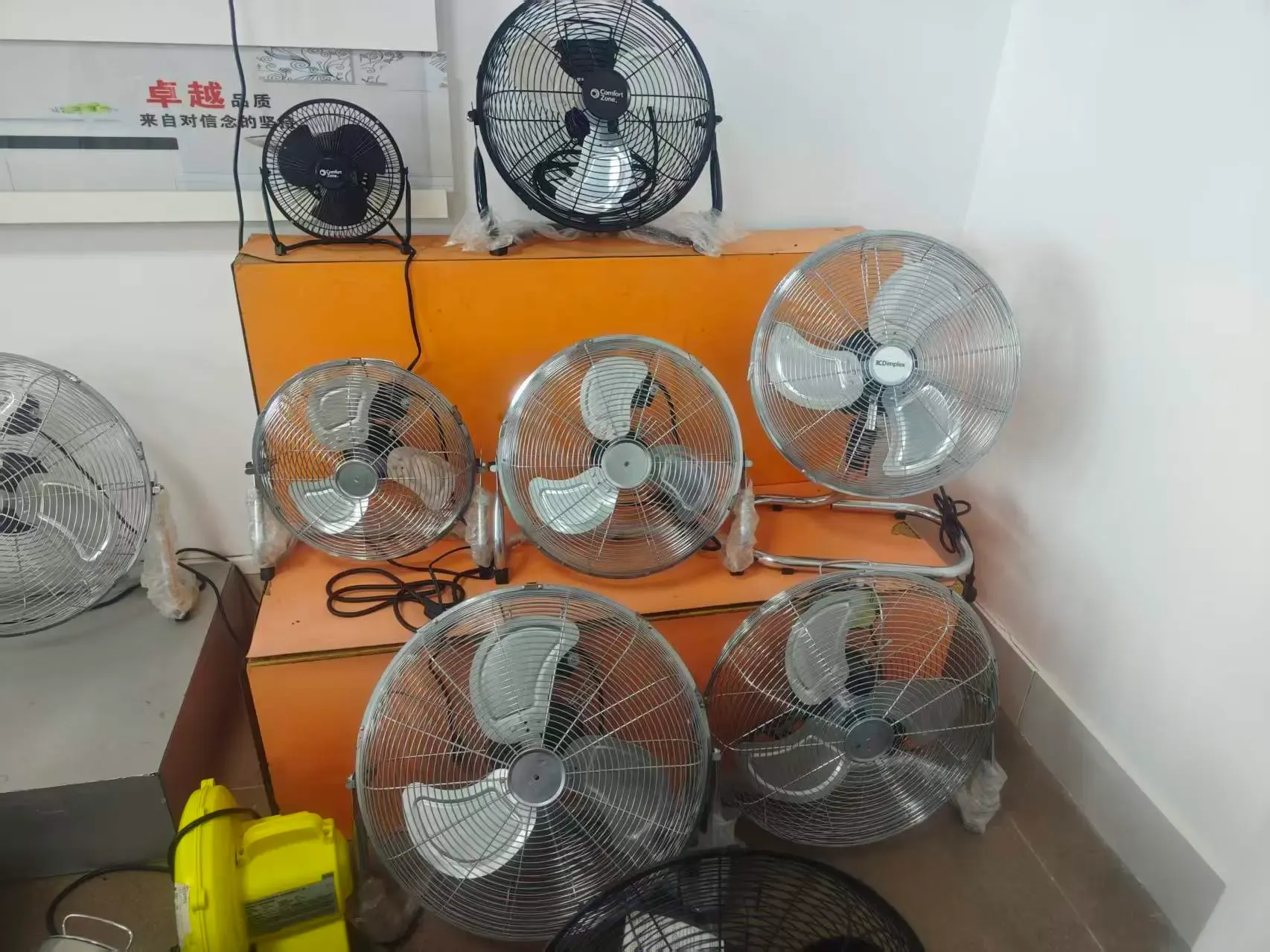
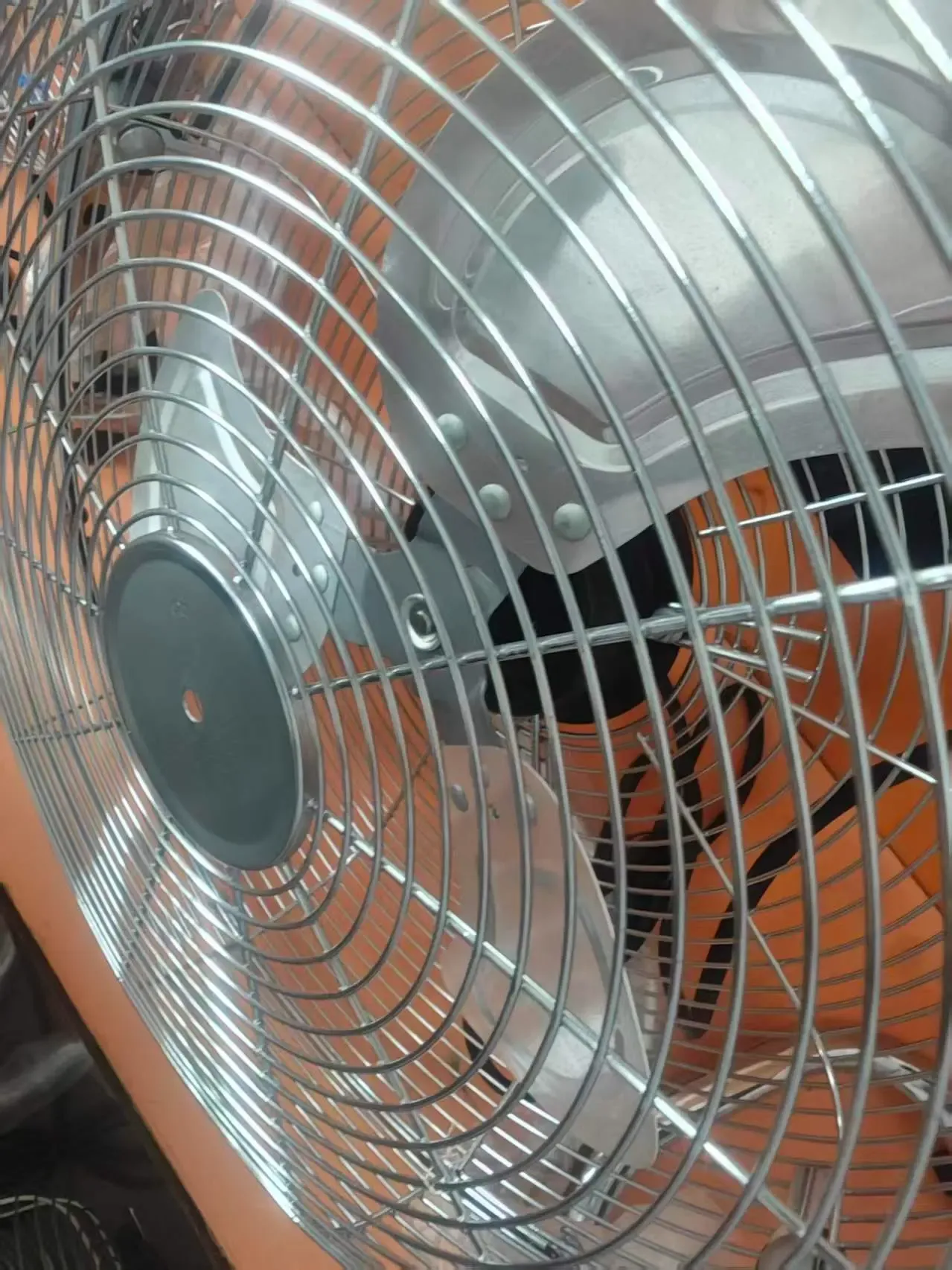
The metal grill is equally important. Industrial settings may involve iron filings, cotton lint, oil fumes, and other contaminants. Metal protective grills are more durable than plastic ones, so they cost more. Floor fan grills are usually snap-on type with a 1.6mm specification. Custom thickened metal grills of 1.8mm are also available for enhanced protection.
Custom functions include remote control, left-right oscillation, solar power, and battery options. These custom features often determine the cost of the floor fan. Solar fans, in particular, are now a popular outdoor cooling device widely used in camping, fishing, and picnics.
In summary, the quality and price of a floor fan are often determined by the above factors. When two fans look similar in style and appearance but differ greatly in price, it is usually due to the motor, blades, grill, and other specifications—because material costs affect the price of the floor fan.
4. Suitability: Is Your Workshop Right for a Floor Fan?
Floor fans are more suitable for the following scenarios:
- Localized hot workstations: welding points, beside injection molding machines, fixed positions on assembly lines.
- Small to medium areas: focused air delivery within 15–30㎡.
- Mobile locations: workshops where equipment layout is frequently adjusted.
Main applications for floor fans include factories, shops, canteens, farms, and living rooms.
Floor fans are less suitable for:
- Large-area overall cooling: A workshop over 300㎡ requires multiple units, resulting in high purchase and management costs. For large-scale stable air delivery and cooling, industrial ceiling fans are recommended.
- High-dust environments: Additional protection rating considerations are needed.
- Sealed spaces requiring heat exhaust and ventilation: Floor fans only circulate air; they do not introduce fresh air.
- Outdoor cooling: Requires a solar system and stronger IP protection rating.
3. Industrial Floor Fan Usage and Maintenance Tips
Usage Precautions
- Place on a stable surface: Ensure the fan is placed on a flat, stable surface to avoid tipping or instability.
- Disconnect power before adjusting angle: Always turn off the power before adjusting the tilt angle. Wait for the blades to stop before operating.
- Avoid humid environments: Prevent electrical components from moisture, which can cause short circuits or leakage.
- Stop immediately if abnormalities occur: If you notice unusual noise, vibration, or smell, cut off the power immediately and contact a professional for inspection.
Maintenance
- Regular cleaning: Always disconnect power before cleaning. Wipe the grill and blades with a soft cloth and mild detergent. Do not use corrosive liquids such as gasoline.
- Bearing lubrication: After 2,000 hours of operation, inspect and replace bearing lubricant. At least once a year is recommended.
- Check connections: Regularly check whether screws are loose and tighten them promptly.
- Inspect blades: Long-term use can cause fan blades to deform, leading to shaking. Rotate the blades against a fixed reference to check for deformation.
4. A Systematic Approach to Workshop Cooling
In actual work, workshop cooling difficulties mainly have the following causes:
First, complex heat source distribution. The surface temperature of an injection molding machine can reach 80–120°C. A spraying line or an oven is a small "heat source station." If only overall cooling is performed, the cold air is neutralized by the heat wave before it reaches the workstation—resulting in high energy consumption and poor results.
Second, special spatial structures. Many old factory buildings have ceilings over 8 meters high, some even reaching 12 meters. In tall steel-structure workshops, hot air rises to form a heat dome, and cold air cannot settle down. Ordinary wall-mounted fans blow air at the same temperature as the workshop, merely "accelerating the flow of hot air," making workers even more uncomfortable.
Third, large temperature differences between workstations. On an assembly line, some workstations are close to high-temperature equipment, some are near material entrances, and some are in enclosed corners. Personnel and logistics doors are often open, and indoor cold air is quickly lost. Conventional equipment struggles to retain a cool feeling.
Therefore, a floor fan is an effective tool for localized cooling, but if the entire workshop is stuffy, a floor fan alone cannot solve the problem. A complete workshop ventilation and cooling plan should consider the following levels:
Level | Goal | Suitable Equipment |
|---|---|---|
Overall Ventilation | Exhaust hot air, introduce fresh air | Negative pressure fans, roof exhaust vents |
Area Cooling | Lower temperature in a specific area | Eco-friendly air coolers, evaporative cooling fans |
Workstation Cooling | Provide direct airflow for workers | Floor fans, industrial ceiling fans (HVLS) |
For large workshops, the combination of negative pressure fans and cooling pads can achieve a 5–12°C temperature drop, with investment and operating costs only about one-tenth of air conditioning. Industrial ceiling fans are suitable for tall factory buildings, circulating air across the entire space, eliminating temperature differences between upper and lower levels, and providing a perceived temperature drop of 4–6°C.
The best positioning for a floor fan is as a supplementary workstation cooling device: on the basis of overall ventilation, it provides direct airflow coverage for the hottest areas. Combining floor fans with negative pressure fans and industrial ceiling fans can achieve a synergistic effect of "overall ventilation + localized cooling."
Our floor fans feature:
- 10-meter air throw for wider coverage
- Upgraded copper motor for energy saving
- Thickened aluminum blades for stability and durability
- Multiple style options and customization support
- Dense metal grill and anti-slip base design
Conclusion
When your workshop is too hot, an industrial floor fan is a cooling tool worth considering—but it is not a universal solution. When choosing, focus on CFM airflow, copper wire motors, high-quality blades, and protection. Judge whether a floor fan suits your scenario based on actual workshop conditions. If you are unsure how to choose the right floor fan, contact us. We are a professional fan manufacturer and can provide expert advice.
For large workshops, prioritize overall ventilation and use floor fans as a supplementary workstation cooling method. The right combination of equipment, such as floor fans + HVLS fans, is the key to creating a truly cool and efficient production environment.
📞 Looking for the right industrial floor fan for your workshop? Contact us today for expert advice and a customized cooling solution.