Pedestal Fan
Industrial Pedestal Fan Selection Guide 2027 | Types & Motors
How to choose an industrial pedestal fan in 2027: fan types, copper vs aluminum motors, base options, TCO math and a 4-step selection process from a Chinese factory.
Industrial Pedestal Fan Selection Guide 2027: Types, Motors, Stands and How to Choose
Quick answer: Choose an industrial pedestal fan by airflow first, then by motor and stand. Match total CFM to your floor area, insist on a copper-winding motor (or a DC brushless motor where noise matters), pick a fixed base for permanent spots and a caster base for moving between zones, and calculate 3–5 year total cost of ownership — not just the unit price. Standard pedestal fans cover most factory floors; detachable and 2-in-1 models pay off where space is tight or usage changes by season.
Why This Guide Matters
The pedestal fan has grown into a huge product category. Walk through any sourcing platform and you will find dozens of sizes, motor options, base designs and add-on features — and for a procurement manager, that variety is exactly the problem. Picking the wrong configuration means either paying for capacity you never use or fighting heat all summer with a fan that was never sized for the job.
The stakes are higher than they used to be. Hotter summers, shifting global climate patterns and tighter operating budgets mean ventilation equipment now has to do two jobs at once: solve the heat problem on the workshop floor and keep energy and maintenance costs down. A well-chosen industrial stand fan quietly improves productivity and reduces cost for years. A poorly chosen one becomes a maintenance line item.
This guide walks through fan types, motors and windings, stand designs and the features that actually earn their price — then gives you a four-step selection process you can take straight into a supplier conversation.
Industrial Pedestal Fans vs Household Pedestal Fans: What's the Difference?
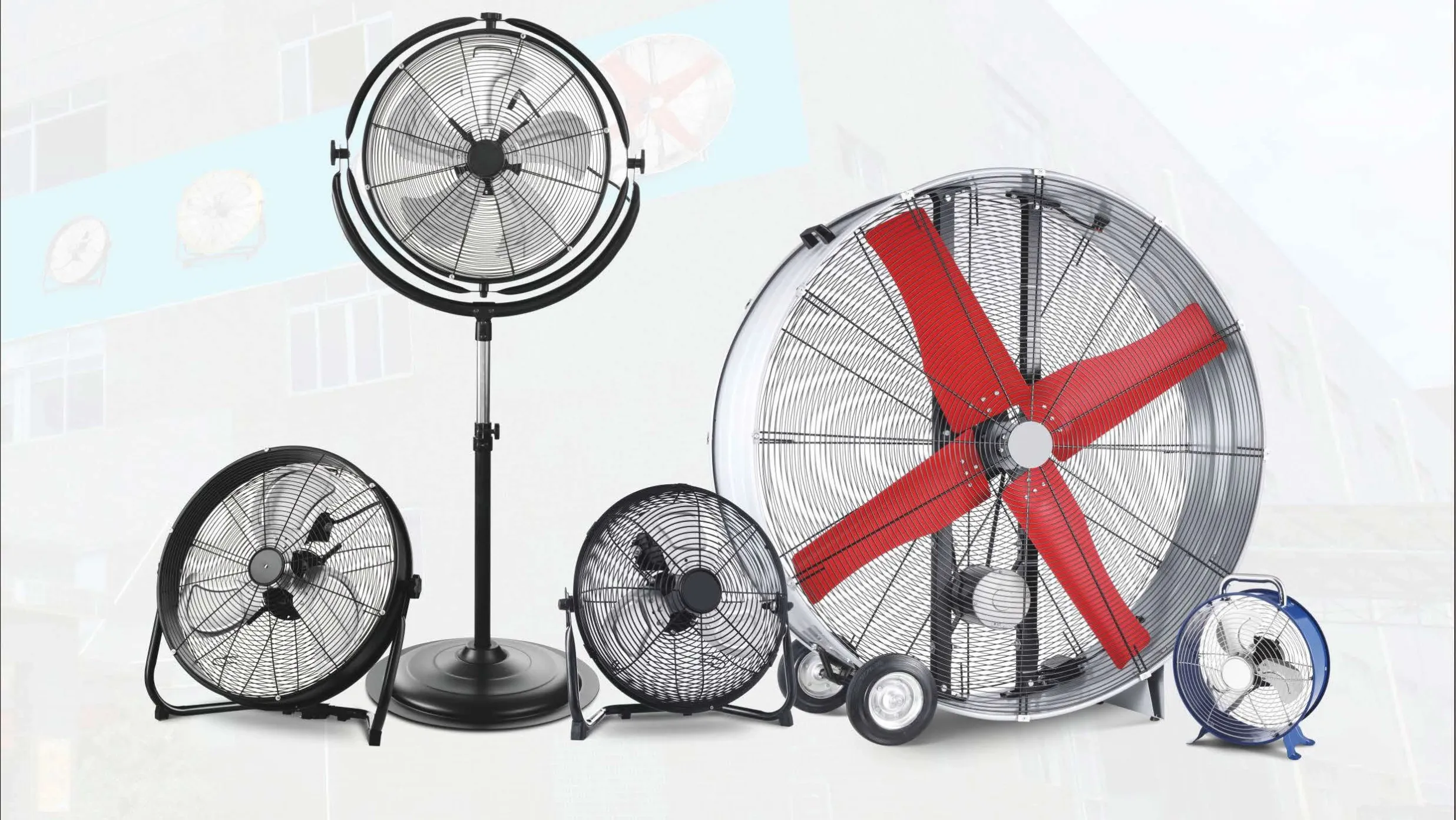
The category splits into household (residential) fans and industrial (commercial) fans — the latter often sold as industrial stand fans or heavy-duty pedestal fans. They look similar, but they are built for very different duty cycles.
| Industrial pedestal fan | Household pedestal fan |
Typical size | 14–30 inches and above | 8–12 inches |
Airflow and velocity | High airflow, high velocity | Low airflow, gentle breeze |
Motor | Heavy-duty, built for continuous operation | Light-duty, intermittent use |
Structure | Simple and stable, few failure points | Feature-heavy, more components |
Features | Deliberately minimal | Multi-speed, smart control, timer, oscillation, humidifying, USB or solar charging, natural wind, quiet mode, water cooling, air circulation, foldable |
Best for | Factories, warehouses, workshops, farms, greenhouses | Bedrooms, living rooms, small offices |
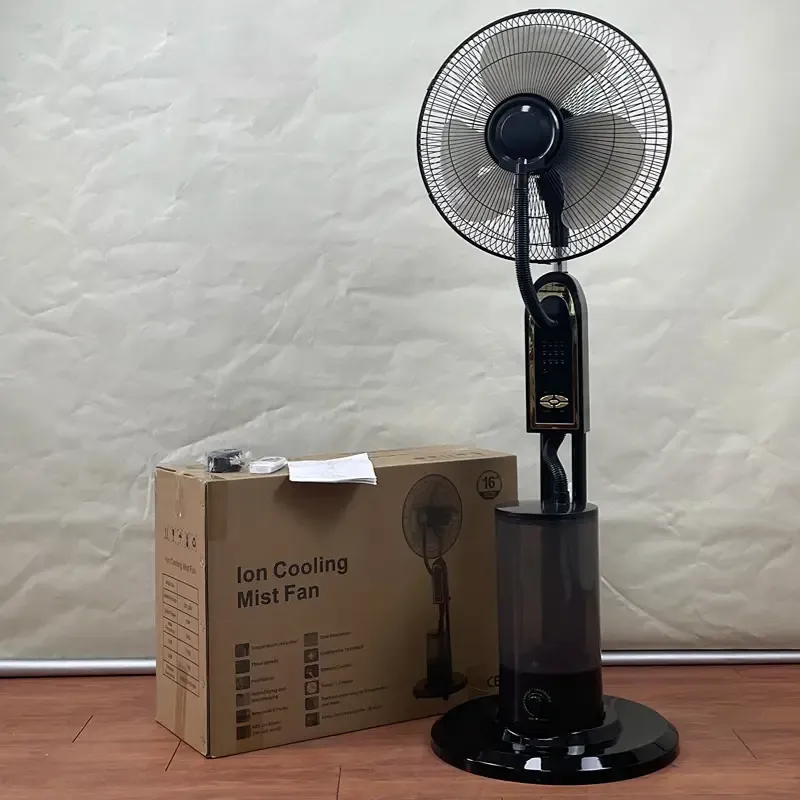
Household pedestal fans compete on features: multiple speed settings, smart control, height adjustment, humidifying, solar charging, timers, oscillation, USB charging, natural-wind modes, quiet operation, water cooling, air circulation and folding designs. Buyers pick whatever combination suits their preference.
An industrial pedestal fan can absolutely be used at home — the build quality is better, not worse. The reverse does not work. Household pedestal fans are too small in both size and airflow to cool a commercial or industrial space, no matter how many features they carry.
The Three Main Types of Industrial Pedestal Fans
1. Standard Pedestal Fan
The classic industrial fan: a fan head on a pillar, mounted on a weighted base. It is the best-selling configuration on the market for good reason — simple, proven and the most cost-effective option per unit of airflow.
Choose it for permanent cooling positions on assembly lines, packing areas, loading docks and open workshop floors.
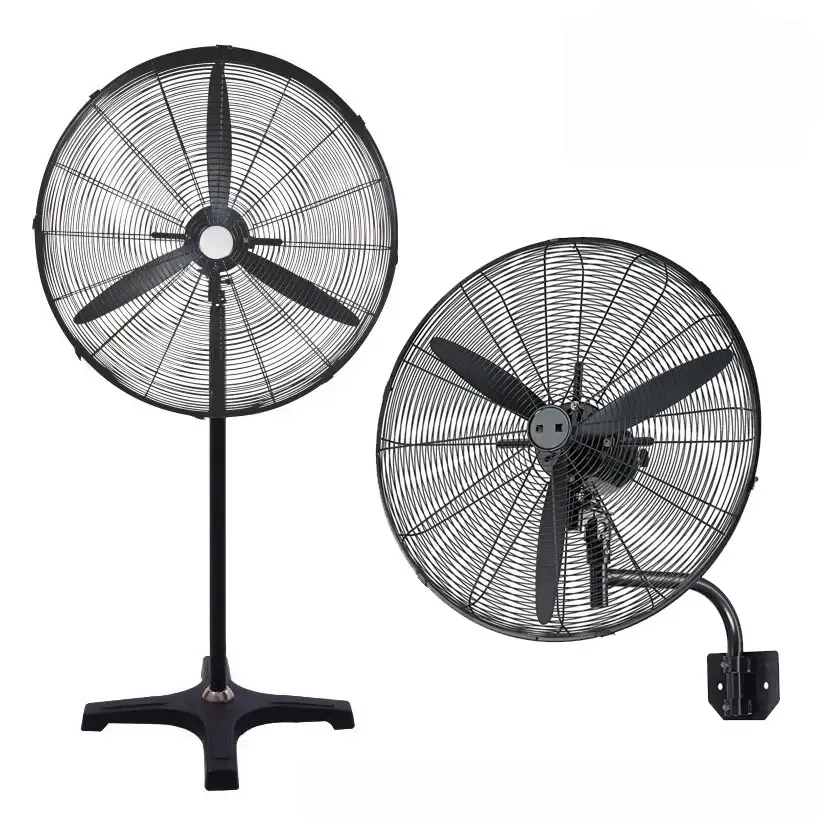
2. Detachable (Wall-Mount or Stand) Pedestal Fan
A detachable pedestal fan separates from its stand and can be hung on a wall or run directly on the bracket. That flexibility matters in factories where floor space is contested or where the cooling need moves with the season.
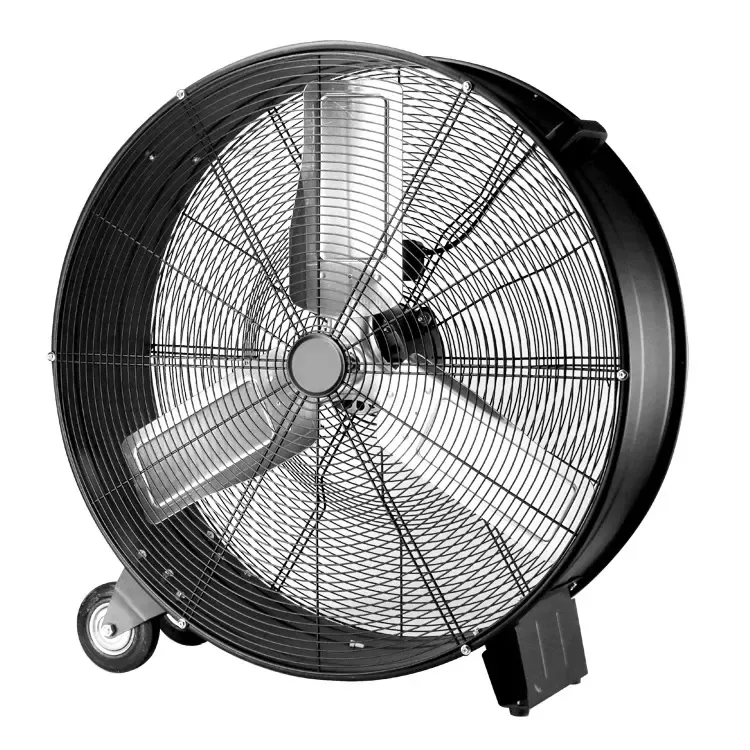
The classic example is the industrial bull-horn fan (the open wire-guard "cow horn" style), which also widens the airflow angle considerably compared with a standard pedestal head.
3. 3-in-1 Pedestal Fan
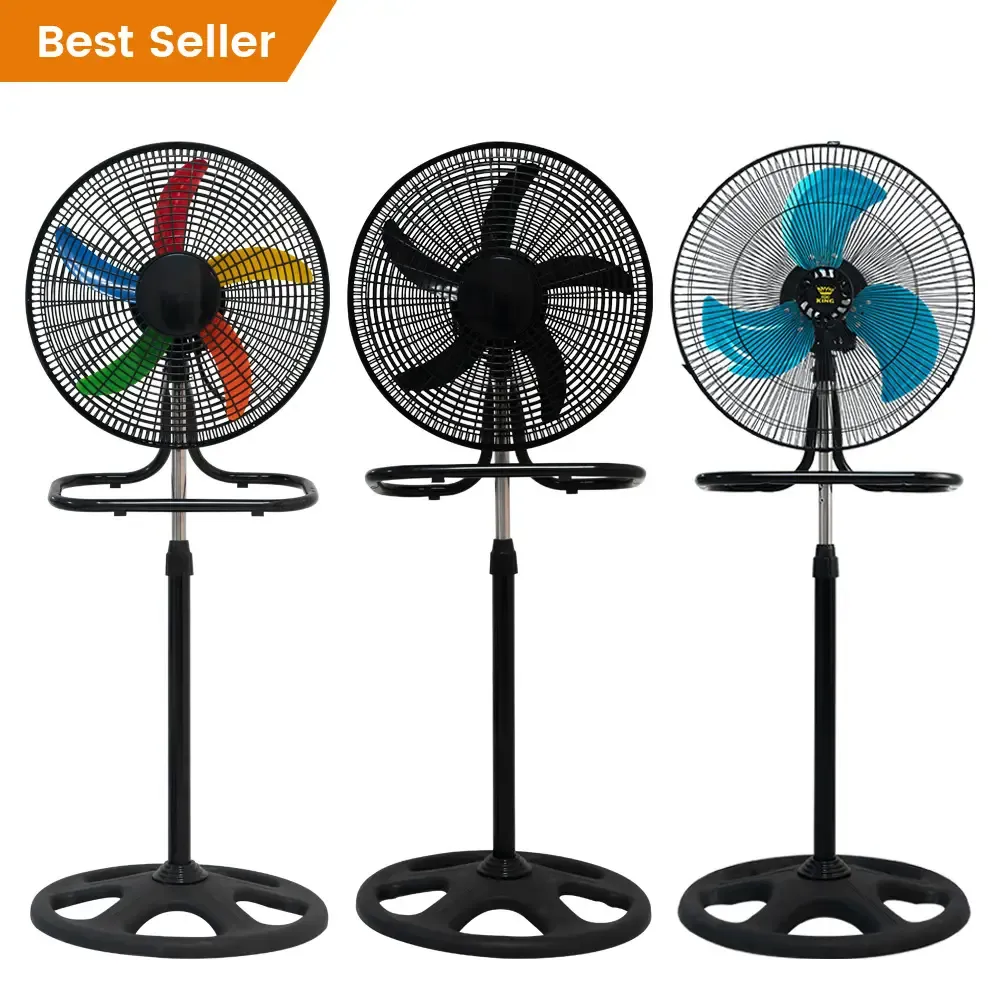
A 3-in-1 works like a detachable pedestal fan with one key difference: once removed from the stand, it can be used as a drum fan (floor blower). A normal pedestal fan adjusts in height but cannot go down to floor level. A 2-in-1 can be laid flat on the ground or a workbench, delivering the low, wide air movement that a pedestal fan physically cannot.
This is the most versatile configuration for rental fleets, multi-site operations and distributors who want one SKU covering several use cases.
This is a 18 inches 3 in 1 pedestal fan which is very popular in the Amazon, and we are one of manufacturers of it.
Motors and Windings: What Really Decides Lifespan
The motor determines both service life and the day-to-day experience of using the fan. There are two motor technologies and two winding materials to understand.
Motor type
DC brushless (inverter) motor
- Very low noise — down to roughly 20 dB at the lowest setting
- Energy efficient
- Fine-grained speed control
- Higher purchase price
AC motor
- Affordable
- Louder in operation
- Higher power consumption
Winding material
Aluminum winding
- Low purchase cost
- Poor conductivity and heat dissipation, which lowers energy conversion efficiency and raises running cost
Copper winding
- High conductivity and high conversion efficiency
- The mainstream choice for industrial pedestal fans
Rule of thumb: for home use with a comfortable budget, a brushless DC motor is worth it — low noise is a real advantage for sleep and daily life. For factory and commercial use, copper winding is the baseline; the electricity savings usually repay the price difference well before the fan reaches the end of its life.
Stand Types: Stability vs Mobility
The stand is not a trivial part. It decides how stable the fan is, how easy it is to reposition and how much floor space it occupies.
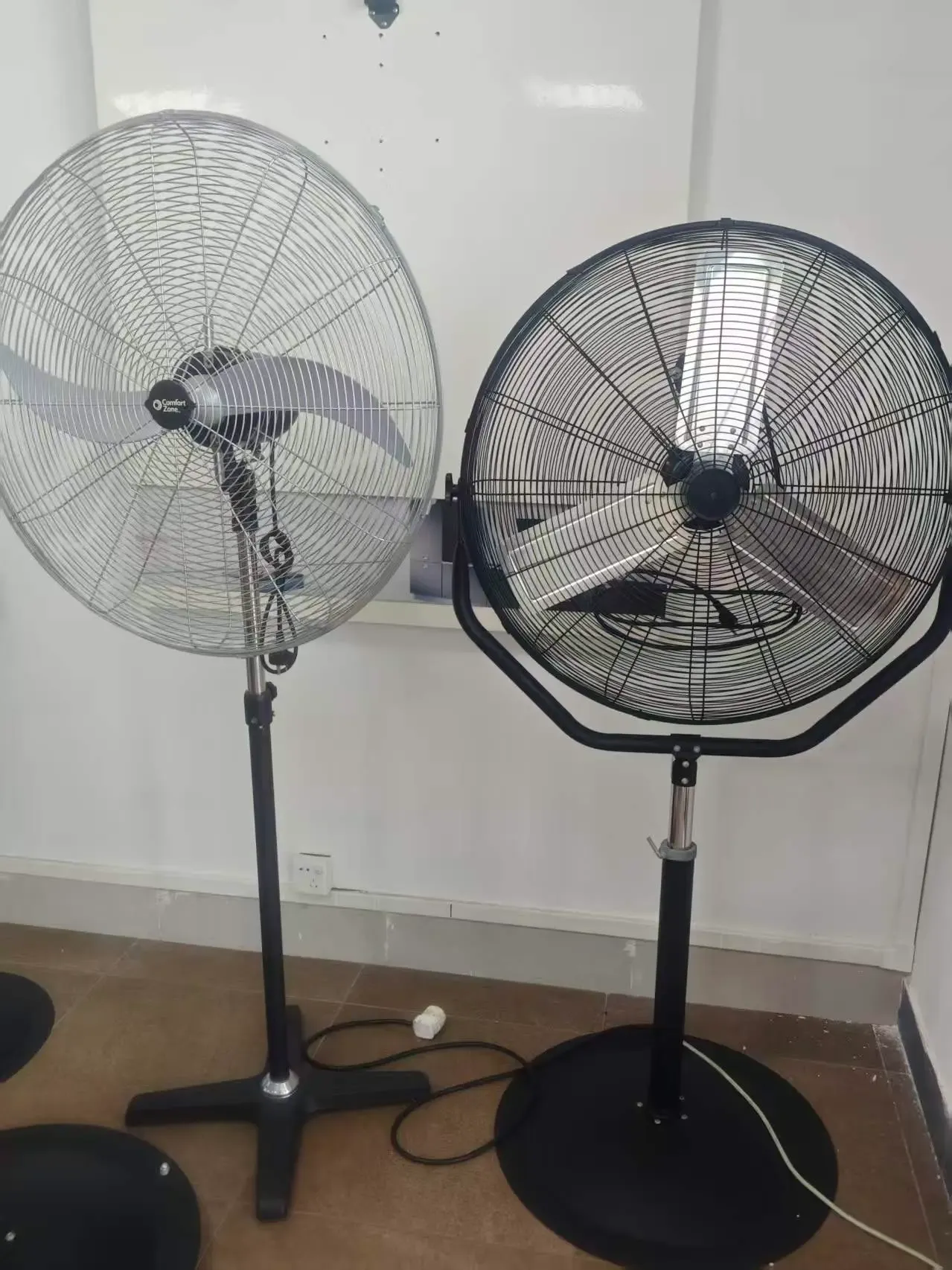
Fixed base
Base weight and volume scale with fan size. A 30-inch pedestal fan can carry a 6–8 kg base plate, and with the rest of the assembly the unit is very stable — and very heavy to move. Right choice for a permanent position.
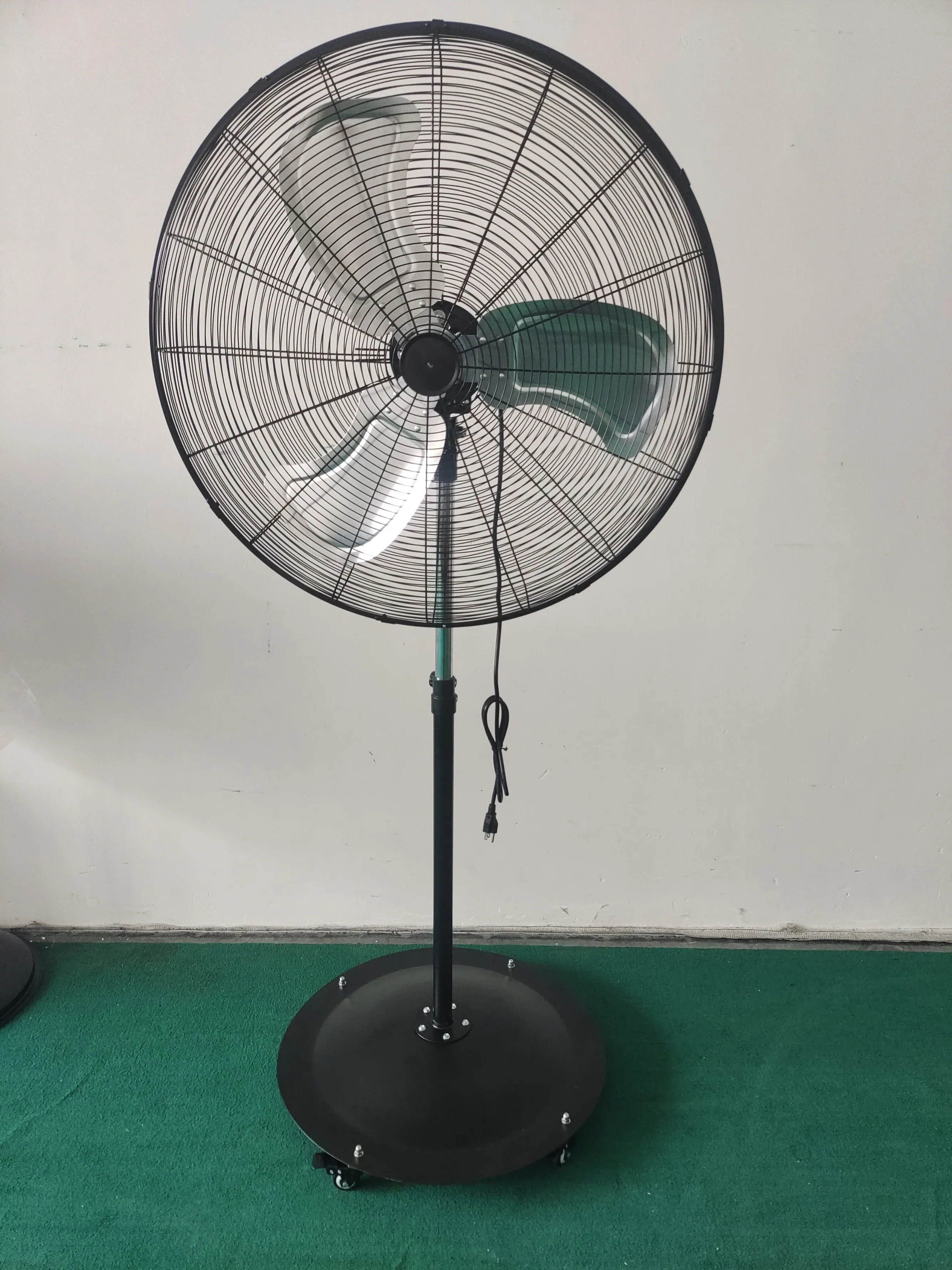
Caster (wheeled) base
Adding casters to a heavy base turns the fan into a mobile industrial pedestal fan: you keep the stability of a weighted base while gaining the ability to roll it between work zones. Increasingly popular with factories that cool different areas on a schedule.
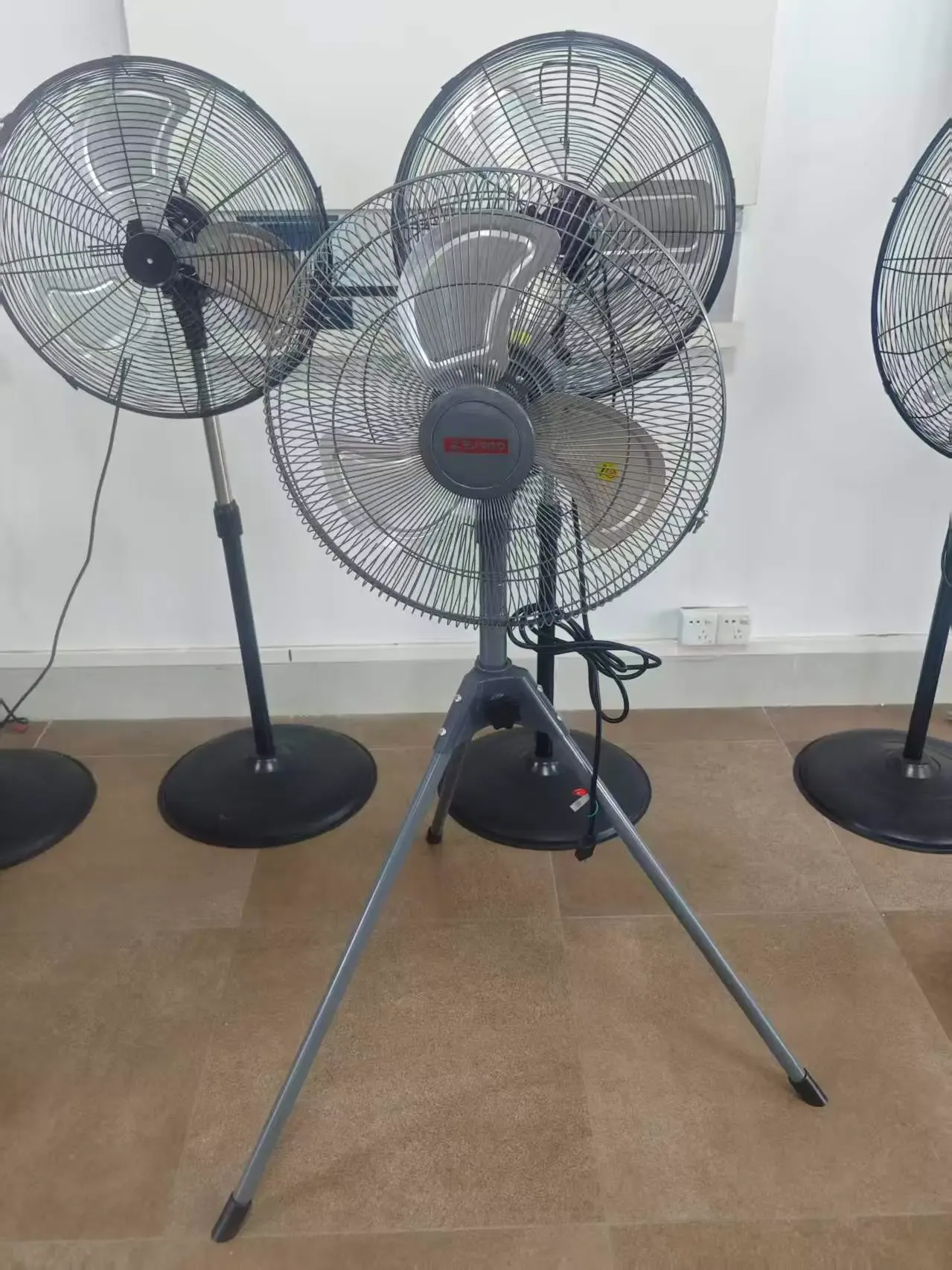
Tripod base
A three-leg stand cuts overall weight substantially and remains very stable, at the cost of a slightly larger footprint. A good fit where the fan must be moved often but the floor is uneven.
Features Worth Paying For
You can add almost any feature to a commercial pedestal fan, but every feature adds cost. For factories managing a budget, three stand out as genuinely useful.
Remote control — best suited to wall-mounted industrial fans, since it lets you operate a fan mounted out of reach. It is also widely used on pedestal fans and drum fans, saving staff the walk to adjust speed.
Solar power — useful for backup cooling and for regions with unstable or expensive grid supply.
Misting (atomizing) function — suited to hot, dry climates, especially spaces where hot air accumulates. Evaporating water absorbs a large amount of heat, producing a noticeable cooling and humidifying effect.
If you are a distributor or brand owner rather than an end user, survey your target customers before specifying features. Added features add cost, and the features that sell in one market are dead weight in another.
How to Choose an Industrial Pedestal Fan in 4 Steps
Step 1: Define demand and market
Match airflow, quantity and workshop area. Undersizing is the most common and most expensive mistake — a fan that cannot move enough air across the floor does nothing for a heat problem, however cheap it was.
If you are selecting products for resale rather than for your own plant, look for gaps in the market. Wheeled industrial pedestal fans, for example, remain a relatively uncrowded segment compared with standard fixed-base models.
Step 2: Set the budget against total cost of ownership
Your budget has to cover quantity × unit price, but the purchase price is only the first number. Calculate the 3–5 year total cost of ownership: purchase price plus electricity plus maintenance plus replacement.
This is where aluminum-winding motors lose. A cheaper aluminum fan typically consumes more power and has a shorter service life, so its TCO over three to five years is almost always higher than a copper-winding fan that cost more up front.
Step 3: Choose the manufacturer
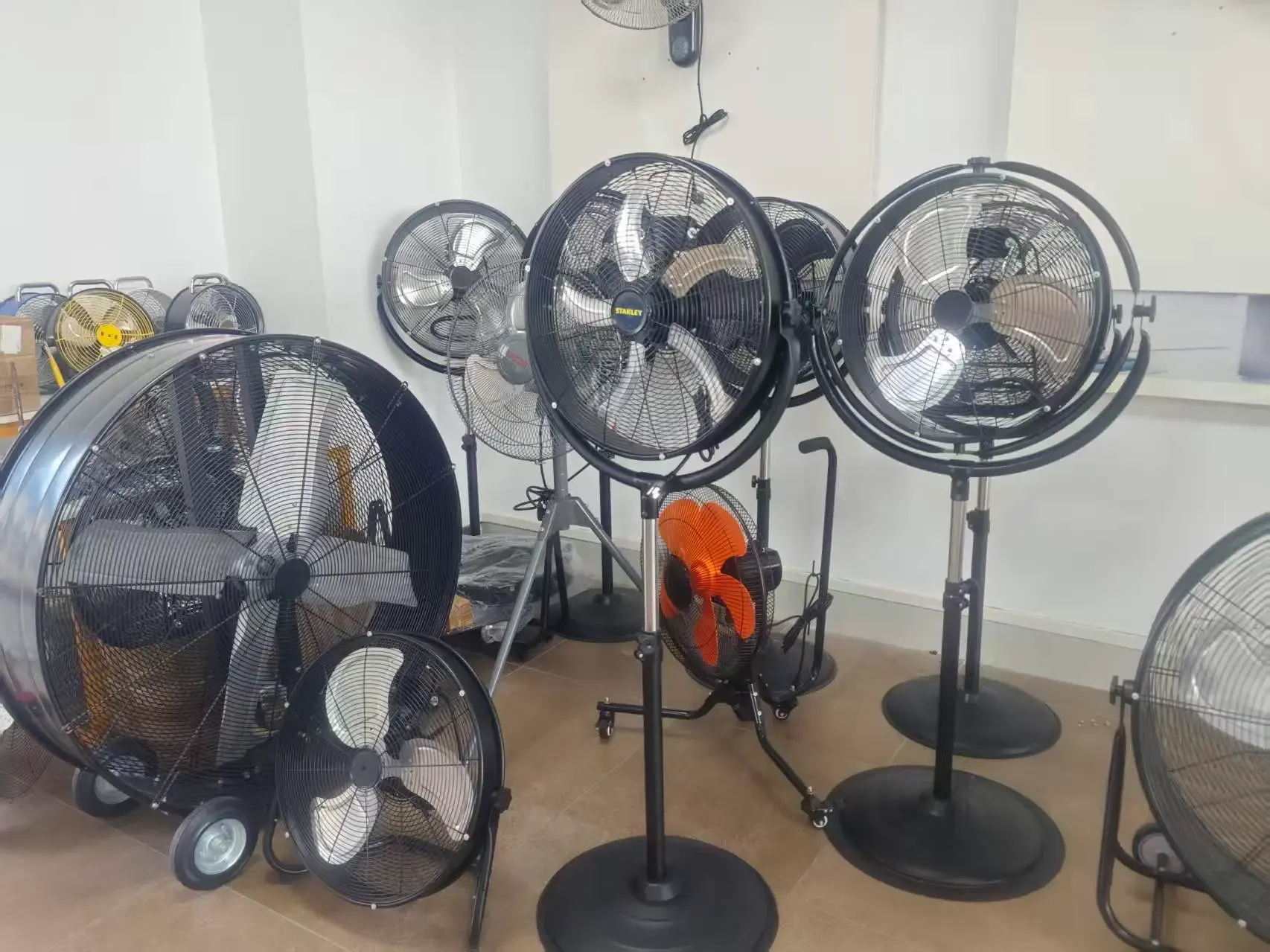
Work with a reliable Chinese fan manufacturer. Sundream Fan is a professional ventilation equipment manufacturer based in Zhongshan, China, supplying pedestal fans, drum fans and exhaust fans for home, commercial and factory cooling, and manufacturing for established brands.
Verify a few things before committing: motor specification (copper or aluminum, AC or DC), base weight and material, blade design, certification documents, warranty terms and OEM/ODM capability.
Step 4: Weigh brand against price
Branded fans are good quality — that is rarely in question. The premium is the question. If your budget allows it, a brand purchase is a safe route. If you are buying for a factory floor or reselling, factory-direct supply with a documented specification typically delivers the same performance at a materially lower cost.
FAQ
Do I have to buy a branded fan?
No. Many branded fans are manufactured by contract factories — OEM production is the norm in this category, not the exception. Sundream Fan is a professional fan manufacturer supporting OEM and ODM, and supplies products sold through major retail chains including Walmart and Home Depot.
What is the difference between a pedestal fan and a floor fan?
A pedestal fan delivers air from a higher position, comes with oscillation as standard and covers a wide angle. A drum fan is smaller and lighter, usually fitted with a carry handle, and is designed to be moved and aimed at floor level. Many buyers keep both: pedestal fans for general circulation, drum fans for spot cooling and drying.
Does airflow depend on the motor?
Partly. Airflow is a function of the motor, the blade length, the blade shape and the guard design. Published figures vary by test method, so confirm actual measured airflow with your supplier rather than relying on a catalogue number.
Should I choose a pedestal fan by size or by airflow?
Experienced buyers usually work by size — 14 inch floor fan, 16 inch floor fan, 30-inch pedestal fan — because it is fast and the categories are familiar. Choosing by airflow is more professional and more reliable, especially for large spaces, because it accounts for the actual volume of air you need to move.
Conclusion
Industrial pedestal fan selection comes down to four decisions: how much air you need, which motor and winding you can afford over five years rather than on day one, which stand matches how the fan will actually be used, and which supplier can document what they are selling you.
Get those four right and the fan becomes a low-maintenance asset that pays for itself every summer. Get them wrong and you spend the season moving a heavy base around a floor that never gets cool.
Sundream Fan manufactures industrial pedestal fans, drum fans and exhaust fans for factories, warehouses, farms and commercial spaces, with OEM and ODM support. Send us your floor area, ceiling height and target temperature drop, and we will size the airflow for you.