Sep 30, 2026Floor fan
Permanent Magnet Fan vs Floor Fan: What's the Difference?
Discover the difference between permanent magnet fans and regular industrial fans. Compare motor structure, energy savings, noise, airflow coverage, and maintenance costs for workshop ventilation.
Permanent Magnet Fan vs Floor Fan: What's the Difference?
Introduction
Many tall factory buildings and warehouse workshops face the problem of poor air circulation. Some enterprises casually purchase a few ordinary industrial fans and install them, thinking there is airflow. But the workshop remains stuffy, dust accumulates, and electricity bills stay high. To choose the right ventilation equipment, you must first understand the difference between a permanent magnet fan and a regular fan. Many factories make the mistake of only looking at the purchase price while ignoring long-term operating costs and overall results.
In one sentence: the difference between a permanent magnet fan and a regular floor fan lies in the motor. A regular floor fan uses an asynchronous motor plus a gearbox, while a permanent magnet industrial fan is equipped with a permanent magnet synchronous direct-drive motor. Overall, the permanent magnet industrial fan is superior to the regular floor fan in both quality and energy savings.
Permanent Magnet Industrial Fan vs Regular Floor Fan: Key Differences and Workshop Applications
The hidden risks of poor workshop ventilation are greater than imagined. Data shows that when the workshop temperature exceeds 35°C, worker efficiency drops by about 30%. High temperatures also accelerate equipment aging and increase the probability of failure. In enclosed workshops, welding fumes, grinding dust, and volatile gases cannot be discharged in time. They continue to accumulate, not only causing respiratory occupational diseases but also creating safety hazards with certain dusts. In humid and stuffy environments, raw materials and finished products are prone to moisture and mold, causing serious product losses.
At present, there are many types of industrial ventilation equipment commonly used: small wall fans, exhaust fans, floor fans, pedestal fans, ordinary gearbox industrial ceiling fans, and permanent magnet industrial fans are all mainstream market options. The applicable scenarios, ventilation effects, and energy consumption of different devices vary significantly. For tall spaces seeking full-area air circulation and cooling, large-diameter industrial fans are the most cost-effective choice. This is when understanding the difference between permanent magnet fans and regular fans becomes especially critical.
Motor Structure: The Core Difference
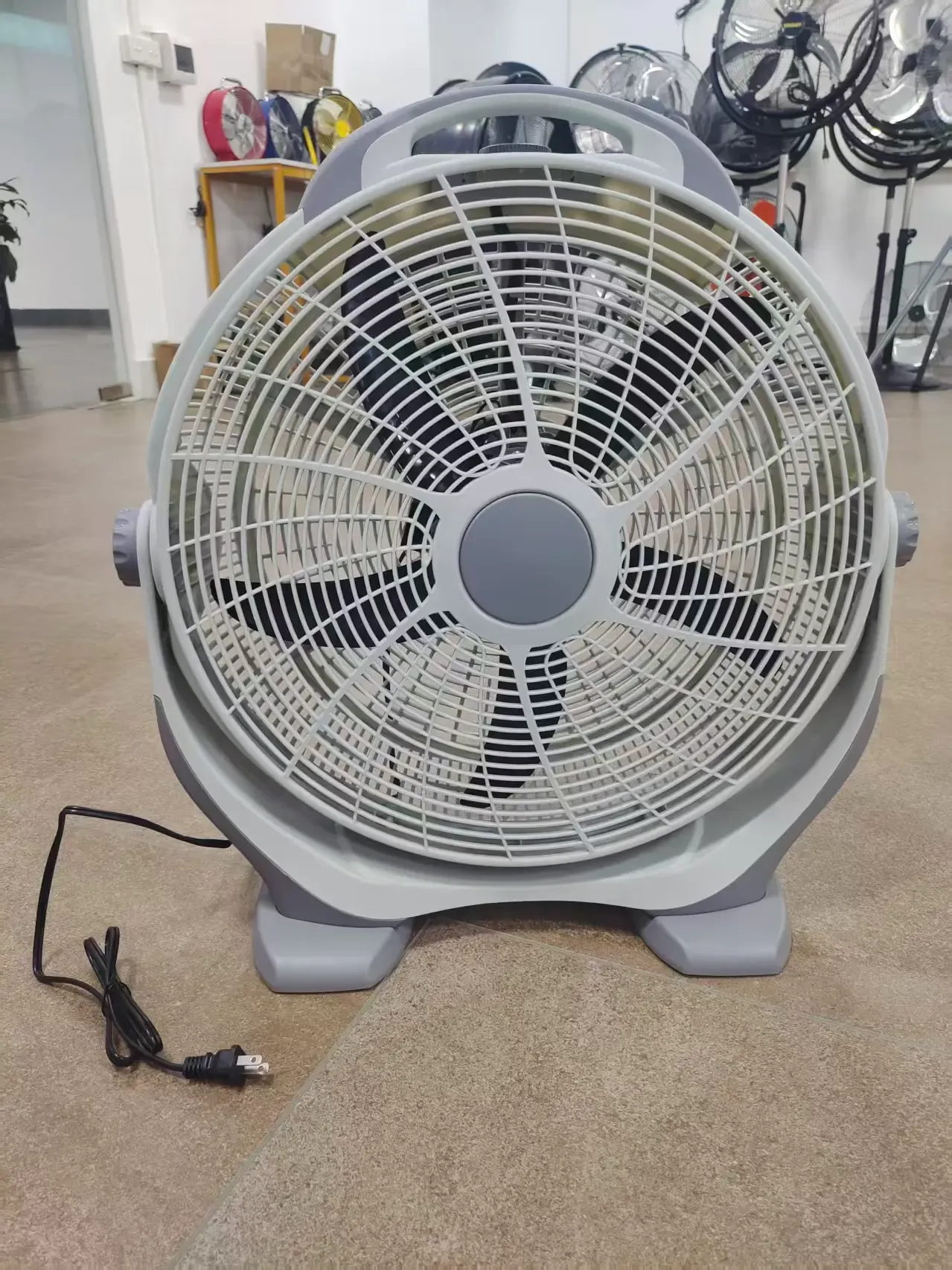
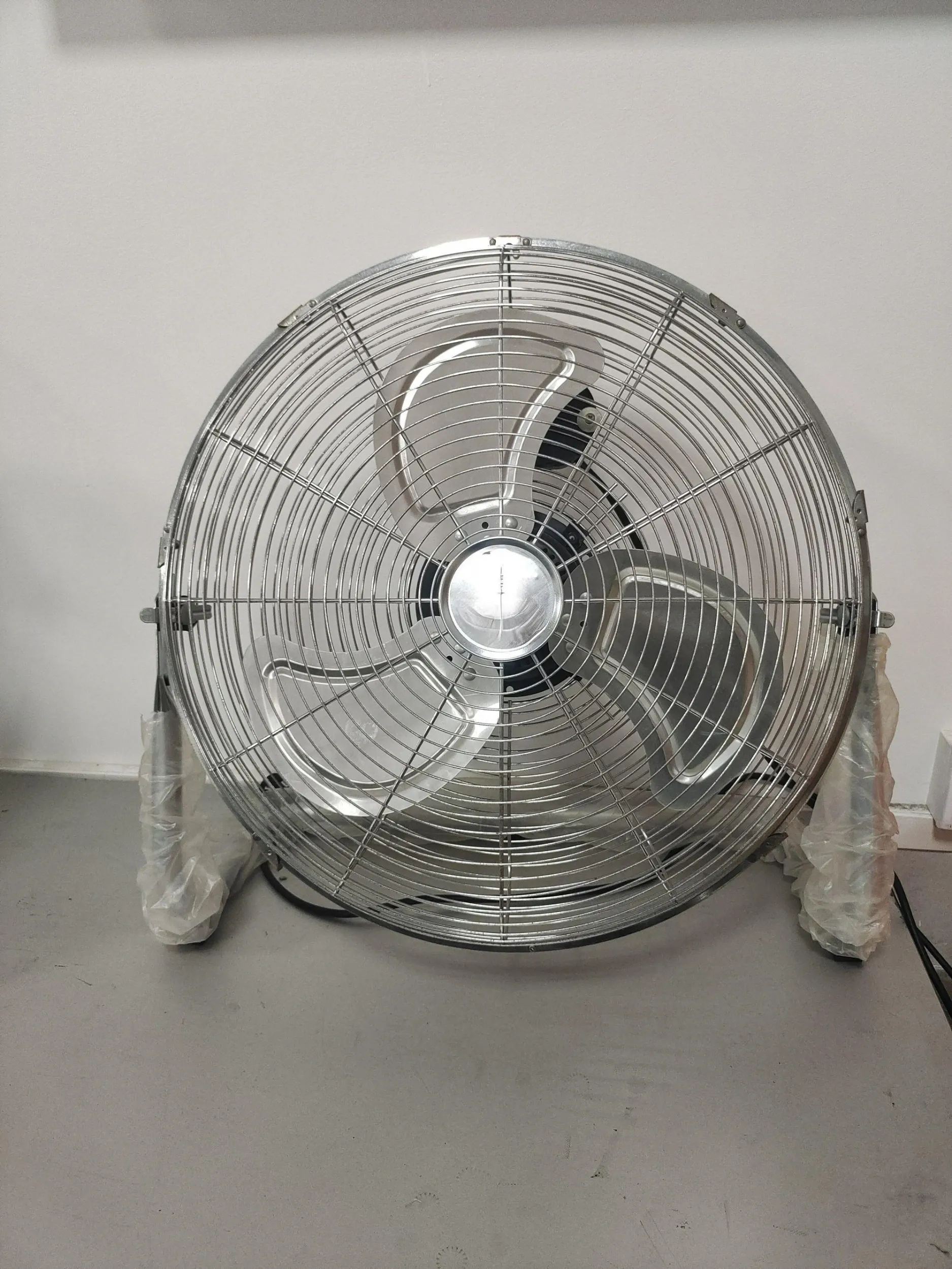
Ordinary industrial floor fans mostly use an asynchronous motor plus gearbox structure. They rely on gear transmission to drive the blades. Operating noise is generally 75-85 dB. The gearbox is prone to oil leakage and wear during long-term operation, requiring inspection and parts replacement every 1-2 years on average, resulting in high maintenance costs. Airflow output is harsh, direct blowing range is limited, and many ventilation dead angles exist. Large workshops need to deploy a large number of devices to barely achieve ventilation, resulting in high overall power consumption and low cost-effectiveness.
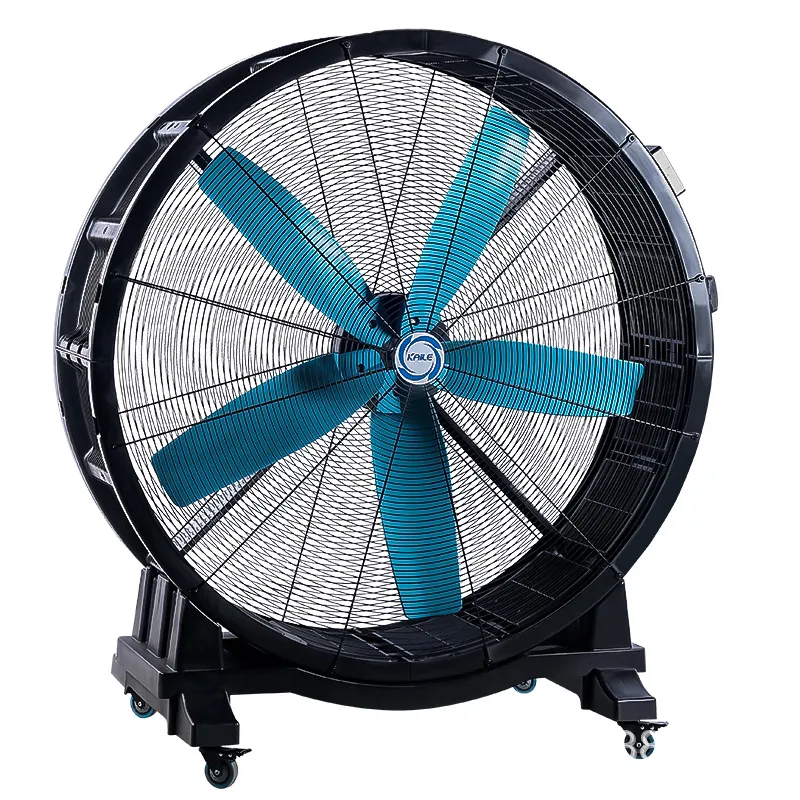
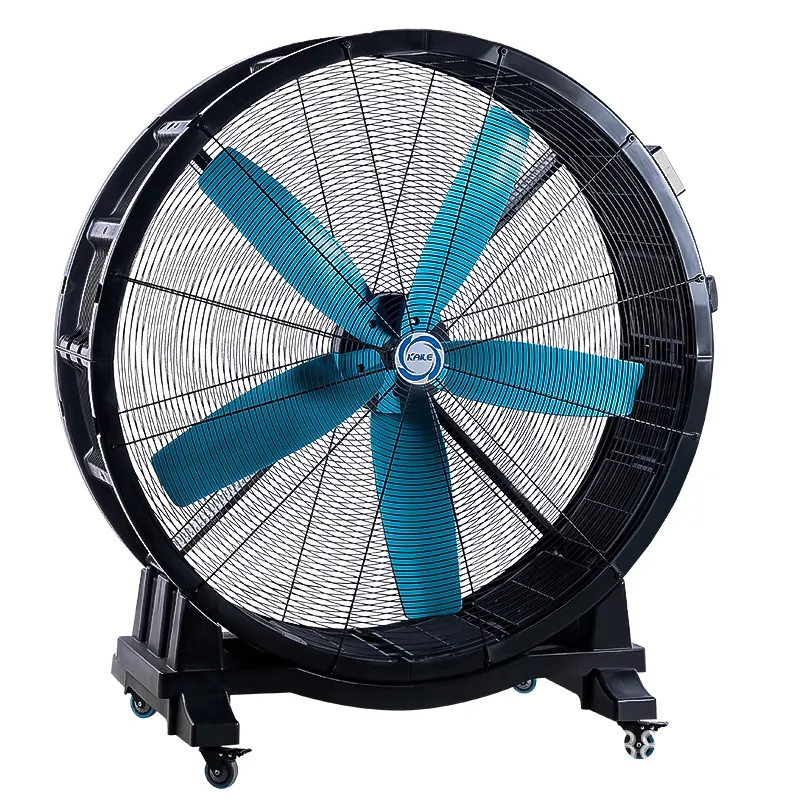
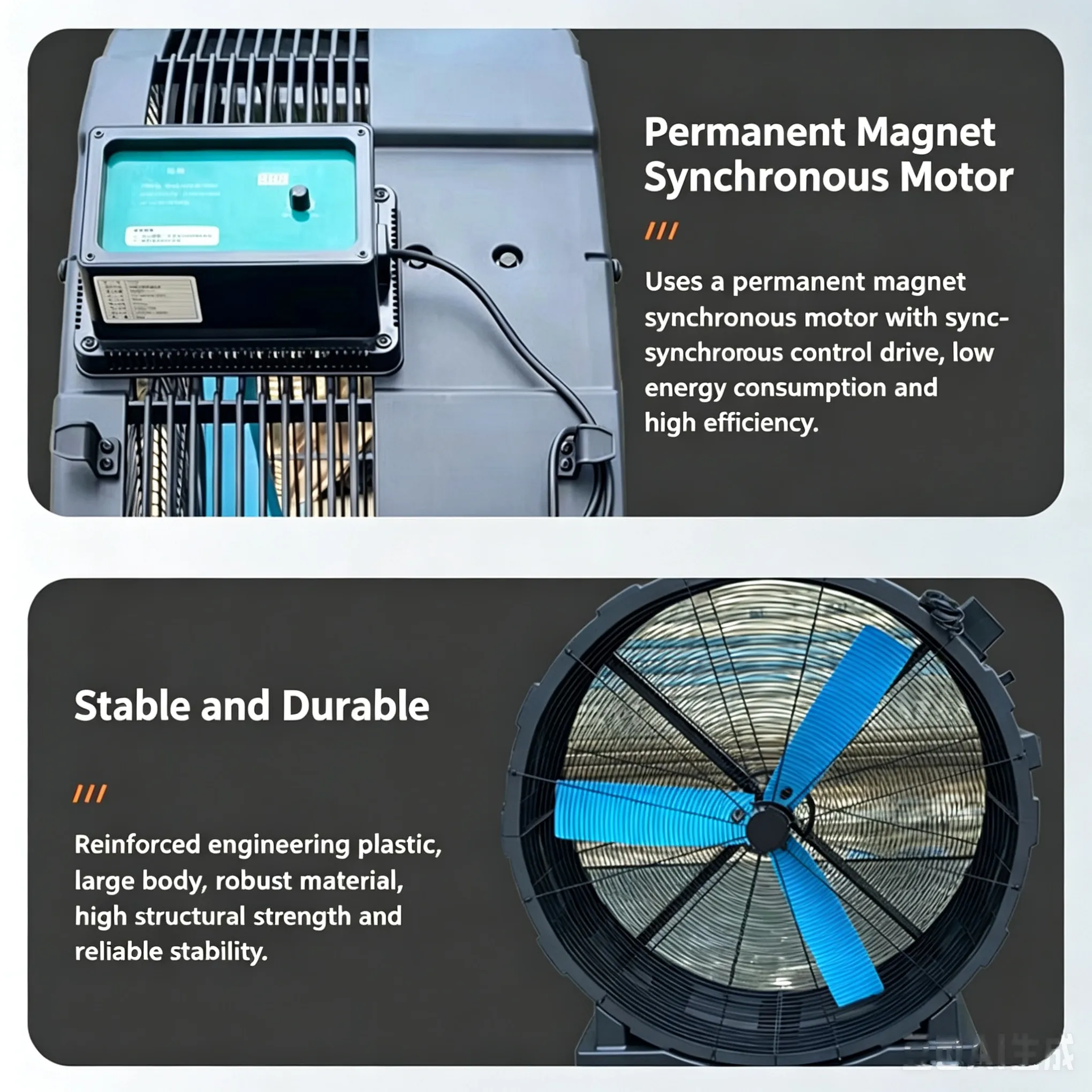
Permanent magnet fans, however, are equipped with a permanent magnet synchronous direct-drive motor. They eliminate the traditional gearbox structure, greatly reducing the overall failure rate. Operating noise can be controlled within 55 dB. Under the same coverage area, they save 25%-40% more electricity compared to ordinary industrial fans. Large-diameter permanent magnet fans can drive three-dimensional circulating airflow. A single unit can effectively cover 1000-1500 square meters, slowly stirring the air across the entire workshop, eliminating the 4-8°C temperature difference between the upper and lower levels of the factory building. The perceived temperature can drop by 4-6°C. At the same time, they break up suspended dust and discharge stale air, comprehensively improving workshop air quality. They support stepless variable frequency speed regulation, allowing flexible adjustment of fan speed according to workshop temperature and the number of personnel. They are suitable for long-term continuous operation in factories.
Real-World Data: Energy Savings Compared
Actual test data provides a more intuitive comparison. For the same 7.3-meter diameter industrial ceiling fan, a permanent magnet direct-drive model consumes only 8.7 kWh over 8 hours of continuous operation, while a traditional gearbox model consumes 12.3 kWh—a gap of nearly 30%. Calculated at 10 hours of operation per day and an electricity price of $0.8 per kWh, a single permanent magnet fan can save over $1,000 in electricity bills per year. For a workshop with 20 fans installed, this saving becomes very significant.
Customer Case Study: Workshop Transformation
In a machining workshop renovation case, the workshop had previously installed ordinary industrial fans in batches. Not only were they noisy and energy-hungry, but the workshop still suffered from heat accumulation and dust retention. Annual equipment repair and parts replacement costs exceeded tens of thousands of dollars. Later, the workshop purchased and fully replaced them with permanent magnet industrial fans from us, and re-optimized equipment layout and airflow circulation paths. After the transformation, the workshop's air circulation efficiency was greatly improved. The problems of high-temperature stuffiness and dust accumulation were completely solved. Annual electricity costs dropped by 38%, and the equipment became almost maintenance-free. This greatly reduced the enterprise's long-term operating expenses and truly achieved cost reduction and efficiency improvement.
Conclusion
In summary, the difference between a permanent magnet fan and an ordinary industrial floor fan is not just a simple motor structure difference. It is an environmental optimization math problem: using the optimal equipment combination and airflow solution to push both results and costs into the optimal range. We are a professional fan manufacturer providing one-stop ventilation and cooling solutions. Our main products include floor fans, pedestal fans, negative pressure fans, and industrial air coolers. If you have any questions, you are welcome to consult us.