Sep 18, 2026Floor fan
Solar Floor Fan Buying Guide: Key Points to Know Before You Purchase 2026
Simple placement ideas for trays, pouches, and bags that reduce morning friction without adding visual clutter.
Solar Floor Fan Buying Guide: Key Points to Know Before You Purchase 2026
I. Introduction
As extreme weather events become increasingly frequent around the globe, and as demand for outdoor activities continues to grow, along with the rising need for energy-saving emergency cooling solutions, solar floor fans have become one of the preferred outdoor cooling options. They also provide an emergency air circulation solution for areas experiencing unstable voltage supply.
However, there are many floor fan manufacturers on the market, and specifications such as fan size and battery capacity vary widely. Product quality is also inconsistent. Choosing the wrong product can lead to insufficient airflow, short battery life, and other malfunctions. Choosing the wrong manufacturer can result in inadequate after-sales service and support.
This article will break down the key technical parameters and functional features you must evaluate, helping you select the solar floor fan that best suits your needs and identify a reliable floor fan manufacturer.
What Is a Solar Floor Fan?
A solar floor fan is a floor fan powered by solar energy. It mainly consists of a solar panel, a rechargeable battery, and the floor fan itself. The core principle is that solar energy is converted into electrical energy, which then drives the fan motor. Its primary application scenarios are outdoor and emergency use.
Understanding the Power Core: Solar Panel and Battery Basics
There are two main ways photovoltaic panels and battery storage systems are connected: direct connection and battery storage connection.
- Direct Connection vs. Battery Storage System
- Direct Connection: Works only when exposed to direct sunlight (cheaper, but cannot be used at night or on cloudy days).
- Battery Storage System: Stores electrical energy for nighttime and cloudy-day use (essential for reliability).
- Solar Panel Type
- Monocrystalline Silicon: Most photovoltaic panels on the market today are monocrystalline silicon, offering higher conversion efficiency (20%–22%), making them more suitable for scenarios with limited space.
- Battery Capacity (mAh) and Runtime Battery capacity is one of the most important indicators of a solar floor fan. Selecting a high-capacity battery improves the fan's runtime and overall lifespan. Therefore, battery capacity is a critical factor to consider when purchasing a floor fan.
- Rule of Thumb: The higher the battery capacity, the longer the runtime. You can ask the solar floor fan manufacturer about the battery capacity and expected runtime. Generally speaking, manufacturers offer customization services for fans, including battery capacity options.
- Battery Type: Lithium batteries are generally used because they are lighter in weight and more suitable for outdoor portability. Lithium iron phosphate (LiFePO₄) batteries outperform standard lithium batteries in cycle life and safety, and they are comparatively safer. Ternary lithium batteries offer stronger performance, but their safety profile is inferior to LiFePO₄. You can consult the fan manufacturer about the battery type. We recommend choosing lithium iron phosphate batteries for safety.
Performance Metrics: Airflow, Motor, and Speed Settings
CFM is a major indicator for evaluating industrial fans.
- CFM (Cubic Feet per Minute) is the internationally recognized unit for measuring the volume of air a fan delivers per minute. The higher the number, the more air is moved per unit of time, and the more direct the perceived cooling effect. It is not equivalent to RPM, nor is it determined solely by blade size—rather, it is the result of motor torque, blade curvature, air intake structure, and the overall airflow path working together. For example, typical household fans generally deliver between 800–1500 CFM, while fans with true industrial-grade air delivery capability typically start at 2500 CFM or above. They can quickly stir stagnant air throughout a room, creating a continuously flowing "air curtain" that accelerates sweat evaporation and significantly lowers perceived temperature.
- The higher the CFM value, the stronger the cooling effect.
- Motor Type: Brushless DC Motor (BLDC) vs. Brushed Motor
- Brushless DC Motor (BLDC) Offers Superior Performance: The motor is another factor buyers should pay attention to. Brushless motors are quieter (≤45 dB), more energy-efficient (saving 30% on power), and more durable than brushed motors, which translates to a longer overall fan lifespan.
- Speed Settings
- Multiple speed settings provide more options. It is recommended to choose models with 5 or more speed levels for precise airflow control (from quiet sleep mode to powerful turbo mode).
Key Features for Outdoor Durability and Convenience
- Build Quality Good materials ensure the fan's durability and rust resistance.
- Material: Aluminum alloy or high-quality ABS engineering plastic is preferred for impact resistance.
- Oscillation and Tilt Adjustment
- A wide oscillation range (45°–90°) enables better air circulation. Manual 180° tilt adjustment allows you to direct airflow precisely where it is needed. Generally speaking, the wider the supported angle, the greater the fan's flexibility.
- User-Friendly Additional Features
- Remote Control: A floor fan with remote control capability is very convenient, allowing you to adjust settings from a distance without getting up.
- Timer Function: Automatic shutoff (1–8 hours) saves power while sleeping.
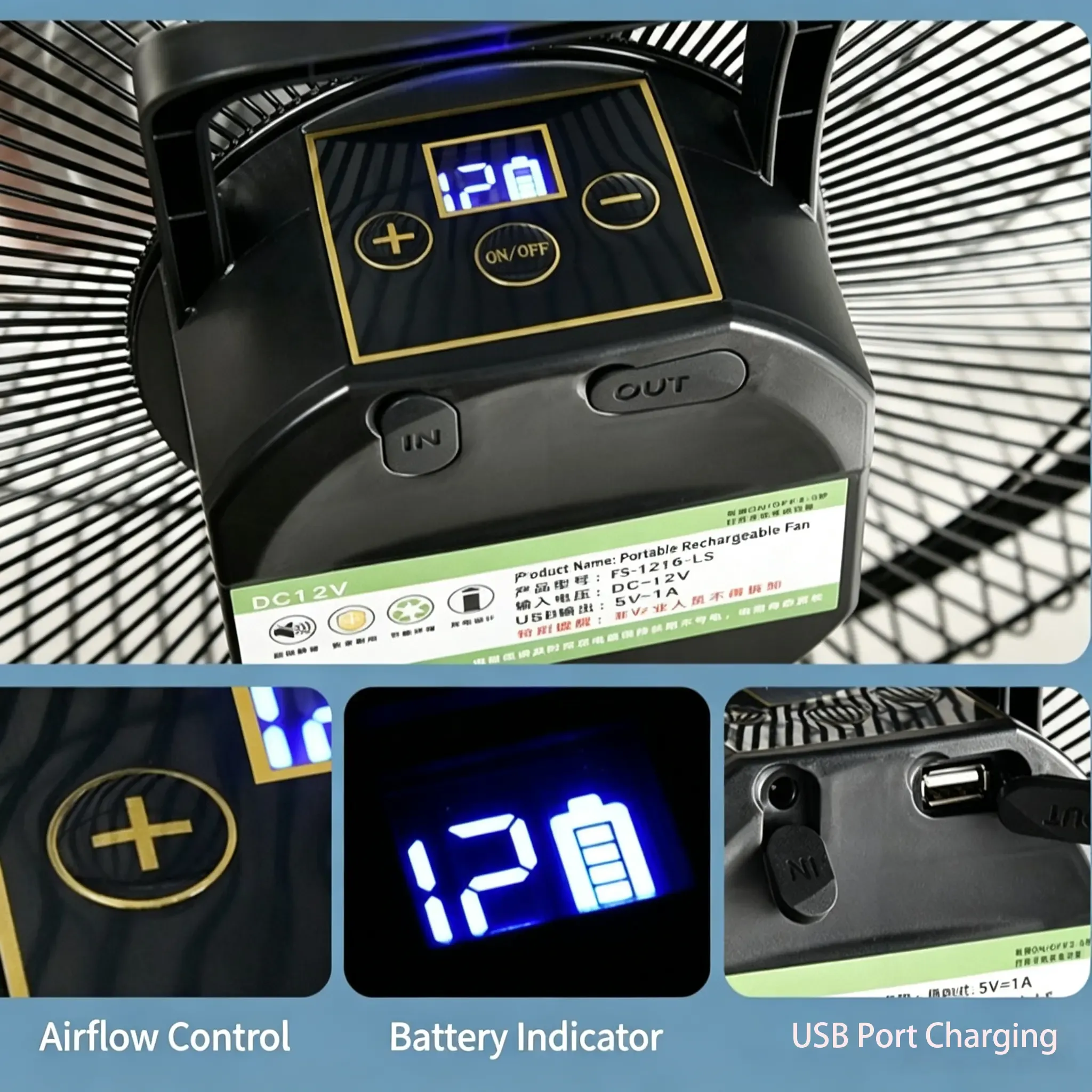
- Integrated Lighting and USB Charging Port: Extra utility for camping and emergency scenarios (can turn the fan into a power bank). These features are not standard configurations. You need to consult with the electric fan manufacturer or request customization for these functions, which will incur additional costs.
Application Scenarios: Which Fan Is Right for You?
- Camping and Outdoor Adventures: For outdoor activities such as fishing, camping, and picnics, prioritize portability, lightweight design, and battery capacity. Models with integrated LED lights and USB charging ports are worth considering.
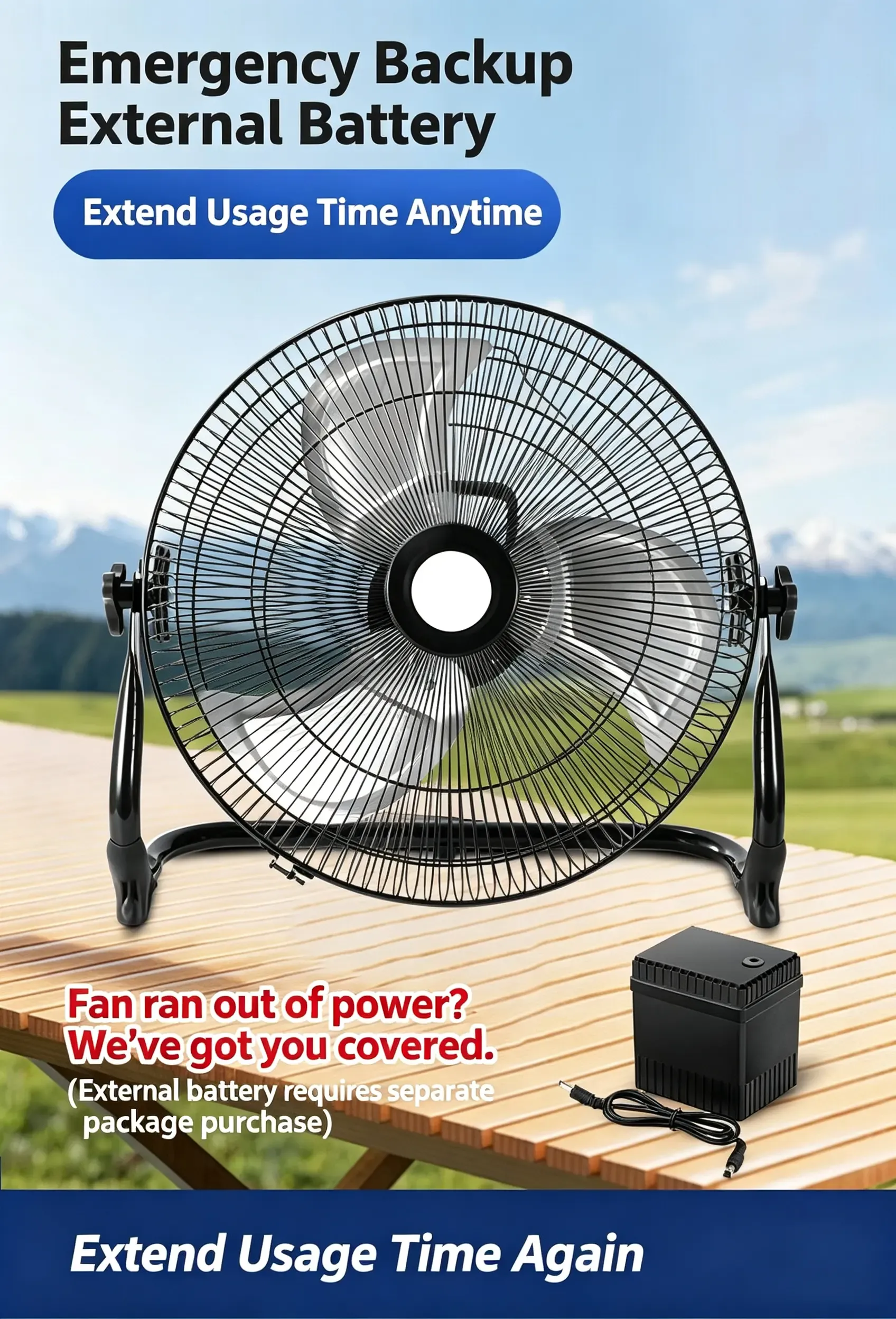
- Garages, Barns, and Greenhouses: Focus on high CFM airflow, large battery capacity, and USB charging support. Models like the Sundream 30000mAh high-capacity battery version support solar charging and USB charging for emergency use.
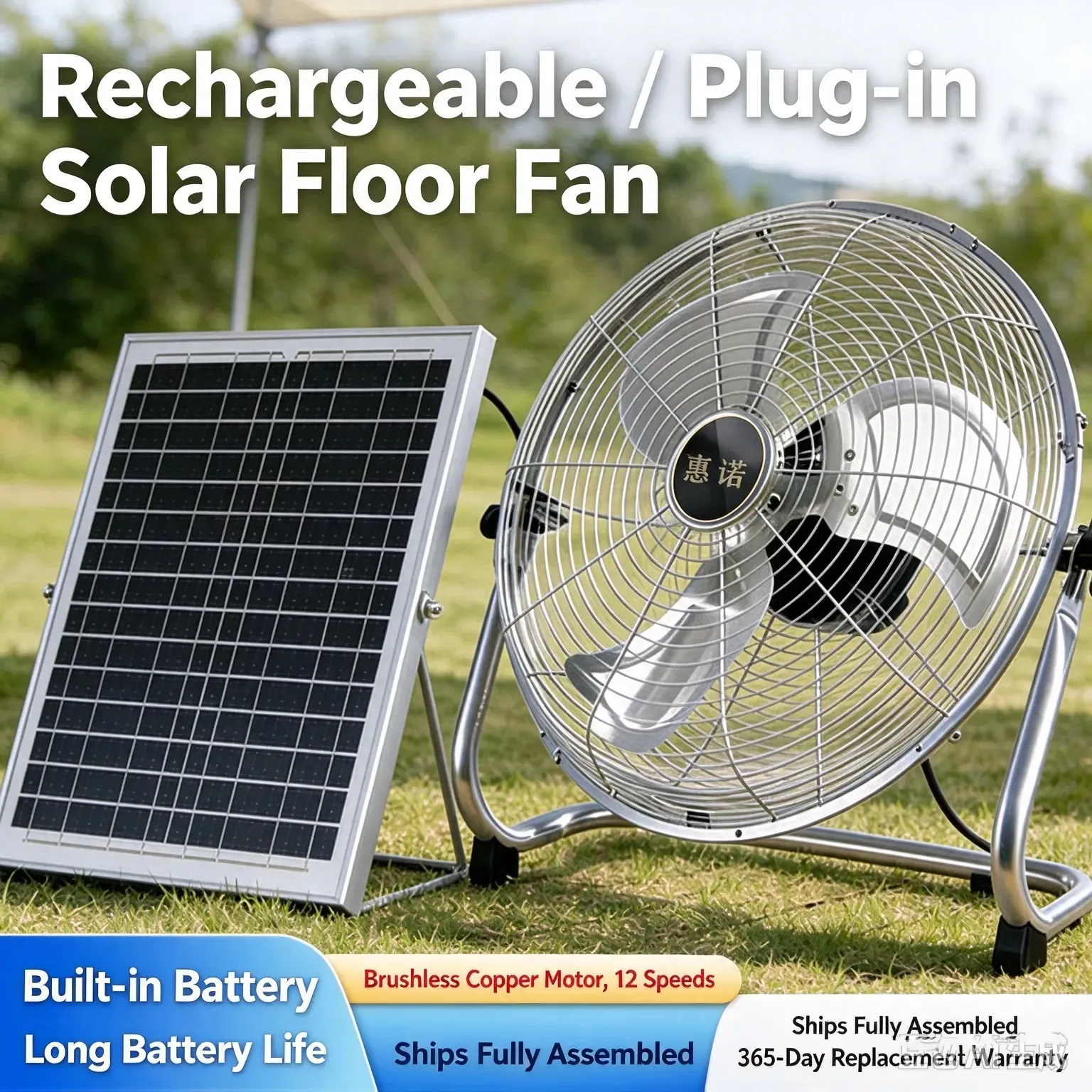
This is our best-selling solar floor fan, and it offers the following key advantages:
- High airflow with low noise
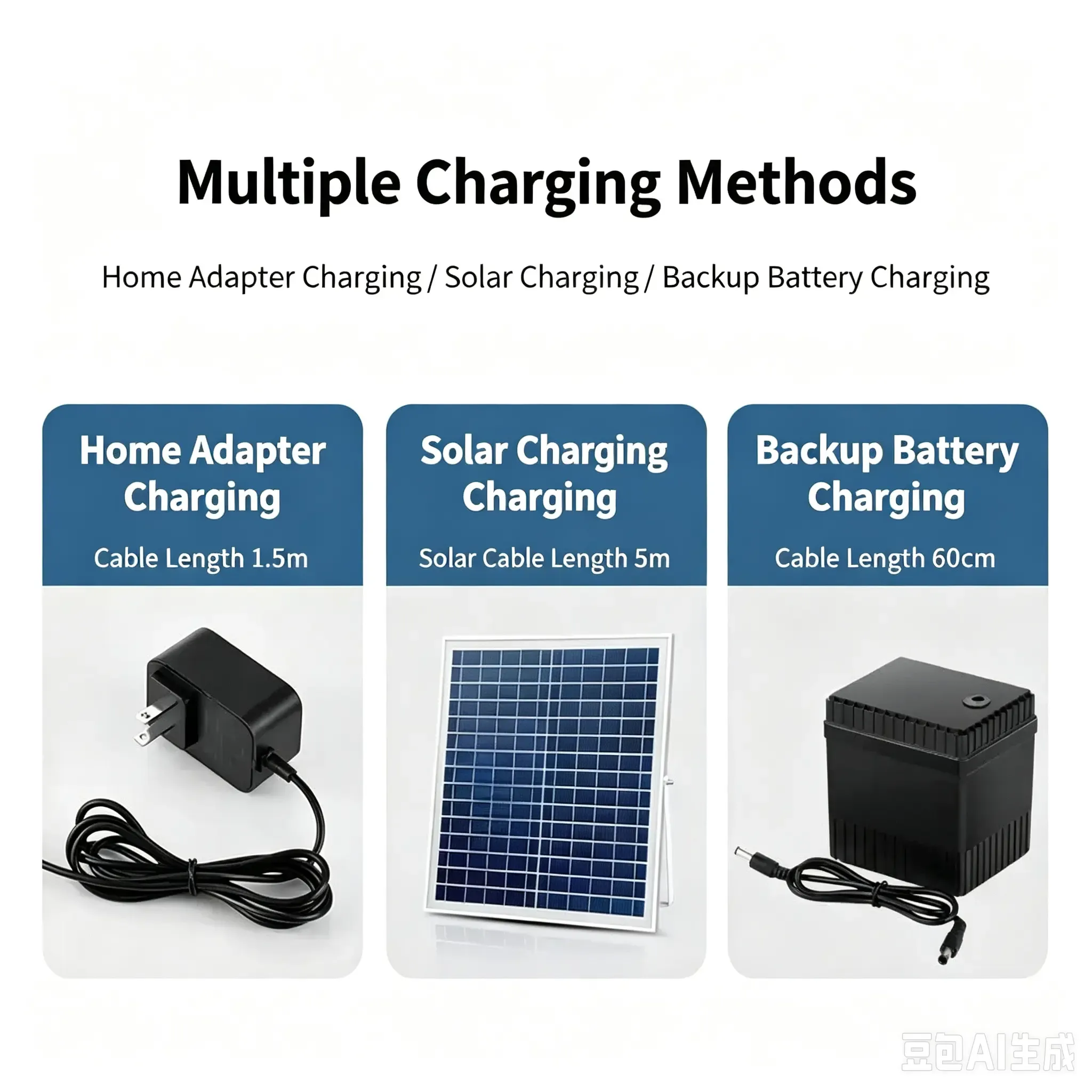
- Two charging methods: household AC adapter charging / solar charging
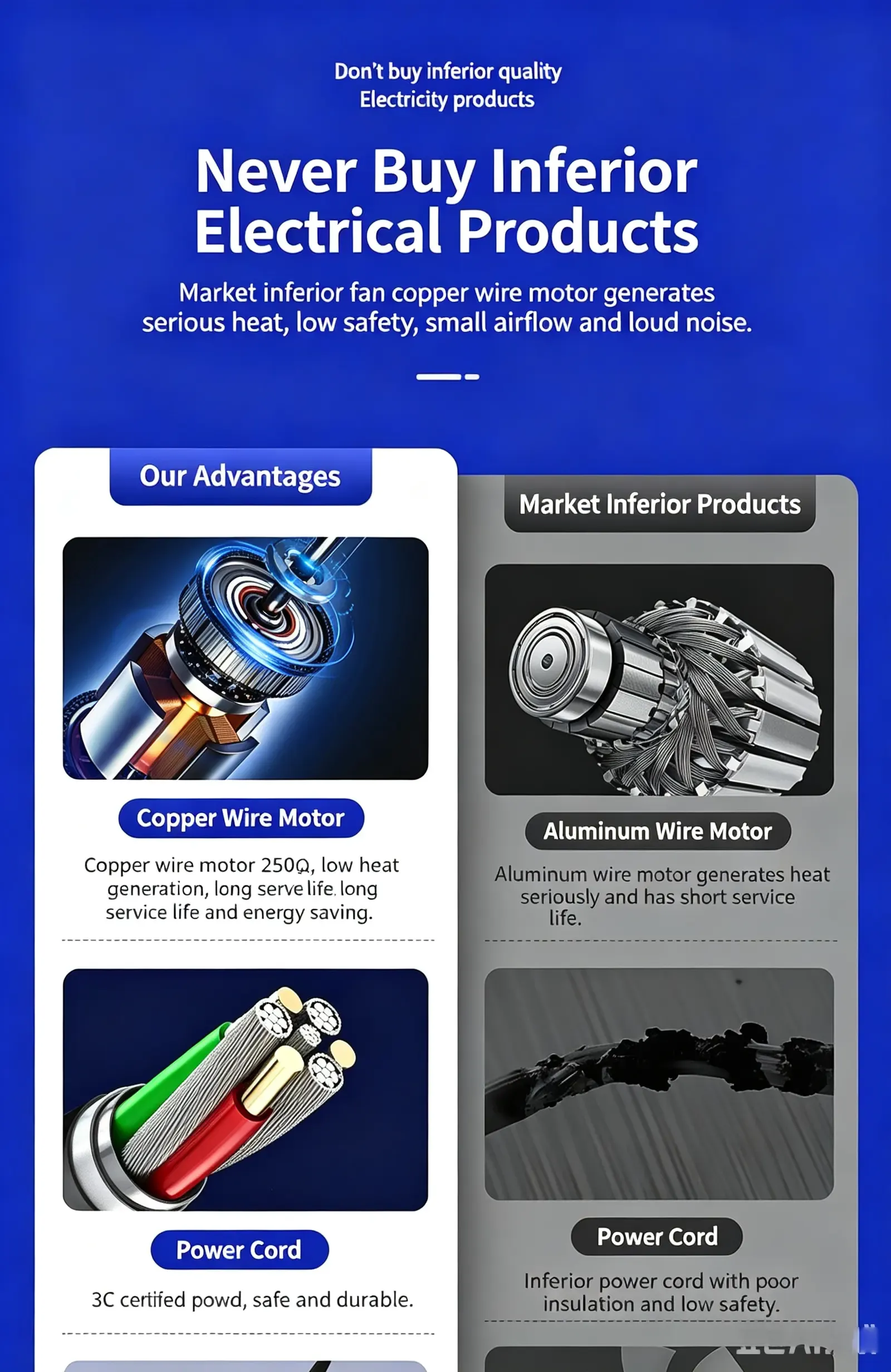
- Three-phase pure copper brushless motor for long service life and consistent airflow
- All-aluminum fan blades that cut airflow evenly, working with the brushless motor to deliver smooth, comfortable air
- Metal body for durability and practicality. Spiral safety grille with snap-lock design for easy cleaning.
- Supports customization of multiple floor fan sizes and large-capacity batteries—12-inch, 14-inch, and 16-inch fans, with battery capacity up to 30000mAh for extended runtime.
- Suitable for warehouses, construction sites, farms, factories, and outdoor use.
-
Frequently Asked Questions (FAQ)
- Can a solar fan work at night? Yes, but only if it has a built-in rechargeable battery. The solar panel is responsible for generating electricity, and the battery is responsible for storing it. Without a battery, the fan stops working at sunset.
- Besides solar power, can it be charged via USB? Yes, most newer solar fan models are equipped with a Type-C USB charging port, making it convenient to charge via a power bank or wall adapter.
- How long does a solar fan take to fully charge? And how long does the battery last? Charging time varies by model and depends on the power output of the solar panel. A 6W solar panel charged via USB/solar may take approximately 5 hours to charge, providing a runtime of 5 hours at speed 3 and 12 hours at speed 1. For larger-capacity models, the time required depends on battery capacity, sunlight conditions, and the fan speed setting.
- How much does a solar fan weigh? The weight of a solar fan, including the photovoltaic panel and battery, is approximately 3.2 kg, depending on the fan size and battery capacity.
- Are you a solar fan manufacturer? Yes, we are a fan manufacturer. Our main product categories include household fans and industrial fans. Our specific products include floor fans, pedestal fans, ceiling fans, and solar fans, all manufactured using high-quality motors and raw materials. We support various customizations including motors, logos, and more.
Conclusion
When choosing a solar fan, the key parameters to pay attention to include battery capacity, fan size, motor type, and airflow (CFM). Also consider your usage environment—whether it is for outdoor or indoor use. If you need more advanced features such as remote control functionality, you need to confirm with the manufacturer. Take your budget into account as well when selecting the floor fan that suits you.
When making your purchase, do not focus solely on price. Pay more attention to solar panel power output and battery chemistry type. Choosing a model with high-quality components and a reliable solar fan manufacturer will ensure years of dependable, quiet, and truly off-grid cooling freedom.
We are a professional solar fan manufacturer supporting OEM and ODM. You can contact us to obtain samples or place an order.