Sep 28, 2026Floor fan
Solar vs. Regular Floor Fan: Which One Is Right for You?
Solar vs. regular floor fan: Compare cost, performance, and use cases to find the best cooling solution for your home, workshop, or outdoor space.
Solar vs. Regular Floor Fan: Which One Is Right for You?
1. Introduction
As summer cooling needs grow, a new type of fan powered by solar energy has emerged. Let's first clarify the core differences between a regular floor fan and a solar ventilation fan.
Here is a quick guide to choosing between them:
- Choose a regular floor fan if: You prioritize maximum airflow, stable reliability, and low upfront cost. It is the ideal choice for bedrooms and industrial cooling, suitable for any scenario that needs strong airflow to quickly dispel heat.
- Choose a solar floor fan if: You need an off-grid cooling solution for outdoor spaces (patio, camping, etc.), want to save on electricity bills long-term, or need a reliable backup cooling solution during power outages. A solar floor fan is undoubtedly an investment in long-term savings and energy independence.
As a professional fan manufacturer, we will help readers make the best choice by comparing cost, performance, usage scenarios, and more.
What Is a Solar Fan?
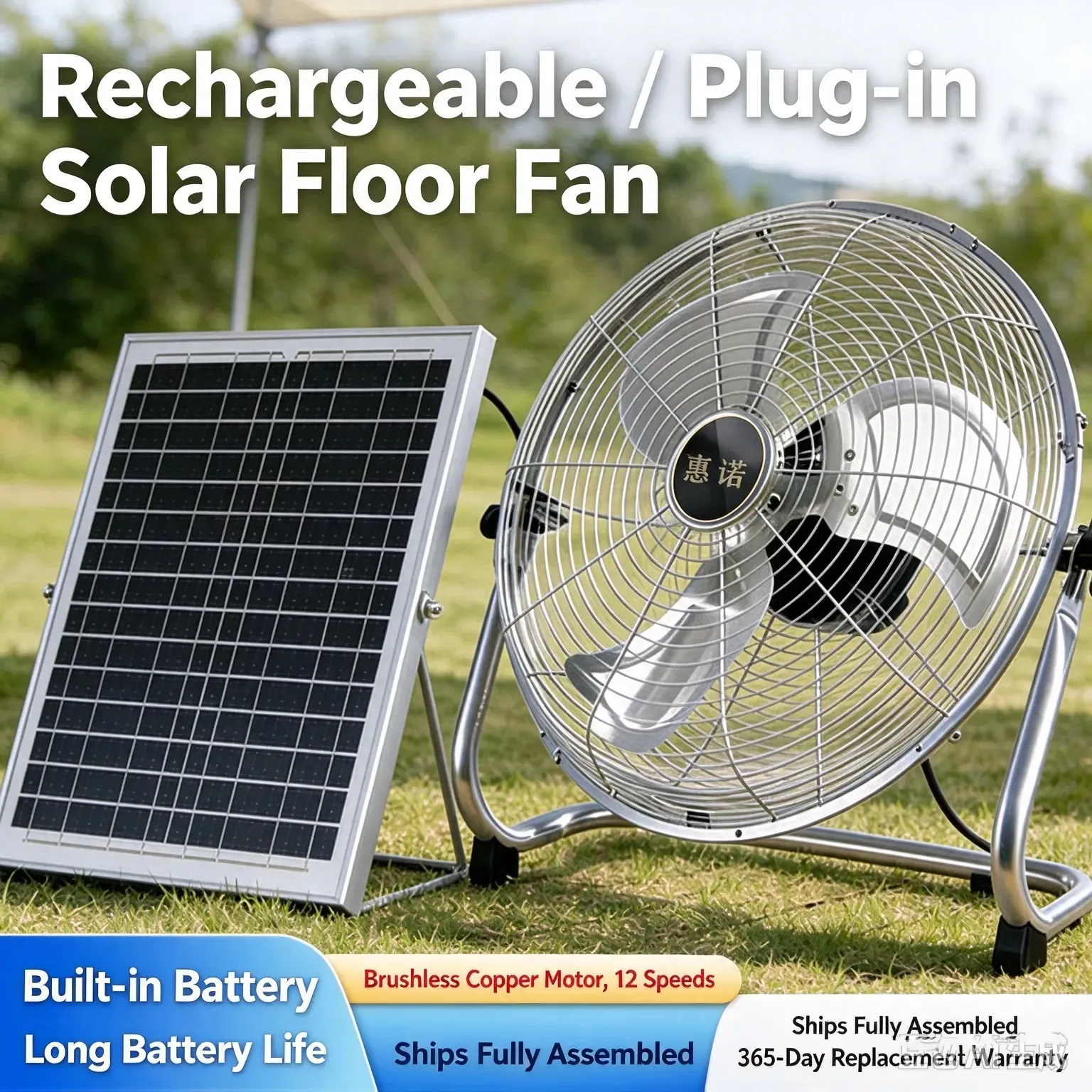
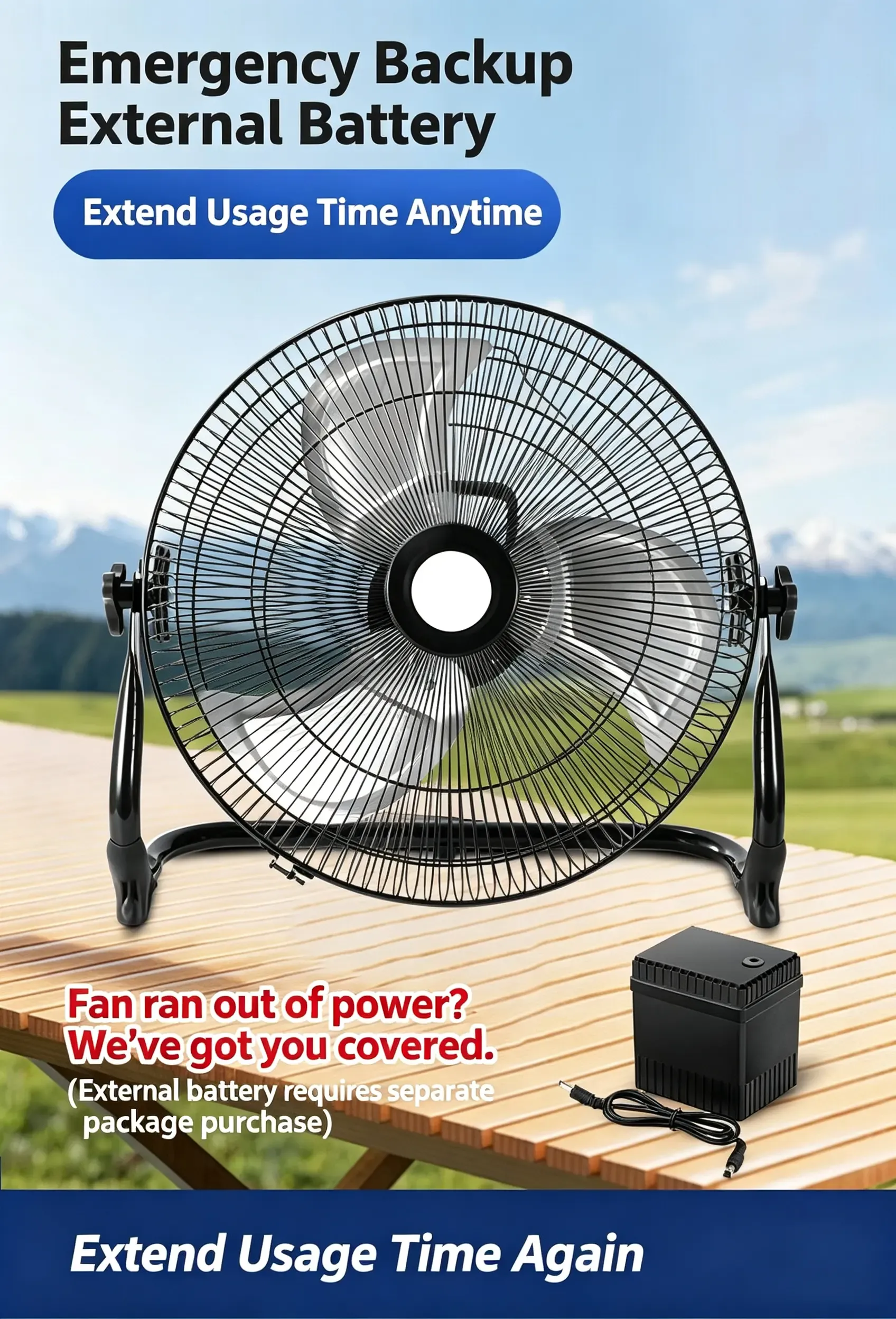
A solar fan mainly consists of the following components:
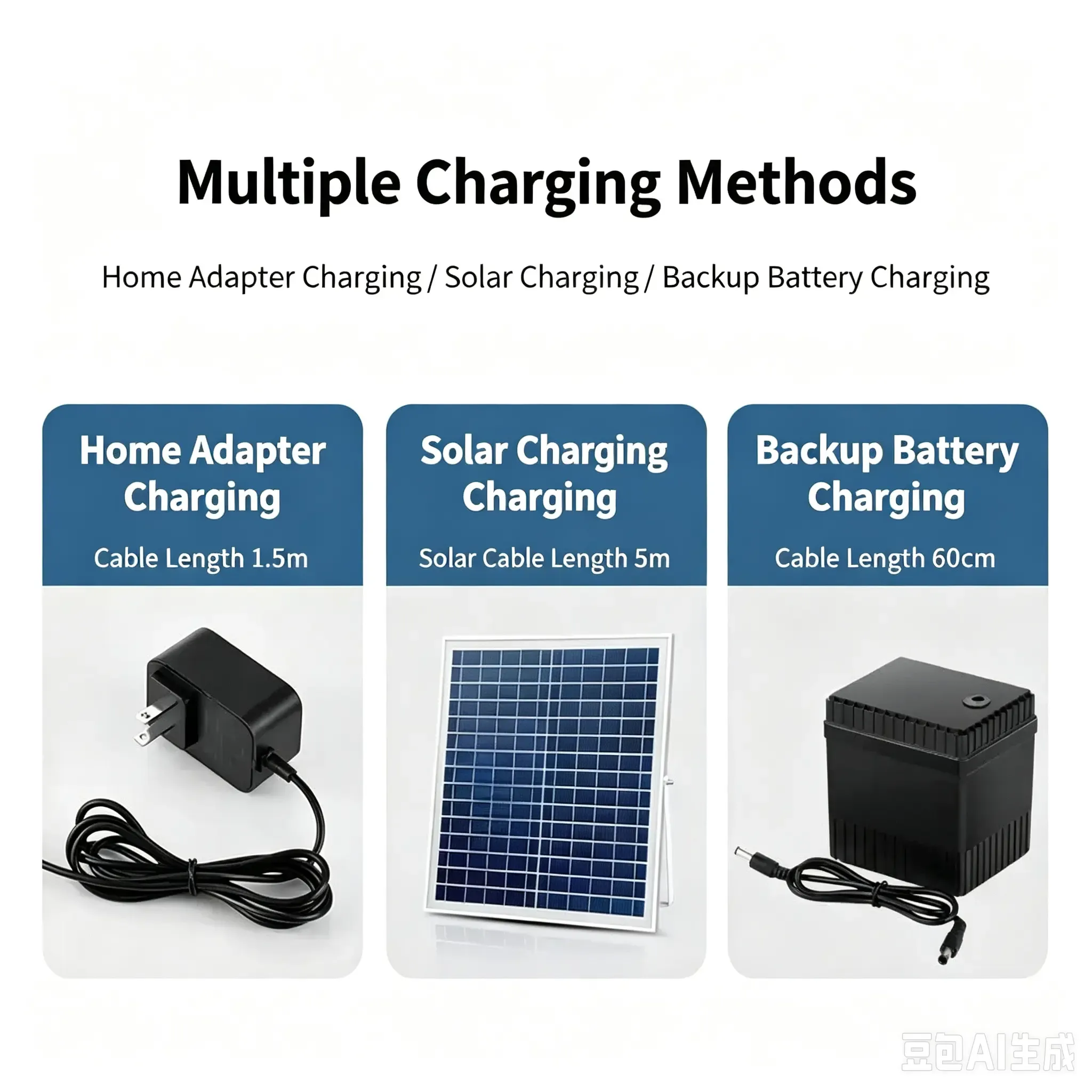
- Solar Panel: Absorbs sunlight and converts it into electricity, storing it in a lithium battery.
- Lithium Battery: The stored energy is used to power the fan, providing continuous and reliable airflow even without direct sunlight.
- Floor Fan: The floor fan connects to the solar photovoltaic system to provide airflow and cooling.
Long Service Life: This solar fan kit is designed for maximum energy efficiency, durability, and portability.
Applications: Perfect for off-grid living, outdoor activities, or emergency cooling. It runs quietly and consumes minimal power, making it an ideal sustainable cooling solution for camping, patios, or small outdoor events.
2. Cost Comparison: The Wallet-Friendly Champion
Due to the addition of solar panels and battery components, the initial purchase cost of a solar fan of the same size is higher than that of a regular floor fan.
- Initial Purchase Cost: Regular floor fans are relatively inexpensive (for example, a standard 20-inch floor fan starts at around 37 factory price.
- Long-Term Operating Cost: This is the core advantage of solar fans. Calculate the annual electricity cost of a traditional fan (for example, a floor fan costs about 4 per month in electricity, which is48 per year; electricity prices vary by region, but any use of electricity means a monthly bill). However, a solar exhaust fan costs $0 per month in electricity.
Comparison Dimension | Regular Floor Fan | Solar Floor Fan |
|---|---|---|
First Purchase Cost | Low (factory price about | High (factory price about |
Usage Cost | Ongoing (electricity) | Zero (solar powered) |
Estimated 5-Year Total Cost | Purchase + electricity > $260 | Almost only the purchase cost |
- Payback Period: Data shows that although the initial investment is higher, a solar fan typically "pays for itself" within 2-3 years through electricity savings. After that, it is pure savings. A solar rechargeable fan can even create value for you—today's solar models come with USB ports that can reverse-charge phones, power banks, and other electronics.
3. Performance and Usage Scenarios
What is the difference in performance between a solar fan and a floor fan? Or what are their usage scenarios?
Airflow & Cooling Power
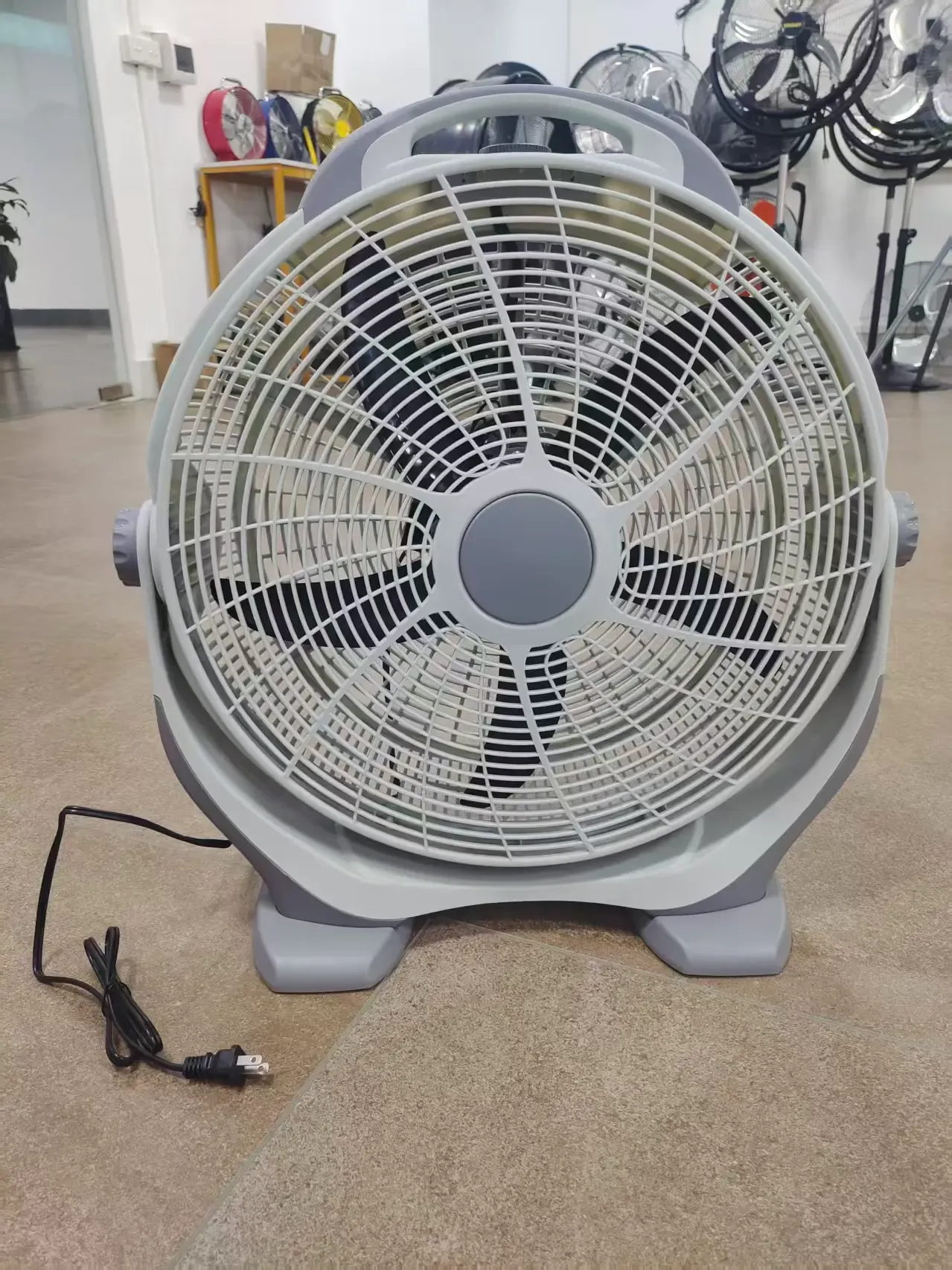
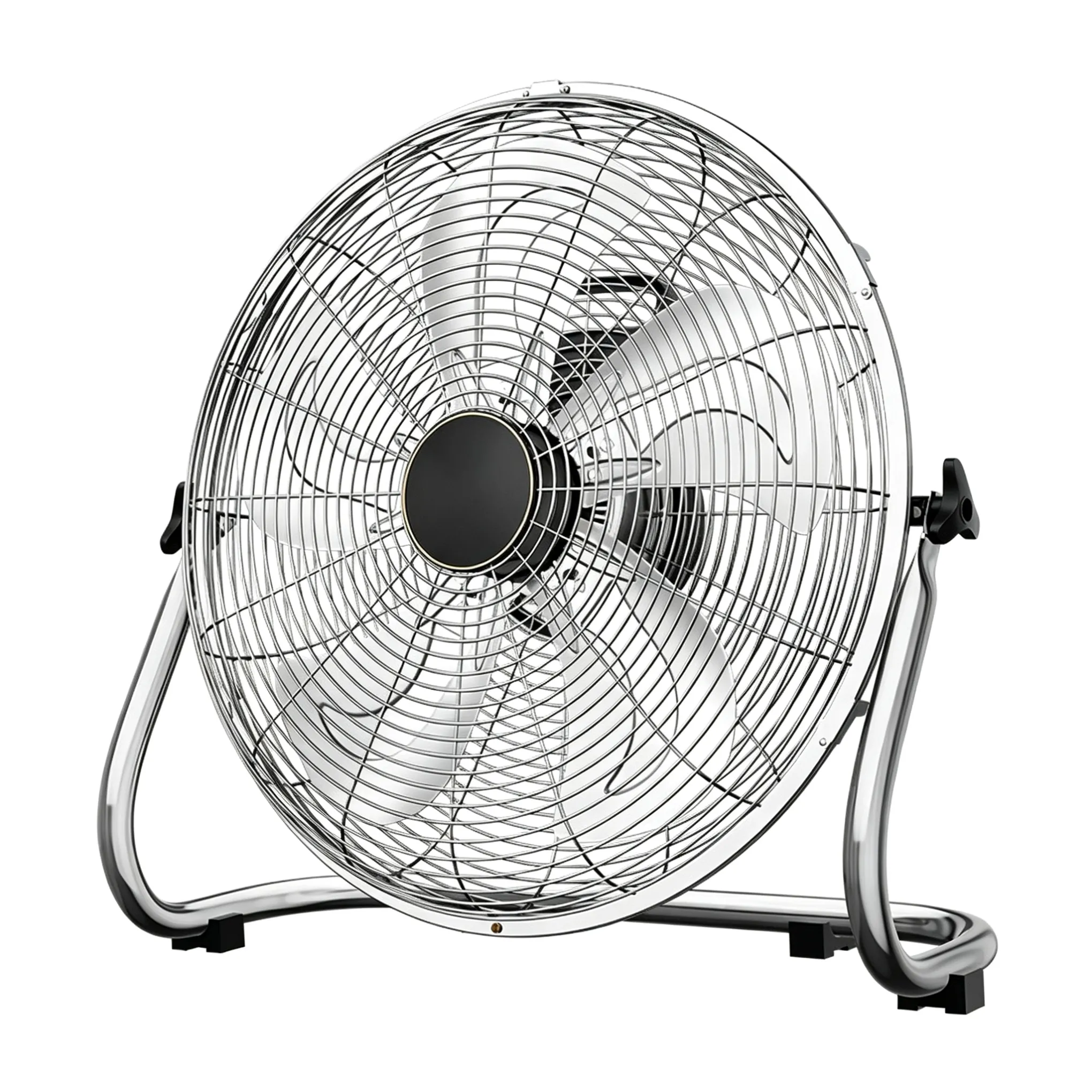
- Traditional Fan: A floor fan is a mature home appliance. High-quality machines offer powerful, stable airflow. They are the "strong performers," suitable for indoor scenarios requiring fast, powerful cooling, such as workshops, living rooms, and bedrooms.
- Solar Rechargeable Fan: Airflow is relatively softer, making it more suitable as a circulating fan to use with air conditioning, or to provide a continuous natural breeze outdoors. Outdoor work requires higher levels of dust and water resistance, so outdoor fans need better quality.
Power & Reliability
- Traditional Floor Fan: Equipped with a handle and a long power cord, it is plug-and-play with stable performance. However, it is limited by power supply. If the local power supply is unstable, it cannot provide a stable cooling solution.
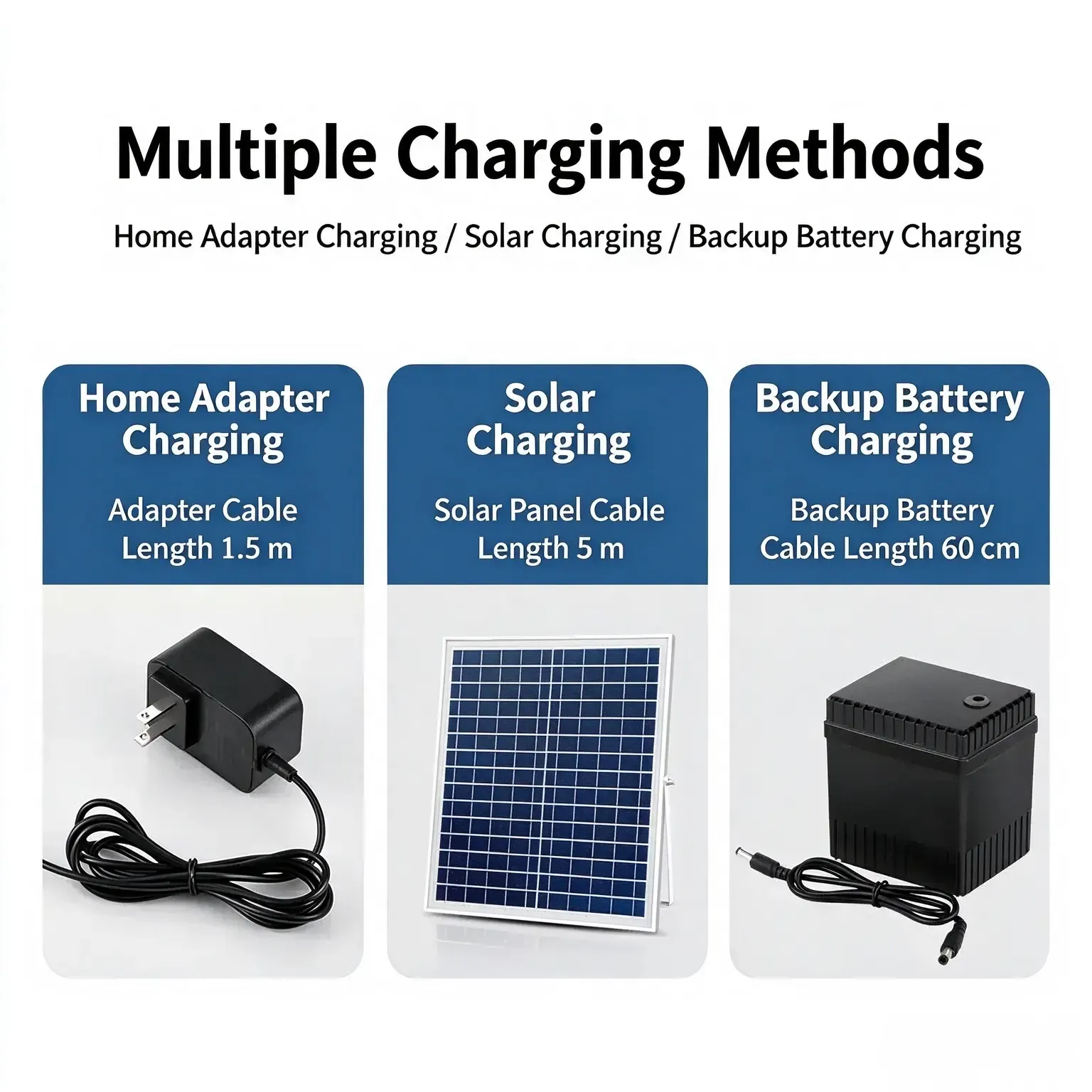
- Solar Fan: Equipped with a solar panel for power generation and a battery storage system, the power supply is stable. The only downside is that it cannot generate electricity on rainy days or at night. This can be solved by equipping a battery charger.
-
Installation & Portability
One of the biggest advantages of a solar floor fan is being cordless and wire-free. It is perfect for outdoor spaces, balconies, garages, greenhouses, and other places where it is difficult to run power. It can also be used as an emergency backup during power outages. Traditional fans are limited by the location of power outlets.
4. User Experience & Environmental Impact
Solar fan motors differ from those of floor fans, so the user experience also differs. Apart from that, the main body of a solar floor fan is not much different. It supports 130-degree up and down adjustment, 4-speed airflow adjustment, and other functions.
Noise Level
- Solar Fan: Usually uses a brushless DC motor (BLDC) , which runs very quietly. Most noise comes from airflow. Noise level is about 45 dB.
- Floor Fan: AC motors may produce a low-frequency "hum," with noise around 60-70 dB. A thermostat may suddenly start at night, disturbing sleep. Due to its construction, it is louder than a solar portable fan.
Maintenance & Durability
- Solar Powered Outdoor Fan: Designed for outdoor use, it is usually more durable, waterproof, and dustproof. However, the solar panel needs regular cleaning. The battery needs to maintain a certain charge to prevent rapid decay. With more components, maintenance costs are slightly higher than traditional fans. Key parameters to watch include battery life, battery capacity, solar panel power, and charging support.
- Traditional Floor Fan: Mainly suitable for indoor use. It requires regular cleaning of blades and grilles, as well as motor lubrication.
Environmental Impact
A solar powered outdoor fan uses renewable solar energy, significantly reducing carbon emissions. It is a greener, more eco-friendly, and sustainable choice.
5. Key Buying Guide: What to Look For
Solar Fan for Power Outage – Buying Points
- Solar Panel Power and Conversion Rate: Determines charging speed and efficiency. Monocrystalline silicon panels have better power generation efficiency than polycrystalline silicon. Solar panel power is generally 20-50W. Choosing a higher-wattage solar panel enables faster charging.
- Battery Capacity: A solar battery is a battery-powered unit. Battery capacity determines runtime without sunlight (e.g., 2000mAh or more is more durable). Try to choose a large-capacity battery to improve both runtime and fan lifespan.
- Motor Type: Prioritize a brushless DC motor (BLDC) for quieter, more energy-efficient, and longer-lasting performance.
- Airflow (CFM): Choose the appropriate airflow based on the size of the space (Cubic Feet per Minute).
- IP Rating: For outdoor use, ensure adequate waterproof and dustproof capability. An IP4 or higher protection rating is recommended.
- Extra Features: Reverse charging support for charging phones outdoors; battery direct-charge support for charging when there is no sunlight; remote control function.
Traditional Fan – Buying Points
- Motor Type: Copper wire motors are recommended for faster speed and better quality.
- Noise Level: Pay attention to decibel levels. For sleep, choose a product below 50 dB.
- Energy Consumption: Choose low-power products (e.g., 15-30W) for long-term savings.
6. The Verdict: Which Fan Is Right for You?
It is clear that solar portable fans have more advantages than regular floor fans, but solar fans also have their own drawbacks, such as slightly more complex maintenance and dependence on sunlight.
Final Conclusion:
- Choose a solar outdoor fan if… You need cooling for outdoor spaces (balcony, garden, garage, greenhouse) or areas with unstable power supply; you pursue ultimate long-term energy savings and environmental protection.
- Choose a traditional indoor floor fan if… You want a low initial purchase cost and mainly use it in indoor master bedrooms or living rooms; you need powerful, stable cooling unaffected by weather; your budget is limited; or you live in an area with frequent rainy weather.
You can choose the right fan based on your needs and actual situation. If you are unsure, you can consult us directly. We are a professional electric fan manufacturer, specializing in floor fans, pedestal fans, industrial fans, and outdoor fans.